Increase in Floor Area Ratio Limits for Type 2 and 3 General Residential Zones
Promotion of Housing Supply Activation through Deregulation
Gyeonggi-do Icheon City is easing regulations related to urban development projects to revitalize housing supply. The uniform operational standards applied to small-scale urban development zones will be abolished, and the floor area ratio (FAR) limits in residential areas will also be raised.
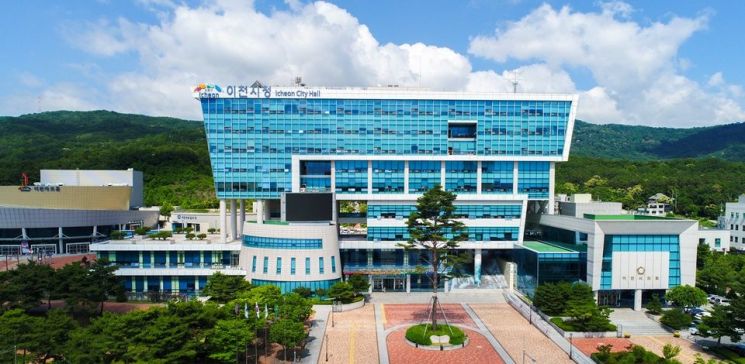
On the 14th, Icheon City announced that it has decided to abolish its own operational standards applied to urban development projects under 100,000㎡ to ease regulations that have been suppressing housing supply and to encourage private capital participation.
An urban development project is a project implemented under the 'Urban Development Act' to create complexes or urban areas with functions such as residential, commercial, industrial, and distribution in areas requiring planned urban development. Both public and private sectors can implement urban development projects, making it a major method for private land development projects.
The operational standards to be abolished by the city this time apply to small-scale urban development zones under 100,000㎡, for which the mayor has approval authority. For projects exceeding this area, the approval authority for zone designation lies with the city or provincial governor.
A city official explained, "Until now, to prevent indiscriminate development, internal regulations maintained operational standards such as a separation distance (200m) from existing apartments and site conditions and ecological environment, but we have decided to eliminate such uniform standards. From now on, these will be operated flexibly through individual reviews."
Along with this, the city will relax the guidelines for establishing district unit plans and ease the floor area ratio upper limits in residential areas. Accordingly, the FAR upper limit for Type 2 General Residential Areas will increase from 230% to 250%, and for Type 3 General Residential Areas from 250% to 290%.
Kim Kyung-hee, Mayor of Icheon City, said, "We have abolished unnecessary regulations to strengthen residential stability and revitalize the construction industry," and added, "We expect this decision to be a foundation for the continuous development of Icheon City."
Meanwhile, according to Icheon City, about 20 urban development projects are currently underway in the Icheon area. A representative project is the 'Daeheung District' in the Daewol-myeon Daeheung-ri area. The zone designation was announced by Gyeonggi-do in November last year, and it is a project to build 1,975 apartment units and knowledge industry centers on a site of 175,023㎡.
In addition, small-scale urban development projects such as ▲Choji District (53,522㎡) ▲Galsan District (40,720㎡) ▲Ami 1 District (57,479㎡) ▲Sadong District (34,772㎡) are also being promoted consecutively.
© The Asia Business Daily(www.asiae.co.kr). All rights reserved.
![Clutching a Stolen Dior Bag, Saying "I Hate Being Poor but Real"... The Grotesque Con of a "Human Knockoff" [Slate]](https://cwcontent.asiae.co.kr/asiaresize/183/2026021902243444107_1771435474.jpg)















