From Employment, Housing, and Childcare to Social Awareness Shift
Need for Change Toward a Society Conducive to Having and Raising Children
Gathering Opinions from Various Sectors to Proceed with Policies
at a National Level from the Perspective of Policy Users
Joo Hyung-hwan, the newly appointed Vice Chairman of the Low Fertility and Aging Society Committee (ministerial level), stated on the 12th, "It is a necessary time to devise drastic measures not only for short-term solutions but also at structural levels such as economic, social, and cultural aspects to create a turning point for reversal."
Vice Chairman Joo expressed his thoughts on his appointment during a briefing at the Yongsan Presidential Office in the afternoon, saying, "We must recognize that the urgent and pressing issue of the world's lowest birth rate is a matter of survival for our community." This aligns with the recent low fertility policy stance of the Yoon Suk-yeol administration, which pursues long-term policies while also preparing short-term measures to raise the birth rate.
Vice Chairman Joo emphasized, "It is a crucial time for a major transformation toward a society conducive to having and raising children, including structural measures to alleviate the three major anxieties of youth?employment, housing, and childcare?overcoming excessive competitive pressure and high costs, as well as a societal shift in perception regarding immigration, adoption, and work-life balance (Work-Life Balance, or 'Wolrabel').
Furthermore, he stressed that social security systems such as industrial structure, labor force, and pensions must adapt to the trends of low fertility and aging while advancing to a higher level. Vice Chairman Joo explained the future direction of birth promotion policies, saying, "Existing measures should be comprehensively reviewed in light of policy effectiveness, foreign cases, and changed conditions, then refined into effective areas and measures through selection and concentration. Areas that need reinforcement should be significantly strengthened, and tasks that require immediate focus and those that need sustained efforts over the long term should be pursued with a sense of urgency."
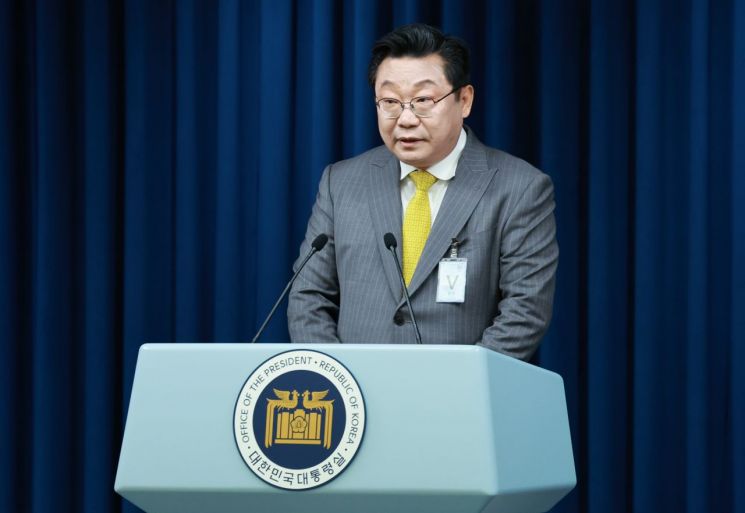 Joo Hyung-hwan, former Minister of Trade, Industry and Energy, who was appointed as the new Vice Chairman of the Low Birthrate and Aging Society Committee, is expressing his thoughts on the 12th at the Presidential Office building in Yongsan, Seoul.
 [Image source=Yonhap News]
The policy adjustment and implementation will also proceed at a national level from the perspective of actual policy users. Vice Chairman Joo pledged, "I will listen attentively to the opinions of the central and local governments, businesses, civil society, political circles, media, academia, and the public, and gather all national wisdom and capabilities to devote my utmost effort to solving the low birthrate and aging problem, even if my contribution is small.
Regarding academic criticism that, unlike the committee system, a single government ministry should fully integrate and handle the low birthrate and aging issues as seen in overseas cases, Vice Chairman Joo responded, "I understand there is ongoing discussion across political parties about improving governance to solve various low fertility and aging problems. Therefore, we will listen to diverse alternatives to find the most suitable approach for our circumstances and strive to identify the optimal solution together.
When asked why the terms low fertility and low birthrate are used interchangeably, he replied, "Low fertility has somewhat gender-related implications, while low birthrate is viewed from the perspective of babies. I have not yet discussed this issue with the committee members, but we plan to deliberate together to find the most appropriate term.
He added, "What is important is not the terminology of low fertility or low birthrate but how to resolve this issue. Especially since the late 2010s, the birthrate has dropped significantly. Currently, the low birthrate problem is seriously felt mainly in schools and kindergartens, but when those born during this period enter the economically active population, the impact will be enormous. Around that time, along with accelerated super-aging, while terminology matters, how we solve this problem is more important."
Regarding the reason a bureaucrat was appointed as vice chairman, breaking the convention of politicians or professors holding the position, he said, "Many measures have been proposed so far, but some results have fallen short of expectations. I think bureaucrats are now expected to review how these measures were implemented and find ways to efficiently solve this problem at the national level."
He particularly noted, "At the pan-government level, each ministry, local government, and various organizations should set policies they need to implement and define performance indicators for those policies. They should regularly check whether these are being implemented and achieved, supplement what needs improvement, and enhance what requires betterment to produce results. This is something bureaucrats do well." He added, "In that context, I want to see if there is a part where I can contribute. Since this is a flexible organization, and as our director mentioned earlier, there are also standing committee members and others with whom I will consult and work well together."
© The Asia Business Daily(www.asiae.co.kr). All rights reserved.
![Clutching a Stolen Dior Bag, Saying "I Hate Being Poor but Real"... The Grotesque Con of a "Human Knockoff" [Slate]](https://cwcontent.asiae.co.kr/asiaresize/183/2026021902243444107_1771435474.jpg)
















