Daegu Bank Submits Conversion Approval Application
Consortium for 4th Internet Bank Expands to 3 Groups
Last Year's Financial Authorities' 'Banking Sector Improvement Measures' Effective
Daegu Bank has applied for approval to convert into a commercial bank. The number of consortiums preparing the fourth internet-only bank, following Kakao Bank, K Bank, and Toss Bank, has increased to three. Analysts suggest that this reflects the effect of the government's improvement measures introduced last year to promote competition in the banking sector.
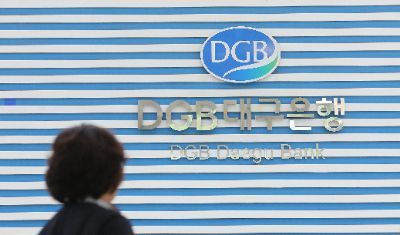
DGB Daegu Bank submitted its application for commercial bank conversion approval to financial authorities on the 7th. If Daegu Bank's main approval application is accepted, it will mark the birth of a new commercial bank for the first time in 32 years since Peace Bank in 1992. Additionally, Daegu Bank will be recorded in history as the first regional bank in Korea to convert into a commercial bank.
In the business plan submitted to the financial authorities, Daegu Bank presented a vision of a "New Hybrid Bank growing together with customers nationwide." The bank aims to transform into one that combines the advantages of internet banks, such as digital accessibility and cost efficiency, with the strengths of regional banks, including expertise in financing small and medium-sized enterprises.
The bank also plans to change its name from the regionally distinctive "DGB Daegu Bank" to "iM Bank." However, in the Daegu and Gyeongbuk regions, the Daegu Bank brand will be co-branded to preserve the 57-year history of Daegu Bank, according to the bank.
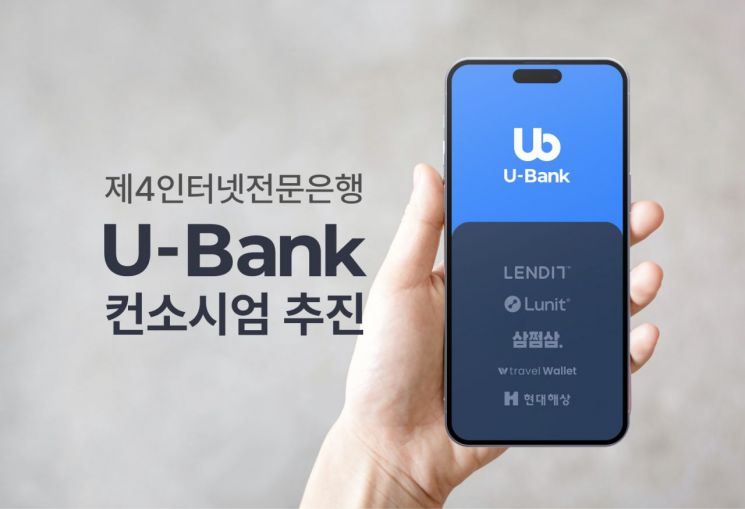
Meanwhile, the number of consortiums preparing the fourth internet-only bank has increased to three. Following Soso Bank and KCD Bank, which are preparing an internet bank aimed at small business owners, the U-Bank consortium has also started preparing for internet bank approval.
The U-Bank consortium was formed with the goal of creating an internet bank that embraces financially marginalized groups (the elderly, small business owners, SMEs, and foreigners) who have had difficulty accessing traditional financial institutions such as existing commercial banks. The consortium includes Rendit, an online investment-linked finance company; Jarvis & Villains (Samjjeomsam), a fintech platform; Travel Wallet, a foreign exchange specialized fintech company; Lunit, a medical AI (artificial intelligence) company; and Hyundai Marine & Fire Insurance.
This movement was triggered by the government's announcement last year of the "Banking Sector Management, Business Practices, and System Improvement Plan." The Financial Services Commission and the Financial Supervisory Service stated, "Despite rising loan interest rates increasing economic difficulties for the public, the oligopolistic structure of banks has allowed the five major commercial banks to achieve record-high profits," and pledged to promote competition in the banking sector to provide better services at lower interest rates.
Accordingly, to encourage the entry of "new players" into the banking sector, the government actively allowed existing financial companies to convert into banks. It was judged that if entities with banking experience, such as Daegu Bank, expand their business areas or scale, competition could be stimulated in a short period. Furthermore, operators with sufficient soundness and business plans can apply for new approvals at any time. Companies providing specialized banking services are subject to more relaxed criteria than those for general bank approvals.
In the case of Daegu Bank, it already meets the capital and other requirements for conversion to a commercial bank. According to the Banking Act, the capital required to operate a commercial bank is at least 100 billion KRW, and Daegu Bank had capital of 700.6 billion KRW as of the third quarter of last year. There are concerns that last year's illegal securities account opening incident could be an obstacle. However, Daegu Bank expressed confidence, stating, "We plan to establish the country's highest level of internal control and governance systems by the first half of this year, including early adoption of a responsibility structure."
For consortiums preparing internet banks, maintaining asset soundness is crucial. In 2019, Soso Smart Bank failed to pass the preliminary approval. The financial authorities judged it as unqualified, stating, "The capital procurement plan and business plan were insufficient, indicating that the bank was not adequately prepared to manage an internet bank stably."
© The Asia Business Daily(www.asiae.co.kr). All rights reserved.
![Clutching a Stolen Dior Bag, Saying "I Hate Being Poor but Real"... The Grotesque Con of a "Human Knockoff" [Slate]](https://cwcontent.asiae.co.kr/asiaresize/183/2026021902243444107_1771435474.jpg)

















