Gukgeum Center Report on 'The Evolution and Significance of Japan's Monetary Policy Shift'
The Bank of Japan (BOJ) is expected to shift its monetary policy as early as April, and thereafter, the focus of Japan's economic policy is anticipated to move from fiscal policy to monetary policy.
The Center for International Finance recently stated this in its report titled "The Evolution and Significance of Japan's Monetary Policy Shift." It analyzes that Japan could transition from its long-standing low-interest monetary policy as early as April, supported by a virtuous economic cycle driven by wage and consumption growth.
Previously, Japan's economy experienced prolonged deflation following the collapse of the bubble economy in the early 1990s. To escape deflation, traditional monetary policies such as policy rate cuts and zero interest rate policies were implemented but proved insufficient. In the 2000s, unconventional monetary policy tools like negative interest rate policy and yield curve control were also employed in response.
However, with the end of the COVID-19 pandemic, Japan's economy is showing signs of moving away from a prolonged period of low growth, low inflation, and low interest rates. As the economic situation changes, there are emerging signs of gradual shifts in policy as well.
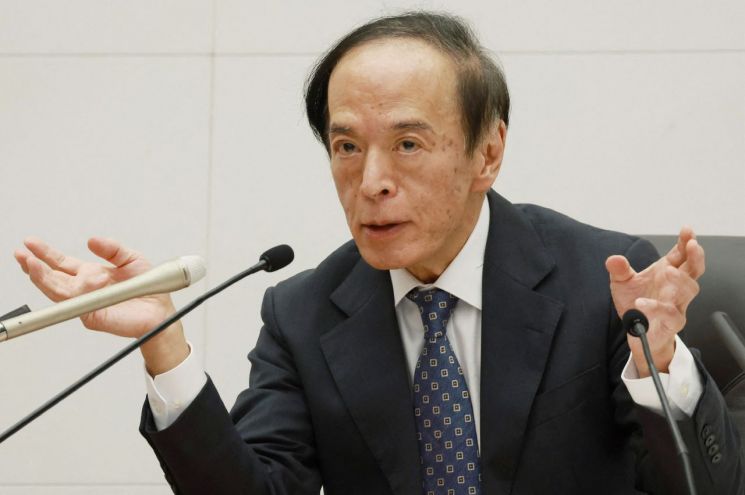
Recently, BOJ Governor Kazuo Ueda expressed a positive view on rising prices, hinting at the possibility of transitioning from the current accommodative monetary policy. At a press conference following the BOJ monetary policy meeting on January 23, he stated, "The certainty of achieving the 2% price stability target is gradually increasing," and added, "Once the outlook for achieving the inflation target becomes clear, we will reconsider the continuation of the large-scale monetary easing measures currently in place, including negative interest rates."
Son Young-hwan, a senior researcher at the Center for International Finance and the author of the report, explained, "If the Bank of Japan shifts its monetary policy this year, it will mark the first step toward normalizing monetary policy following the end of Japan's economic emergency, indicating a shift in the focus of economic policy from fiscal policy to monetary policy."
The shift in policy focus from fiscal to monetary is a response to the increasing burden of government bond interest payments. Until now, the Japanese government has supported the economy by creating demand through fiscal expansion policies funded by increased government bond issuance at low interest rates. However, as monetary policy normalizes and interest rates rise, fiscal policy will be constrained by the growing burden of government bond interest payments, and households and businesses will become more sensitive to interest rates, increasing the impact of monetary policy on the economy.
Son explained, "Monetary policy has so far played a supplementary role by supporting fiscal resources through government bond purchases, but going forward, as households and businesses become more sensitive to interest rates, the economic influence of monetary policy is expected to grow further."
© The Asia Business Daily(www.asiae.co.kr). All rights reserved.
![Clutching a Stolen Dior Bag, Saying "I Hate Being Poor but Real"... The Grotesque Con of a "Human Knockoff" [Slate]](https://cwcontent.asiae.co.kr/asiaresize/183/2026021902243444107_1771435474.jpg)















