11 Members of Minjoo Party, 2 of People Power Party Announce Non-Candidacy
Busy Preparing Bill Proposals, Firefighter Exams, and More
The political sphere is bustling with controversy over candidate nominations ahead of the April general election. Newcomers are striving to win a seat, while established politicians are desperately trying to hold onto the badges they wear on their chests. However, some remain detached. These are the incumbent lawmakers who have declared they will not run. Although their reasons vary, they share one common point: "Our politics must change." We explored why they declared their non-candidacy and what kind of life they envision afterward.
According to political sources on the 9th, two incumbent lawmakers from the People Power Party and eleven from the Democratic Party have declared they will not run in the general election. Among the 13 who announced their non-candidacy, seven are first-term lawmakers (Kim Woong from the People Power Party; Kang Min-jung, Kim Hong-gul, Oh Young-hwan, Lee Tan-hee, Choi Jong-yoon, and Hong Sung-guk from the Democratic Party), making up more than half, which draws attention. Additionally, Park Byeong-seok (six terms), Kim Jin-pyo (Speaker of the National Assembly, five terms), Woo Sang-ho (four terms), Kim Min-ki and Jang Je-won (three terms), and Lim Jong-sung (two terms) also declared they will not run.
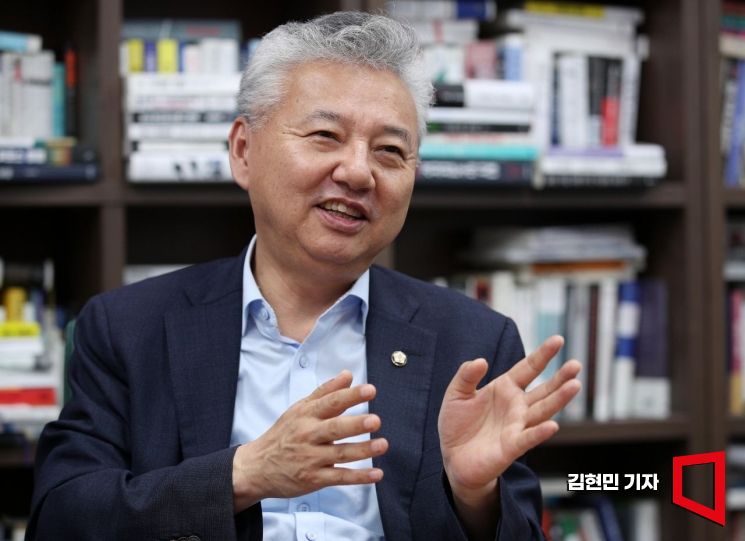
Are those who declared non-candidacy spending their time leisurely? Hong Sung-guk, who declared non-candidacy last December, lamenting the limitations of the backward political structure, said, "I am still busy visiting my constituency these days," adding, "I am just not running for the National Assembly, but I must work hard for the party's victory." Hong said, "Right now, I am focusing on wrapping things up well. Those who declared non-candidacy are all probably very busy." He added, "Until the election, I will play a role in local elections and central party pledges, and after the election, I have tasks to do in the 21st National Assembly, so I think I will be busy until mid-May. Only after that will I think about my future."
Kim Woong, who said, "People Power Party is not a democratic party, so I cannot ask the people for votes," is spending time meeting supporters after declaring non-candidacy. He plans to focus on legislative activities until the end of his term. He said, "Even if it doesn't succeed in the 21st National Assembly, I hope it can be reflected in the 22nd National Assembly or the next presidential election as pledges, so I am preparing to propose two bills." "One bill is about granting legal personality to artificial intelligence and establishing an AI exchange. The other concerns the chaotic adjustment of investigative authority, so I am considering enacting a Korean-style FBI law," he explained. Regarding the Korean-style FBI law, he said, "It involves separating the judicial police of the police and the special investigation division of the prosecution to create an FBI like in the U.S., which would be responsible for investigations. The police would be responsible for public safety and crime prevention, and the prosecution would control the investigations conducted by the Korean-style FBI instead of direct investigations." About his plans after his term, he said, "I have no special plans, just thinking about opening a law office."
Other incumbent lawmakers are busy taking care of their constituencies ahead of the Lunar New Year or greeting those who have helped them so far.
The 13 Who Declared Non-Candidacy, Their Reasons?
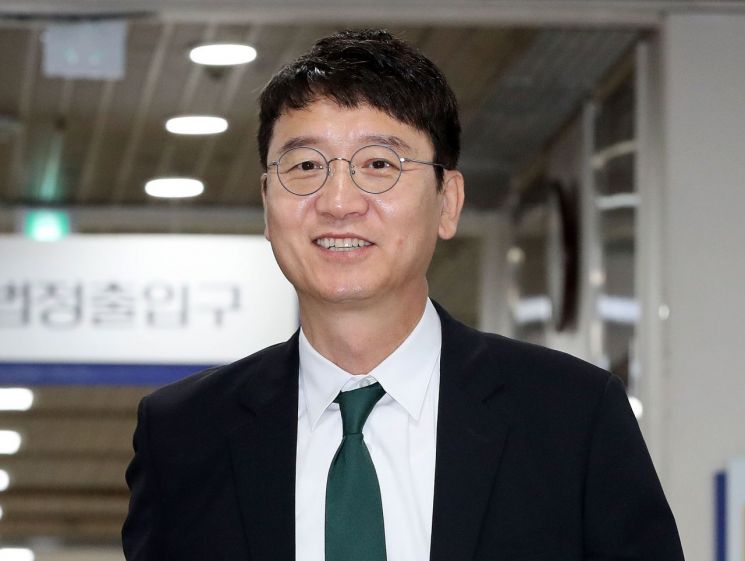
The 13 first-term lawmakers each stated their own reasons. Park Byeong-seok and Kim Jin-pyo, who served as Speakers of the National Assembly in the first half of the 21st National Assembly, declared their retirement from frontline politics. Park announced his retirement last year, saying, "Politics of dialogue and compromise is only possible through constitutional amendments that decentralize the powers of the imperial presidential system," and added, "To create cooperation, the system should be designed so that no single party holds a majority of the seats." Kim Jin-pyo, who advocated for electoral reform to break the politics of hostility, ironically experienced the solid wall of the two major parties during the election law revision process. He expressed his determination to tackle remaining tasks such as low birthrate issues and strengthening the National Assembly's budget review authority during his remaining term.
Woo Sang-ho declared in 2020 that he would run for Seoul mayor in the by-election and would not run in the 22nd general election. His declaration was early among the 21st National Assembly members and the 86 generation. However, he is only quitting as a lawmaker, not politics itself.
Jang Je-won is the first victim of the 'mainstream sacrifice theory' that swept through the People Power Party. After the defeat in the Seoul Gangseo District Office by-election, the In Yo-han Innovation Committee demanded sacrifices and dedication from the leadership, senior members, and pro-Yoon (pro-Yoon Seok-yeol) lawmakers. Jang, who was asked to make a decision, said, "What could be more urgent than the success of the Yoon Seok-yeol government?" and declared his non-candidacy, asking, "Though insufficient, please step on me and achieve victory in the general election to make the Yoon Seok-yeol government successful."
Kim Min-ki's non-candidacy was a 'surprise.' He said, "As a three-term lawmaker, I have long thought I must fulfill my responsibilities and make sacrifices," and "I have believed that someone must take the lead in changing the political climate."
Lim Jong-sung, re-elected in Gyeonggi Gwangju-eul, declared non-candidacy on Facebook on the 19th of last month, sharing his feelings about allegations of violating the Public Official Election Act. He said, "There are unfair parts in the various controversies," but added, "I think stepping back now is the right thing to do." On the 8th, the Supreme Court confirmed a suspended prison sentence for him on charges of violating the Public Official Election Act, resulting in the loss of his seat.
Kang Min-jung of the Democratic Party submitted a non-candidacy confirmation letter to the party and the next day stated on social media, "The 21st National Assembly cannot escape responsibility for politically and economically regressing South Korea as it is today," and "I think there should be at least one person who accepts that responsibility as their own," explaining her reason for not running.
Oh Young-hwan made headlines by declaring he would return to his previous job as a firefighter. He said, "I want to return to where I was devoted to the people, where I should be, my hope and mission, as a firefighter by the people's side." He was deeply saddened whenever news of firefighters losing their lives at fire scenes was reported. He plans to take the exam again to return as a firefighter. Therefore, he intends to become an examinee after his term as a lawmaker ends.
Lee Tan-hee gave up his seat, urging to protect the mixed-member proportional representation system, which facilitates the emergence of small parties, as the 22nd general election's proportional representation selection method was reverting to the parallel system. In a statement, he said, "I will give up everything I have and everything I might have," appealing, "Please just keep the election law." Thanks to his earnestness, the Democratic Party, which seemed to be leaning toward the parallel system, ultimately adopted the mixed-member proportional representation system as party policy.
Choi Jong-yoon expressed his disappointment with politics and said he wants to pass the role to someone who can bring about social consensus. He said, "Politics is producing hatred under the pretext of partisanship," and "Expressions like 'killing politics' and 'politics of revenge' are not exaggerated metaphors. In politics, words have long ceased to be tools for dialogue and compromise and have become weapons to attack and slander opponents." He added, "I hope someone who can lead rational dialogue, patience for the people's livelihood before partisan struggles, and social consensus through compromise will fill my vacant seat."
Kim Hong-gul, the third son of former President Kim Dae-jung, declared non-candidacy for the 22nd general election, criticizing the Democratic Party's candidate verification process after being classified as a 'pending' candidate by the party's candidate verification committee.
© The Asia Business Daily(www.asiae.co.kr). All rights reserved.
![Clutching a Stolen Dior Bag, Saying "I Hate Being Poor but Real"... The Grotesque Con of a "Human Knockoff" [Slate]](https://cwcontent.asiae.co.kr/asiaresize/183/2026021902243444107_1771435474.jpg)
















