Gas Stations, Hundreds Closing Annually Since 2010
Only 3 Out of 10 Public Baths Still Operating
In the past, operating a gas station or a public bathhouse meant being called a 'local influencer,' but that is now a thing of the past. Every year, hundreds of businesses close due to declining profitability, and high demolition costs make it difficult to shut down.
According to the local administration permit data from the Ministry of the Interior and Safety on the 3rd, out of 17,447 establishments registered as bathhouse businesses in Korea, only 5,861 are currently 'operating,' revealing that only 3 out of 10 are in operation.
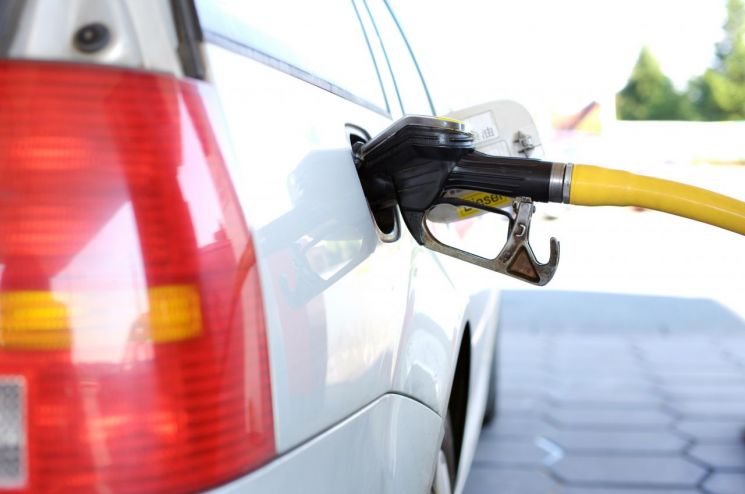 The gas station industry states that the average operating profit margin of domestic gas stations is only in the 1% range, estimating that the appropriate number of gas stations in the country is 8,000.
 [Photo by Pixabay]
About 1,000 bathhouse businesses, including jjimjilbangs, have closed from early 2020 when COVID-19 spread until last year. According to the Korea Bathhouse Association, many bathhouses remain 'long-term closed' because they cannot afford the cost of changing the usage designation and thus cannot demolish the facilities even after deciding to close.
To demolish a bathhouse, everything from the interior design to the machine room must be removed, which alone costs tens of millions of won. For bathhouses with chimneys, the cost rises to at least hundreds of millions of won.
An owner operating a bathhouse in Seoul said, "Unless the business is inherited as is, everything must be removed and discarded, which costs a lot. Other businesses can just pack up and leave, but bathhouses are different."
The situation is similar for gas stations. The number of gas stations in Korea was about 13,000 in 2010 but has decreased every year to about 10,900 as of the end of last year. The number has dropped by around 100 to 200 annually.
The closure costs for gas stations and bathhouses are about five times higher than those for other businesses. According to the Small Enterprise and Market Service, the average cost of closure in 2022 was about 23.23 million won.
On the other hand, if the land of a gas station is converted to general use, the land purification cost alone is about 100 to 200 million won. A purification company official explained, "For gas stations, environmental issues overlap, making the process from simple document preparation to land purification complicated."
The gas station industry points out that the average operating profit margin of domestic gas stations is only in the 1% range and cites the indiscriminate increase in gas stations as the cause of deteriorating profitability. The appropriate number of gas stations in Korea is estimated to be 8,000.
Due to cost issues delaying closures, gas stations and bathhouses are sometimes left abandoned for years, becoming local eyesores. A real estate agent specializing in large land sales and leases said, "In downtown Seoul, it is possible to convert to other businesses through usage changes, but in other areas, while listings increase, transactions do not happen easily."
© The Asia Business Daily(www.asiae.co.kr). All rights reserved.
![Clutching a Stolen Dior Bag, Saying "I Hate Being Poor but Real"... The Grotesque Con of a "Human Knockoff" [Slate]](https://cwcontent.asiae.co.kr/asiaresize/183/2026021902243444107_1771435474.jpg)















