Frequent Conflicts Among Merchants in the Same Shopping Area and Industry
"Business Type Restriction Clause Should Be Included in Lease Contracts"
On the morning of the 1st, in a commercial building in Jung-gu, Seoul, Min Kyung-mi (60), who has been running a salad shop on the second floor for three years, vented her frustration while looking at the store across from hers. Directly opposite Min’s roughly 6-pyeong (about 21 square meters) shop was a newly opened large salad restaurant bustling with customers.
The large salad restaurant had recently replaced what used to be a franchise Vietnamese pho specialty shop. Since they operated facing each other in a small building, Min and her husband had been neighbors and maintained contact for over three years. However, last month, when the other store suddenly changed its business to a salad shop, their relationship deteriorated rapidly.
Min said, "Opening the same type of business side by side in such a small building is basically telling us to go out of business, yet that store blatantly started up. How can neighbors who clearly understand each other’s situations do this?" she lamented.
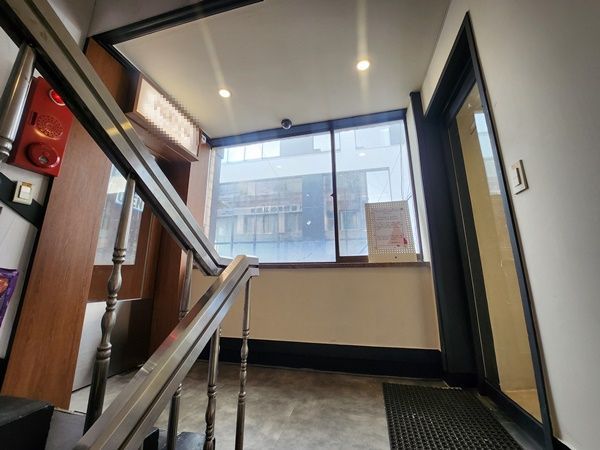 Two stores of the same industry are operating side by side in a commercial building in Jung-gu, Seoul.
 [Photo by Lee Seohee]
Similar conflicts are occurring among merchants in a three-story building in Seodaemun-gu, Seoul. A franchise beer pub had been operating on the second floor for four years, but last month, another franchise beer pub with a similar style opened directly below it, sparking disputes.
Han Mo (37), who newly opened the beer pub on the first floor, said, "At the time of signing the contract, I thoroughly checked with the landlord and legal experts that there was no legal issue at all before opening. Nevertheless, the upstairs merchant has been deliberately parking vehicles right in front of my store to interfere with business just because we are in the same industry."
Cases of merchants clashing while operating under the same roof continue unabated. When additional stores of the same industry open in the same commercial building, legal disputes often involve not only the competing business owners but also the landlords.
Last month, a controversy over business ethics arose when a famous YouTuber announced plans to open another tanghulu (candied fruit) shop right next to an existing one. Facing public criticism, the YouTuber eventually declared the opening would be "canceled," resolving the situation. However, since then, posts about similar experiences have been flooding self-employed communities.
Experts advise that to prevent damages caused by opening the same type of business, it is necessary to include special clauses in lease contracts that restrict the tenant’s business type.
According to current law, an individual’s choice of business is protected under the constitutional rights to freedom of occupation, freedom to conduct business, and property rights. Therefore, this cannot be legally challenged in itself, experts explain.
However, if the lease contract includes provisions restricting the tenant’s business type, a business owner who suffers damage from the opening of a competing store can take legal action against the landlord and the competing business owner.
In fact, since similar issues frequently arise in the same commercial buildings, it is common in the sales market to charge higher prices to tenants while guaranteeing exclusive operation of certain business types. Such business restrictions are sometimes included in the commercial building management regulations established after sales.
Park Sang-heum, a specialist lawyer at the law firm Wooridle, said, "Since commercial districts and location are crucial competitive factors in business, opening the same type of business within the same building is a sensitive and important issue. If there was an agreement on business restrictions beforehand but damage still occurred due to the same industry opening, the affected business owner can file a lawsuit for damages against the competing business owner or the sales company."
He added, "Even before litigation, if damages continue due to a party violating the agreement, measures such as injunctions to prohibit business operations can be taken."
© The Asia Business Daily(www.asiae.co.kr). All rights reserved.
![Clutching a Stolen Dior Bag, Saying "I Hate Being Poor but Real"... The Grotesque Con of a "Human Knockoff" [Slate]](https://cwcontent.asiae.co.kr/asiaresize/183/2026021902243444107_1771435474.jpg)















