January PMI Index Improved but Fell Short of Forecast
Deflation Concerns, Some Call for "Strong Economic Stimulus Measures"
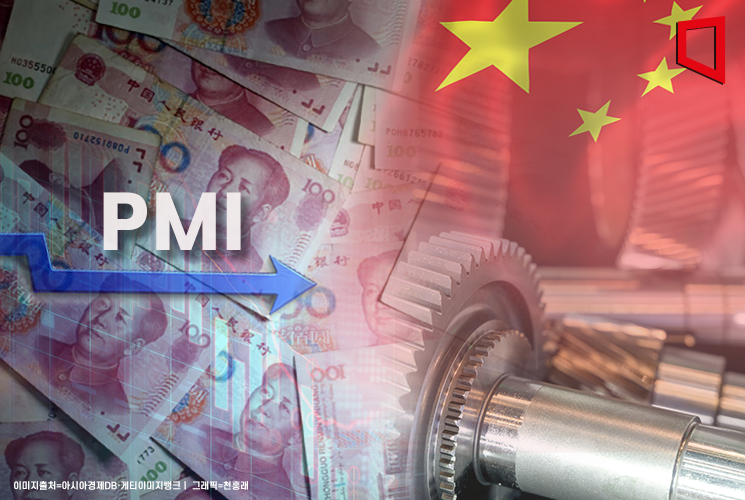
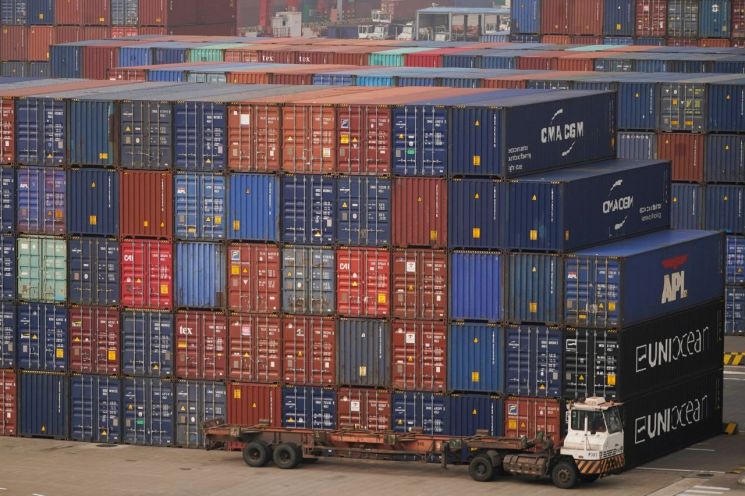
China's manufacturing sector has not escaped contraction for four consecutive months. Amid rising concerns of deflation (price declines during an economic downturn), calls for more proactive economic stimulus measures are growing.
According to the National Bureau of Statistics of China on the 31st, China's manufacturing Purchasing Managers' Index (PMI) for January was recorded at 49.2. This is a 0.2-point improvement from the previous month’s 49.0 but falls short of the forecasted 49.3.
The PMI, which surveys purchasing managers in companies about the economy, is an indicator showing trends in the relevant sector. A reading above 50 indicates expansion, while below 50 signals contraction. China's official manufacturing PMI failed to surpass the benchmark since March last year, briefly showing expansion at 50.2 in September after six months. However, it fell back to 49.5 in October, then 49.4 in November, and 49.0 in December, showing a sluggish trend.
By company size, the PMI for large enterprises rose 0.4 points to 50.4 compared to the previous month, and the PMI for medium-sized enterprises increased by 0.2 points to 48.9. In contrast, the PMI for small and medium-sized enterprises dropped 0.1 points to 47.2.
Among the five sub-indices that make up the manufacturing PMI, the production index rose 1.1 points to 51.3, the on-time delivery index increased 0.5 points to 50.8, and the new orders index went up 0.3 points to 49.0. Conversely, the raw materials inventory index fell 0.1 points to 47.6, and the employment index declined 0.3 points to 47.6.
The non-manufacturing PMI released on the same day was 50.7, exceeding both the previous month’s 50.4 and the forecast of 50.6. This index, which measures the service sector, has not fallen below the benchmark since December 2022 (41.6). By industry, the construction activity index dropped 3.0 points to 53.9, while the service activity index rose 0.8 points to 50.1.
China’s economic recovery is delayed, falling short of expectations. The Consumer Price Index (CPI) for December last year, released on the 12th, fell 0.3% year-on-year, marking three consecutive months of negative growth since October (-0.2%), raising deflation concerns. The Producer Price Index (PPI) released the same day also declined 2.7% year-on-year, marking 15 consecutive months of negative growth. Foreign direct investment also decreased by 8% year-on-year last year due to supply chain conflicts with the United States and other factors.
The Hong Kong South China Morning Post (SCMP) pointed out that "amid weak demand, manufacturers’ sentiment has contracted" and that "the real estate sector, a pillar of the economy and driver of many manufacturing industries, remains sluggish." It added, "China is expected to set a growth target in the 5% range this year, but more measures are needed to stimulate the economy."
However, the composite PMI for January rose 0.6 points from the previous month to 50.9, indicating an expansion phase. Local media such as China’s Pengpai News praised this, stating, "Continuing to stay above the benchmark indicates that the overall production and business activities of our country’s companies are continuously expanding."
Meanwhile, the service sector PMI compiled by China’s economic media Caixin will be released on the following day, February 1. The December figure was 50.8, exceeding the forecast of 50.4 and marking two consecutive months of expansion.
© The Asia Business Daily(www.asiae.co.kr). All rights reserved.
![Clutching a Stolen Dior Bag, Saying "I Hate Being Poor but Real"... The Grotesque Con of a "Human Knockoff" [Slate]](https://cwcontent.asiae.co.kr/asiaresize/183/2026021902243444107_1771435474.jpg)

















