As the lease ratio in the U.S. electric vehicle market rises to around 60%, there are expectations that this will be a positive factor for Hyundai Motor Company and Kia's exports to the U.S. Recently, Hyundai and Kia have been increasing sales of commercial vehicles eligible for subsidies by being excluded from the Inflation Reduction Act (IRA), thereby expanding their market share in the U.S. electric vehicle market.
According to the Wall Street Journal (WSJ) and local specialized media on the 29th, the lease (long-term rental) ratio in the U.S. electric vehicle market last month accounted for 59%, the highest in the past three years. This means that 6 out of 10 electric vehicles sold in the U.S. last month were leased. Leasing is a method where consumers do not purchase the car directly but pay a usage fee for a certain period to rent it.
With the implementation of the IRA last year, electric vehicles whose final assembly location is not in North America were excluded from the $7,500 (about 10 million KRW) electric vehicle purchase subsidy. However, if purchased as commercial electric vehicles such as leases or fleets (sales to corporations, rental car companies, or used car dealers), subsidies can be received even if the electric vehicle was not finally produced in North America.
Hyundai and Kia have actively increased the proportion of commercial electric vehicle sales until last year to actively respond to the U.S. electric vehicle market. Hyundai and Kia's market share in the U.S. electric vehicle market last year was 8.4%, ranking second after Tesla, which holds 55%. They secured the second place ahead of strong competitors such as General Motors (GM), Ford, and Volkswagen Group.
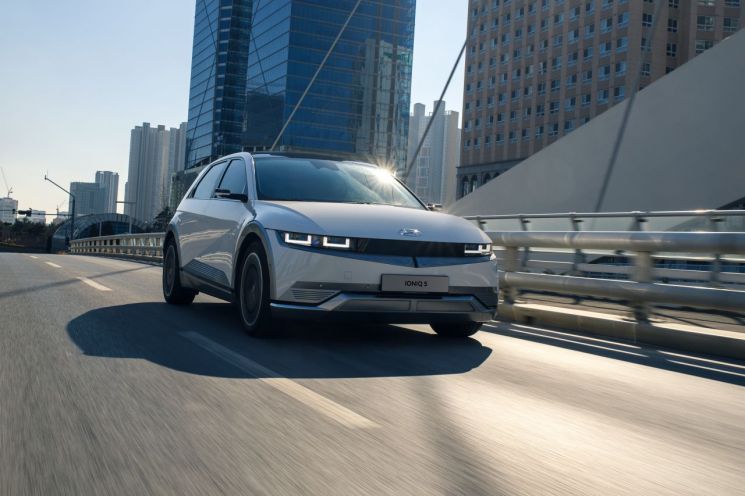
As of the end of last year, the lease ratio of electric vehicles sold by Hyundai and Kia in the U.S. rose to 40%. This is the result of aggressively expanding sales of commercial electric vehicles eligible for subsidies. Last year, Hyundai sold 33,918 units of the Ioniq 5, its main electric vehicle model, which is a 47% increase compared to the previous year. The electric sedan Ioniq 6 also sold nearly 13,000 units.
On the other hand, Tesla, which holds the number one market share in the U.S. electric vehicle market, had a relatively small lease ratio. According to WSJ, Tesla's global lease ratio in the fourth quarter of last year was only 2%. Additionally, Tesla's recent aggressive electric vehicle price cuts have reduced profitability from leasing or rental car businesses. Lowering new car prices makes it difficult to maintain used car prices.
Typically, leasing and rental car companies seek to profit by reselling used cars after the contract period ends or after a certain period of use. Therefore, maintaining used car prices is of utmost importance. In the U.S., consumers usually sign contracts with leasing companies for a three-year term.
© The Asia Business Daily(www.asiae.co.kr). All rights reserved.
![Clutching a Stolen Dior Bag, Saying "I Hate Being Poor but Real"... The Grotesque Con of a "Human Knockoff" [Slate]](https://cwcontent.asiae.co.kr/asiaresize/183/2026021902243444107_1771435474.jpg)















