Possibility of Financial Statement Distortion Remains
Company and External Auditors Must Exercise Special Caution
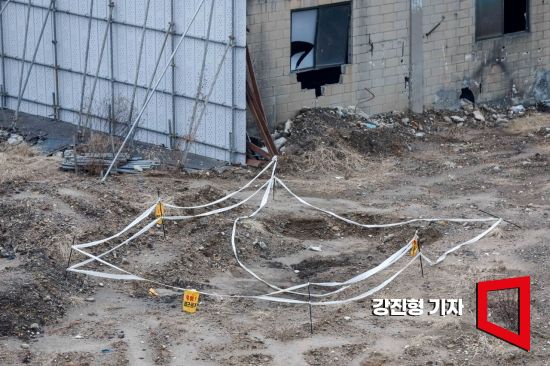
#. Company A was found not to have reflected the rise in raw material prices in the estimated construction cost according to the financial statement audit results. Although Company A continuously faced cost-increasing factors such as rising raw material prices and construction delays, it deliberately inflated sales by calculating the total estimated construction cost lower without increasing it.
#. Despite the project’s very low sales rate and declining sales prices, construction company B did not disclose the project financing (PF) loan guarantee amount provided to the developer and joint contractors as contingent liabilities in the financial statement notes.
As concerns over construction company insolvencies related to real estate PF persist, the Financial Supervisory Service (FSS) has decided to conduct focused audits on the accounting treatment of companies in the construction and shipbuilding sectors. Given the nature of order-based industries that typically run projects for over a year, there is concern that if contingent liability disclosures are not made timely, investors could suffer significant losses. Since some companies in the past were found to have overstated sales or omitted contingent liability disclosures, the FSS intends to respond proactively and thoroughly.
On the 28th, the FSS announced that it has prepared "Precautions for Settlement and External Audit in Order-Based Industries such as Construction" to ensure proper accounting treatment in construction and shipbuilding sectors, and selected accounting treatment in order-based industries as a key audit focus for this year to conduct intensive inspections.
The FSS is concerned that due to recent overlapping factors such as high interest rates, high inflation, and rising raw material prices, companies in construction and shipbuilding may commit accounting violations to make it appear as if profits are being generated from certain projects.
Order-based industries like construction and shipbuilding typically undertake long-term projects lasting over a year. There have been cases of earnings manipulation by exploiting the recognition of construction revenue based on progress rates, making loss-incurring projects appear profitable through window dressing.
The progress rate is generally measured by dividing the costs incurred by the total estimated construction cost. If the total estimated construction cost is reduced, the progress rate increases. Manipulating the progress rate upward leads to recognizing revenue amounts earlier than actual. Since the total revenue and costs over the entire construction period remain the same, an "accounting cliff" phenomenon occurs where losses sharply increase as the project completion date approaches.
Even when cost-increasing factors such as rising raw material prices occur, some companies overstate sales by not increasing the total estimated construction cost or by treating all advance payments as incurred costs (material costs) regardless of whether the construction is performed. There are also cases where companies improperly add contract amount increases with low collectability or fail to deduct delay penalties requested by the client from the contract amount when the construction period is extended.
There are also cases where significant contingent liabilities or provisions are omitted, undermining the reliability of financial statements. For example, despite the project’s weekly declining sales rate and falling sales prices, the construction company did not disclose the PF loan guarantee amount provided to the developer and joint contractors as contingent liabilities in the financial statement notes.
There were also cases where amounts scheduled for debt repayment related to rehabilitation procedures met the recognition criteria for provisions but were only disclosed in notes without being recognized as provisions. The FSS urged companies and external auditors to exercise special caution, noting that estimating construction-related profits and losses or provisions and contingent liabilities involves significant judgment, which could distort financial statements.
Companies must immediately reflect increases in estimated construction costs in progress rate calculations and re-evaluate the collectability of unbilled construction work quarterly for note disclosures. They must also carefully review the necessity of contingent liability disclosures and provision recognition.
The FSS stated, "If losses are concealed in order-based industries, an 'accounting cliff' occurs at project completion, resulting in large losses and potentially causing investor harm." It added, "We will strictly manage and supervise to prevent accounting fraud exploiting estimated construction cost estimates in order-based industries such as construction and shipbuilding."
© The Asia Business Daily(www.asiae.co.kr). All rights reserved.
![Clutching a Stolen Dior Bag, Saying "I Hate Being Poor but Real"... The Grotesque Con of a "Human Knockoff" [Slate]](https://cwcontent.asiae.co.kr/asiaresize/183/2026021902243444107_1771435474.jpg)















