A British entrepreneur who worked in China for 40 years was sentenced to five years in prison by a Chinese court on charges of so-called 'espionage' for illegally selling information overseas.
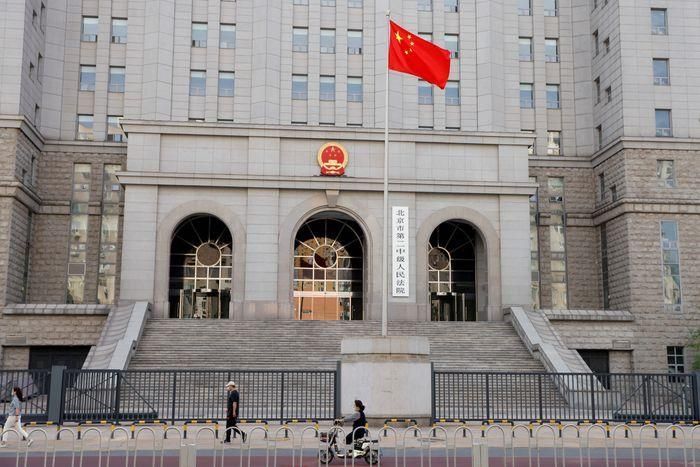
According to the Wall Street Journal (WSJ) on the 25th (local time), British businessman Ian J Stones worked in China for about 40 years, including serving as an executive at major American companies such as General Motors and Pfizer before founding his own consulting firm.
Stones, who is about 70 years old, established an investment management consulting company called 'Navisino Partners' in Beijing 15 years ago and played a key role as the China chief advisor for the New York-based business research company 'The Conference Board,' helping to develop relationships with the National Bureau of Statistics of China, the People's Bank of China, and others.
He suddenly disappeared from the public eye in 2018. This was because he was detained by Chinese authorities without any public explanation from either Chinese or British authorities.
At a regular briefing on the 25th, the Chinese Ministry of Foreign Affairs responded to WSJ's inquiry by stating, "Stones was sentenced to five years in prison on charges of illegally selling information to overseas parties."
The Ministry of Foreign Affairs further explained that he appealed, but the appeal was dismissed in September of last year.
According to reports, the Chinese Ministry of Foreign Affairs issued a separate statement saying, "The Chinese court complied with the law when adjudicating the Stones case and allowed British personnel to attend the trial," adding, "China has been striving to provide a lawful business environment for companies worldwide."
However, Stones' daughter, Laura Stones, said, "Neither the family nor the British embassy staff were allowed to view the legal documents related to this case, so we do not know the details," and added that the trial was closed to the public, with British embassy staff and family members allowed to attend only once.
She also stated, "Although my father did not confess to the charges, he expressed his intention to respect Chinese law and serve the remaining sentence."
The WSJ pointed out that, as seen in Stones' case, concerns are growing about the personal safety of foreign businesspeople operating in China.
Since China strengthened its 'Counter-Espionage Law' in July last year, there have been increasing concerns among foreign companies that even normal business activities could be punished under this law.
China's counterintelligence agency, the Ministry of State Security, announced on the 8th of this month via its official WeChat (微信, the Chinese version of KakaoTalk) account that it had uncovered a case where the British Secret Intelligence Service (MI6) used a third-country individual to conduct espionage activities against China, and disclosed the arrest of those involved. The person arrested at that time was also a consulting company representative operating in China.
Chinese authorities also criminally detained an employee of a major Japanese pharmaceutical company in September last year after arresting him on espionage charges in March of the same year.
Experts point out that the ambiguity of the Chinese legal system makes it difficult for foreign governments and companies to determine what is illegal in China.
Jerome Cohen, Honorary Director of the U.S.-Asia Law Institute at New York University, told WSJ, "The opacity of the Chinese legal system is one of the reasons more people are concerned about safety when traveling to China," expressing concern that "among them, there is fear of being arrested or detained with no hope."
© The Asia Business Daily(www.asiae.co.kr). All rights reserved.
![Clutching a Stolen Dior Bag, Saying "I Hate Being Poor but Real"... The Grotesque Con of a "Human Knockoff" [Slate]](https://cwcontent.asiae.co.kr/asiaresize/183/2026021902243444107_1771435474.jpg)















