Modernization Continues in South and North Regions
East and West Regions Decide Processing Measures Independently
Over 100 Billion Won Benefits for Location Areas
Yoo Jeong-bok: "Cannot Proceed with Existing System"
Incheon City is shifting the ongoing expansion project of the Resource Circulation Center (incineration plant) to be led by local basic government units ahead of the 2026 ban on direct landfill disposal in the metropolitan area.
On the 25th, the city announced that it will completely switch from the previous approach, where the city government led the expansion of incinerators in four regions of Incheon during the 7th term of the civilian administration, to a method where the county heads and district mayors, who are the responsible parties under the Waste Management Act, will take the lead.
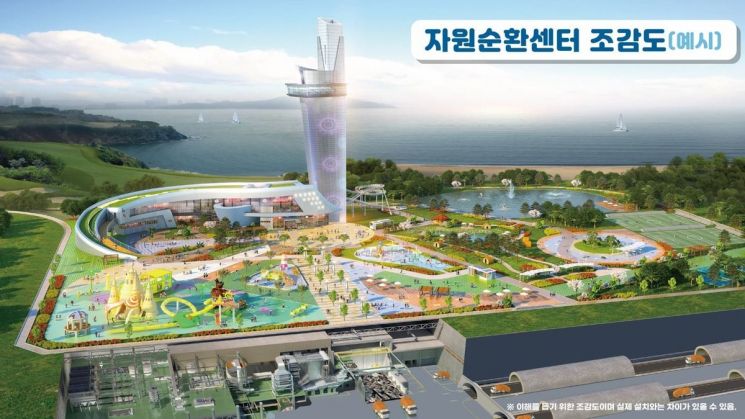
Accordingly, the southern region (Michuhol, Yeonsu, Namdong), where modernization procedures are currently underway, and the northern region (Ganghwa, Seo), which operates its own site selection committee, will continue their projects as before.
Meanwhile, the eastern region (Bupyeong, Gyeyang), where metropolitan integration with Bucheon City failed, and the western region (Jung, Dong, Ongjin), which has not resumed its site selection committee since July last year, will be able to independently decide on measures for household waste treatment.
The city holds the position that the incinerator expansion project, which has faced difficulties due to resident opposition and passive attitudes from counties and districts, can no longer progress under the existing city-led system.
The city plans to step back to a role of coordinating and supporting the project by operating a 'Public Deliberation Support Group' to enhance residents' understanding and participation in the incinerator expansion. To this end, the city’s Environment Bureau Chief will serve as chairman, and a 'Resource Circulation Policy Support Working Council' composed of 10 counties and districts participating voluntarily will be formed to discuss and coordinate waste treatment measures by region.
Above all, Incheon City intends to expand incentives that residents in areas where incinerators will be built can tangibly feel. It is expected that benefits totaling approximately 100 billion KRW, including the construction of resident convenience facilities, support for residents’ long-standing projects, waste import fees and surcharges, and import cooperation fees, will be returned to the residents of the host areas.
On the other hand, areas without incinerators are expected to face increased financial burdens, such as higher prices for volume-based waste bags, due to outsourced waste treatment. In particular, if agreements on incinerator use with other basic local governments are not smoothly reached, a waste disposal crisis may even be feared.
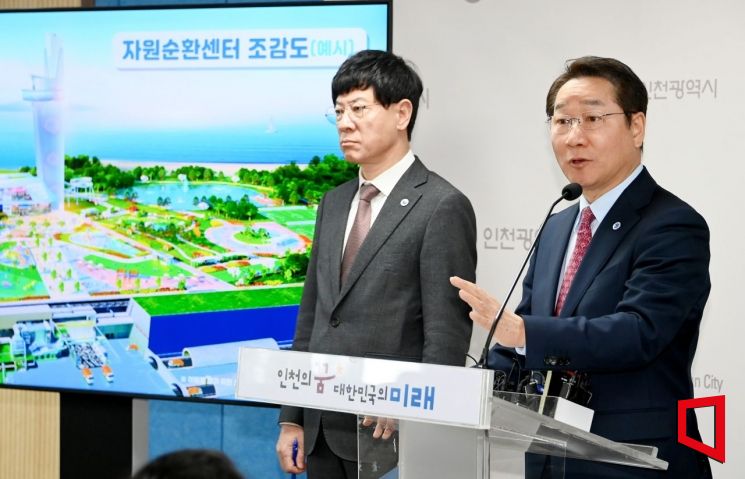 Incheon Mayor Yoo Jeong-bok is giving a briefing on the 25th about switching the expansion project of the Resource Circulation Center to be led by frontline local governments.
 [Photo by Incheon City]
Incheon Mayor Yoo Jeong-bok said, "With the ban on direct landfill disposal just over two years away, expanding the Resource Circulation Center is an unavoidable task," adding, "The installation of the Resource Circulation Center is an important issue that goes beyond simple waste disposal and is linked to regional development, so responsible cooperation from county heads and district mayors and active participation from citizens are necessary."
Meanwhile, when the direct landfill ban is enforced in 2026, waste will no longer be buried directly in the ground, and only incineration ash will be landfilled. Currently, Incheon incinerates an average of 1,100 tons of waste daily at two metropolitan incinerators?Songdo Incineration Plant and Cheongna Incineration Plant?and six private incinerators, but about 300 tons are still processed by direct landfill at the metropolitan landfill site.
© The Asia Business Daily(www.asiae.co.kr). All rights reserved.