Daily Average of 1.62 Million Cyber Threats in Public Sector
North Korea Accounts for 80%... Infrastructure Strengthened Ahead of General Election
Generative AI Also Used in Hacking Attempts... "Closely Monitoring"
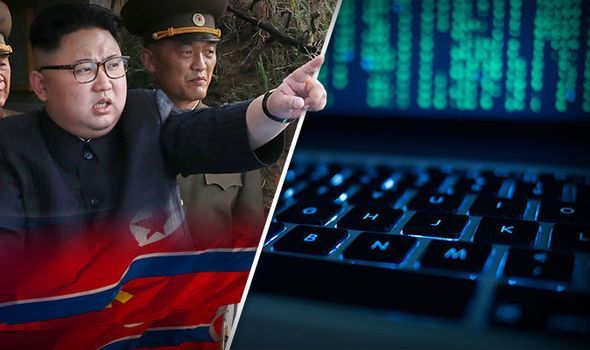
Ahead of the general elections scheduled for April, it has been revealed that North Korea is strengthening its internal hacking infrastructure. Our intelligence authorities have judged that there is a high possibility of North Korea hacking election systems or causing national division through fake news, and have begun full-scale countermeasures.
On the 24th, the National Intelligence Service (NIS) held a briefing at the Seongnam National Cybersecurity Cooperation Center, stating, "There are recent signs of North Korea strengthening its hacking infrastructure internally," and added, "They may attempt to paralyze critical infrastructure such as finance and energy, or public administrative services, to create social chaos."
Baek Jong-wook, the 3rd Deputy Director of the NIS, said, "Recently, North Korea has been deleting concepts such as nation, ethnic kin, and unification, and has been openly threatening by talking about downsizing or abolishing its inter-Korean organizations," adding, "There is a saying that 'a barking dog does not bite,' but in the non-face-to-face cyber realm, we must not forget that attacks have always followed when inter-Korean relations have been strained and criticism toward the South has intensified, so we must remain vigilant."
North Korea Likely to Intensify Attacks Aimed at National Division
In fact, North Korea has carried out threatening cyber provocations during past periods of strained inter-Korean relations or ahead of major elections. North Korean Supreme Leader Kim Jong-un has designated South Korea as a 'hostile state' this year, and with the general elections scheduled for April, concerns over cyberattacks are greater than ever.
The NIS emphasized, "This year is a super election year with elections held in more than 50 countries," and forecasted, "Attacks aiming to divide public opinion through the spread of fake news or deepfake videos on social media, or hacking attacks targeting election systems, are expected to intensify."
Last year, there was an issue involving comments on domestic portals that advocated Chinese superiority and criticized South Korea-U.S.-Japan relations, and the NIS is closely monitoring such attempts to divide public opinion.
Even outside of election periods, North Korea's cyber threats are growing in scale and scope. The NIS reported that last year it detected and responded to an average of about 1.62 million daily attack attempts by state-backed and international hacking organizations targeting the public sector, a 36% increase compared to the previous year. When expanded to the private sector, the number of hacking attacks is much higher. By attacker, North Korea accounted for an overwhelming 80% share.
Hacking Attacks on Shipbuilding and Drone Companies... Theft of Blueprints
According to the NIS, recently North Korean hacking groups have been operating under the direction and interest of Kim Jong-un. After Kim ordered solutions to the food shortage last year, domestic agricultural and fisheries institutions were intensively targeted by hacking attacks. When he emphasized strengthening naval power in August and September, domestic shipbuilding companies were targeted, and after his directive to strengthen drone production in October, domestic drone companies were attacked, resulting in the theft of blueprints and other materials.
North Korea is particularly focused on stealing defense technology. Over the past four years, at least 25 countries worldwide, including South Korea, have been attacked in the defense sector. Among hacking targets, aviation accounted for 25%, followed by tanks (17%), satellites (16%), and naval vessels (11%). North Korea also attempted multiple hacking attacks on Russian defense companies, its allied country.
North Korea's hacking capabilities are continuously strengthening. The NIS stated, "There is evidence that North Korean hackers have recently been using generative artificial intelligence (AI) to identify hacking targets and search for necessary hacking techniques," adding, "Although it does not appear to have been used in actual operations yet, it could be utilized at any time, so we are monitoring it closely."
Concerns over China as well... Mass Production of Pro-China Content Disguised as Media Outlets
Concerns also exist over China's illegal cyber influence activities. The NIS uncovered that Chinese media promotion companies established about 200 websites disguised as domestic media outlets, posting pro-China and anti-American content. They indiscriminately spread this content through influencers.
Although China's share of cyberattacks last year was only 5%, when considering the 'severity' based on damage scale, importance, and attack methods, North Korea accounted for 68% and China 21%, making it a level that cannot be ignored.
As the new Cold War structure between South Korea-U.S.-Japan and North Korea-China-Russia solidifies, the intensity of attacks on diplomatic strategies and advanced industrial technologies such as defense, shipbuilding, and nuclear power plants is expected to increase further. The NIS pointed out, "Considering recent cyberwarfare trends in Russia-Ukraine and Hamas-Israel conflicts, where hacker groups participate in camps, the possibility of international hacker groups with political or religious backgrounds joining cyberattacks cannot be ruled out."
© The Asia Business Daily(www.asiae.co.kr). All rights reserved.

















