Major Oil Refining and Petrochemical Companies
Initiate Development and Mass Production of Next-Generation and Eco-Friendly Fuels such as Bio Diesel, HVO, and SFA
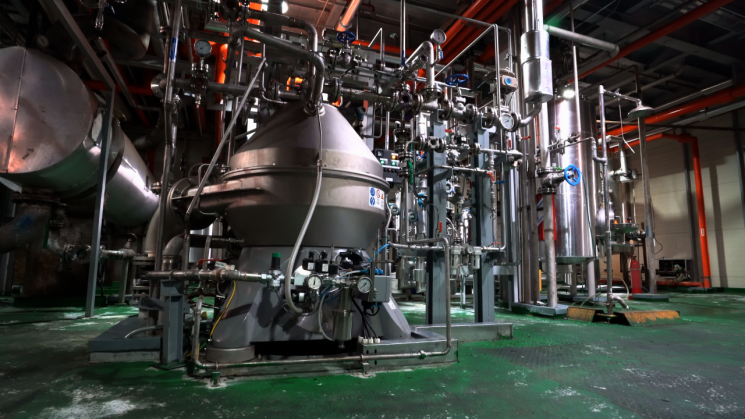
With the establishment of a legal basis for biofuels made by recycling waste cooking oil and other materials, domestic refining and petrochemical companies are accelerating their business efforts. As refiners begin constructing new production facilities, biofuels produced domestically are expected to be sold at gas stations nationwide within this year.
According to the refining industry on the 24th, the amendment to the "Petroleum and Petroleum Alternative Fuel Business Act" for the introduction of biofuels recently passed the National Assembly plenary session. As a result, 'eco-friendly refining feedstocks' can now be used in petroleum refining processes, and government support is available for development, utilization, and expansion. Whereas refiners and petrochemical companies previously could only sell petroleum-based fuels, they can now sell biofuels and renewable synthetic fuels.
Biofuels refer to energy derived from all natural byproducts, including animal and vegetable cooking oils, plants, seaweed, and even animal waste. These biofuels can be used to produce aviation fuel, diesel, gasoline, and heavy oil. Although the unit cost of biofuels is 2 to 3 times higher than fossil fuels, it is expected to decrease as mass production technologies advance.
HD Hyundai Oilbank plans to commence commercial operation of next-generation biodiesel as early as the first quarter. They have completed a manufacturing plant with an annual capacity of 130,000 tons on a 10,000㎡ site at the Daesan plant in Chungnam and have begun test operations. The government currently aims to increase the mandatory blending ratio of biodiesel under the Renewable Fuel Standard (RFS) for bio automotive fuels from the current 3.5% to 8% by 2030. A company official stated, "We are currently testing production facilities," and added, "Commercial operation is expected to begin after this month." HD Hyundai Oilbank plans to supply biodiesel produced directly by the company to gas stations nationwide within this year.
Additionally, HD Hyundai Oilbank will convert some facilities within the Daesan plant into production facilities for 'Hydrotreated Vegetable Oil (HVO)' with an annual capacity of 500,000 tons, an eco-friendly diesel. HVO is a next-generation bio oil produced by adding hydrogen to plant-based raw materials such as waste cooking oil. It has the characteristic of not freezing even at low temperatures. It can be used not only for vehicles but also as eco-friendly biofuel for aviation fuel and others. LG Chem recently signed a main contract with Italy's ENI to establish an HVO joint venture. The two companies plan to build an HVO production plant with an annual capacity of 300,000 tons at LG Chem's Daesan site by 2026.
 The Ministry of Trade, Industry and Energy and the Ministry of Oceans and Fisheries announced on the afternoon of the 15th in Busan that the Hyundai Tacoma, belonging to HMM, has set sail heading to Brazil. GS Caltex supplied the ship with bio marine fuel, a mixture of 70% conventional marine fuel and 30% biodiesel. The photo shows the refueling vessel supplying bio marine fuel to the HMM Tacoma. [Image source=Yonhap News]
Eco-friendly biofuels are emerging as an essential means to respond to increasingly stringent international environmental regulations in industries such as aviation and shipping, where it is difficult to directly replace fuels with electricity or hydrogen. Global market demand is expected to grow from 9.7 million tons in 2021 to 40 million tons by 2030, representing an annual growth rate of about 20%.
Among biofuels, the market that refining and petrochemical companies are most focused on is Sustainable Aviation Fuel (SAF). This is because the International Civil Aviation Organization (ICAO), under the United Nations (UN), has decided to mandate the use of SAF starting in 2027 through the Carbon Offsetting and Reduction Scheme for International Aviation (CORSIA) regulation.
SK Energy plans to test biofuel production in October by partially blending bio feedstock into the existing refining process at its Ulsan plant using a 'co-processing' method. GS Caltex conducted a demonstration flight with bio aviation fuel in collaboration with Korean Air in September last year, the first in the industry, and is also considering building production facilities. S-Oil plans to begin full-scale production and sales of SAF by the first half of this year by using waste cooking oil and bio-oil feedstocks.
Although the biofuel business is becoming more active, the competitiveness of the domestic biofuel market still has a long way to go. Numerous challenges such as standardization and support measures remain. Kim Cheol-hyun, Executive Director of Central Technology Research Institute at HD Hyundai Oilbank, recently said, "In Europe and the U.S., SAF blending mandates have been announced, allowing for demand forecasting, but we cannot accurately predict demand here. On the other hand, investment amounts are large, posing significant risks for companies, making bold investments difficult." Kim Young-dae, Head of Green Growth Technology Team at SK Innovation, stated, "It is necessary to systematize and standardize the entire process from raw materials to manufacturing and consumption."
© The Asia Business Daily(www.asiae.co.kr). All rights reserved.
![Clutching a Stolen Dior Bag, Saying "I Hate Being Poor but Real"... The Grotesque Con of a "Human Knockoff" [Slate]](https://cwcontent.asiae.co.kr/asiaresize/183/2026021902243444107_1771435474.jpg)
















