Professor Jeong In-gyeong of KAIST and Professor Oh Tak-gyu of Bundang Seoul National University Hospital Receive Young Medical Scientist Award
Changjoon Lee, Director of the Life Science Research Cluster at the Institute for Basic Science (IBS), and Wonyoung Kim, Professor of Emergency Medicine at Ulsan University College of Medicine, received the Asan Medical Award.
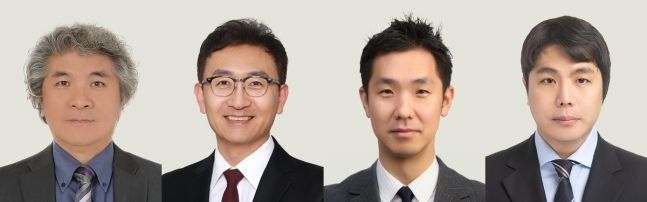 (From left) Changjun Lee, Director of the Life Science Research Cluster at the Institute for Basic Science; Wonyoung Kim, Professor of Emergency Medicine at Ulsan University College of Medicine; Inkyung Jung, Professor of Life Sciences at the Korea Advanced Institute of Science and Technology; and Takgyu Oh, Professor of Anesthesiology and Pain Medicine at Seoul National University Bundang Hospital. [Image source=Asan Foundation for Social Welfare]
The Asan Social Welfare Foundation announced on the 23rd that the 17th Asan Medical Award recipients were selected as Director Lee for the basic medical science category and Professor Kim, head of the emergency room at Asan Medical Center, for the clinical medical science category. For the Young Medical Scientist category, Professor Inkyung Jung of the Department of Biological Sciences at the Korea Advanced Institute of Science and Technology (KAIST) and Professor Takgyu Oh of the Department of Anesthesiology and Pain Medicine at Seoul National University Bundang Hospital were selected. The Asan Medical Award was established in 2008 to encourage medical scientists who have achieved outstanding accomplishments in the fields of basic and clinical medical sciences. Recipients are selected through a review process by the judging and operating committees.
Director Changjoon Lee, the recipient in the basic medical science category, was recognized for his research on astrocytes, star-shaped non-neuronal cells that make up more than half of brain cells but were previously known only for their supportive role to neurons, which changed the paradigm of degenerative brain disease research. He was the first to reveal that the brain’s key neurotransmitters, excitatory glutamate and inhibitory GABA, are produced and secreted by astrocytes, challenging the existing framework that "brain science is neuroscience" and highlighting the importance of non-neuronal cells. Additionally, he presented research showing that substances secreted by reactive astrocytes, which have increased size and number, can induce Alzheimer’s dementia, proposing a new paradigm of treatment targeting astrocytes for degenerative brain diseases such as Parkinson’s disease and dementia.
Professor Wonyoung Kim, the recipient in the clinical medical science category, has devoted over 20 years as an emergency medicine specialist to the treatment and research of critically ill emergency patients with cardiac arrest, sepsis, ischemic brain injury, and acute respiratory failure. He was recognized for raising the cardiopulmonary resuscitation (CPR) survival rate in the emergency room at Asan Medical Center to nearly 30%, six times the national average of 5%. Furthermore, he was highly praised for his research aimed at improving survival rates of critically ill emergency patients, including developing a system that analyzes electrocardiogram results of cardiac arrest patients who survive CPR and require immediate additional treatment, enabling the prompt identification of patients whose cause is subarachnoid hemorrhage rather than cardiovascular disease. Professor Kim, the first in Korea to be board-certified in both emergency medicine and critical care medicine, has served as the head of the emergency room at Asan Medical Center, which treats over 100,000 emergency patients annually, since 2018.
Two recipients were selected for the Young Medical Scientist category, awarded to medical scientists under the age of 40. Professor Inkyung Jung was recognized for pioneering research in Korea on gene regulation mechanisms based on the three-dimensional structure of the genome, elucidating new causes of Parkinson’s disease and cancer. Professor Takgyu Oh was highly evaluated for his research utilizing big data from large-scale population cohort studies to provide policy recommendations on the use of narcotic analgesics in Korea and the management of critically ill patients with acute respiratory distress syndrome and sepsis.
The 17th Asan Medical Award ceremony will be held on the 21st of next month at the Grand Hyatt Seoul in Yongsan-gu, Seoul. The recipients in the basic and clinical medical science categories will each receive 300 million KRW, and the two recipients in the Young Medical Scientist category will each receive 50 million KRW, totaling 700 million KRW in prize money awarded to four individuals.
© The Asia Business Daily(www.asiae.co.kr). All rights reserved.
![Clutching a Stolen Dior Bag, Saying "I Hate Being Poor but Real"... The Grotesque Con of a "Human Knockoff" [Slate]](https://cwcontent.asiae.co.kr/asiaresize/183/2026021902243444107_1771435474.jpg)
















