From the Attic to Kimchi Containers and Garlic Fields
Various Ways to Hide Crime Proceeds as 'Black Money'
A gang that operated illegal gambling sites and earned about 55 billion KRW was arrested by the prosecution on the 22nd. Not only did they squander the money they earned on supercars, luxury apartments, and artworks, but they were also caught living with stacks of 50,000 KRW bills piled up inside an apartment.
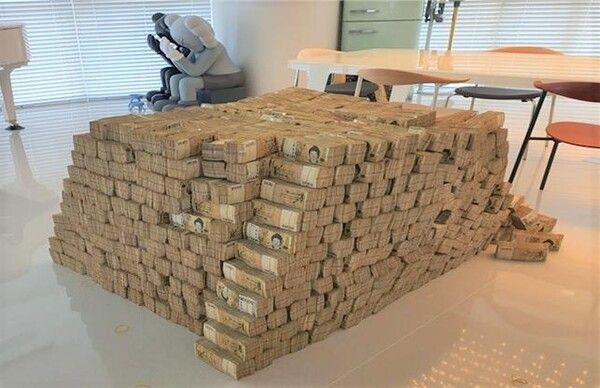 Bundles of cash hidden by a gang that operated an illegal gambling site and pocketed about 55 billion KRW in criminal proceeds [Image source=Busan District Prosecutors' Office]
Stacks of 50,000 KRW bills piled on the bed inside the room
The money piles revealed by the Busan District Prosecutors' Office appear to be roughly equivalent to dozens of ramen boxes stacked up. Since one ramen box filled with 50,000 KRW bills contains about 600 million KRW, just ten boxes amount to 6 billion KRW. The methods used to hide illegally obtained funds are beyond imagination. Especially when a large amount of cash is suddenly acquired illegally, one has to consider where to hide the cash.
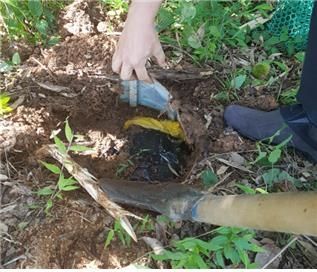
In June 2017, 75 million KRW was found at the home of a public official in Boseong-gun, Jeollanam-do. All of it was in 50,000 KRW bills, hidden in a kimchi container buried underground in the yard and in the attic of the house. Public official A from Boseong-gun received bribes from a broker related to government contracts. His predecessor also received 25 million KRW in bribes and tried to hide it in a bookshelf.
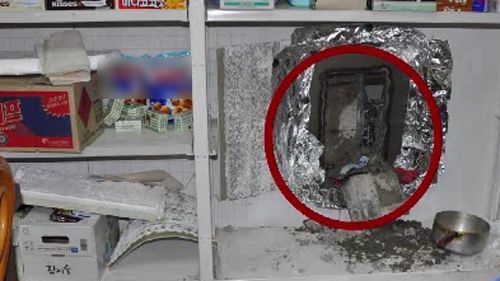
Kimchi container, attic, bookshelf, and under a tree
In 2013, a gang that robbed 50 million KRW from the safe of Yeosu Post Office fled with the money, taking 35 million KRW to the mother’s house in Yeosu City. They dug under a citron tree in front of the house and buried a pile of cash wrapped in plastic in the hole.
This place was near the grave of the perpetrator’s father. When caught by the prosecution, the perpetrator confessed that he chose to bury the money at his father’s grave because "it seemed easier to find later." The remaining 15 million KRW was hidden between stones under a bridge in the sports park behind his apartment, but was eventually discovered.
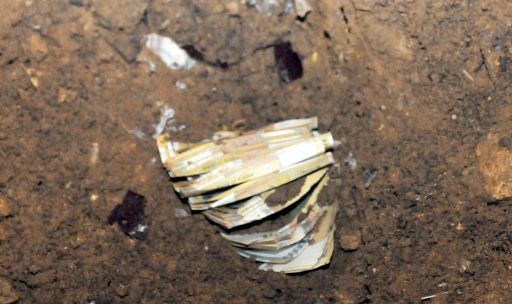
The "Garlic Field Money Bundle Incident" of 2011 is still talked about today. On April 10, 2011, an excavator operator discovered money bundles worth a whopping 11 billion KRW in a garlic field in Chukryeong Village, Seonam-ri, Geumgu-myeon, Gimje-si, Jeollabuk-do. Police investigations revealed that this money was criminal proceeds earned by the landowner’s two brothers-in-law and their gang through illegal gambling sites (Sports Toto) from January 2008 to November 2009.
2011 Garlic Field Incident: 10 billion KRW wrapped in plastic
They divided the 11 billion KRW, which had been stored in apartment wardrobes, under dressing tables, utility rooms, and safes, wrapped it in plastic, and sealed it in kimchi containers, silicone containers, and aluminum steamers before burying it in the ground by digging with shovels and pickaxes. They planted garlic and chili peppers to make it look like a garlic field.
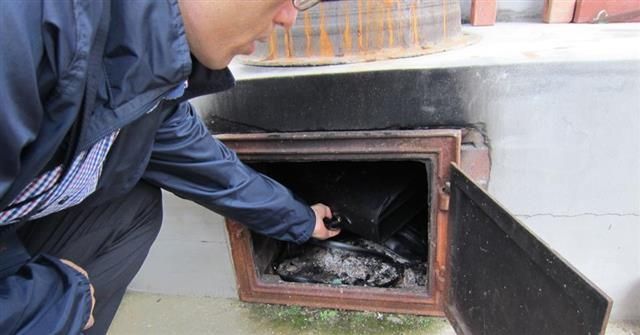 Money bag found inside a furnace by a National Tax Service employee [Image source=National Tax Service]
There is also a case of ruin caused by desperate attempts to evade taxes. In 2015, Mr. B, who made profits in the hundreds of billions of KRW through real estate auctions, used all kinds of money laundering to avoid capital gains tax. The laundered money was withdrawn in cash and hidden in a luxury detached house in Gyeonggi-do.
Real estate and gold bars always appear in large-scale embezzlement cases like Ostem
However, he could not escape the National Tax Service’s surveillance. When NTS officers visited his home unannounced, Mr. B hurriedly hid a bag full of money inside a cauldron stove. One of the NTS officers eventually found a bag filled with bundles of 50,000 KRW bills and 100 US dollar bills inside the stove, ending the perfect crime.
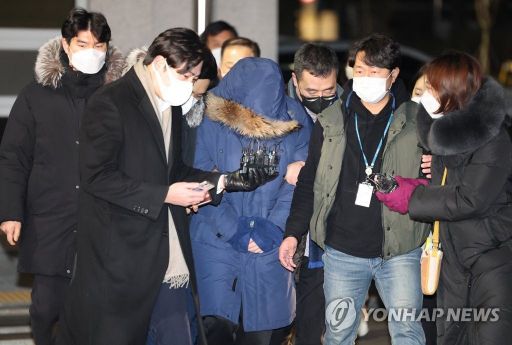 An Ostem Implant employee accused of embezzling 188 billion won of company funds is seen entering the police station on January 6, 2022.
 [Image source=Yonhap News]
How did those who embezzled huge amounts of company money hide the funds? In 2021, Mr. Lee, the head of the finance management team at Ostem Implant, embezzled 221.5 billion KRW. The entire family was involved in the money laundering operation. They bought apartments and officetels, purchased resort memberships, spending 10 billion KRW on these alone. They also bought 855 kg of gold bars worth 68.1 billion KRW and hid them in relatives’ homes.
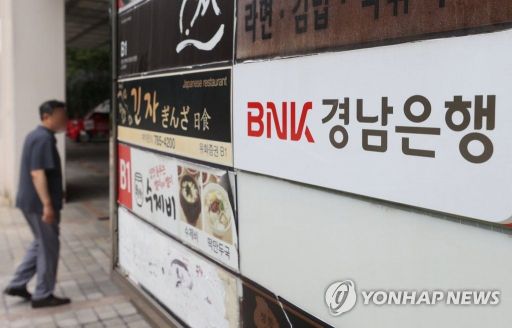 The embezzlement case that occurred at BNK Gyeongnam Bank involved a total damage amount approaching 300 billion KRW.
 [Image source=Yonhap News]
The Ostem embezzlement was the largest in Korean history since Dangun, but that record was soon broken. An employee of BNK Gyeongnam Bank embezzled and misappropriated a staggering 300 billion KRW from 2007 to July 2022. However, a significant portion of the embezzled funds was used for "loan rollovers" such as repayment of principal and interest on project financing (PF) loans, and the remaining 37.8 billion KRW was used personally.
The employee and his family spent over 70 million KRW monthly, buying real estate and expensive luxury goods. The employee’s wife transferred embezzled funds to other accounts, withdrew cash, or converted it to checks, hiding them between kimchi containers. She also purchased 101 gold bars worth 8.3 billion KRW.
© The Asia Business Daily(www.asiae.co.kr). All rights reserved.
![Clutching a Stolen Dior Bag, Saying "I Hate Being Poor but Real"... The Grotesque Con of a "Human Knockoff" [Slate]](https://cwcontent.asiae.co.kr/asiaresize/183/2026021902243444107_1771435474.jpg)


















