It was found that 97.5% of agricultural products distributed in Gwangju last year met the residual pesticide tolerance standards.
The Gwangju Metropolitan City Health and Environment Research Institute conducted residual pesticide (340 items) tests on 4,330 agricultural products, including 3,089 pre- and post-auction agricultural products traded at the Seobu and Gakhwa agricultural (aquatic) product wholesale markets last year, and 1,241 agricultural products distributed through large supermarkets and local food stores.
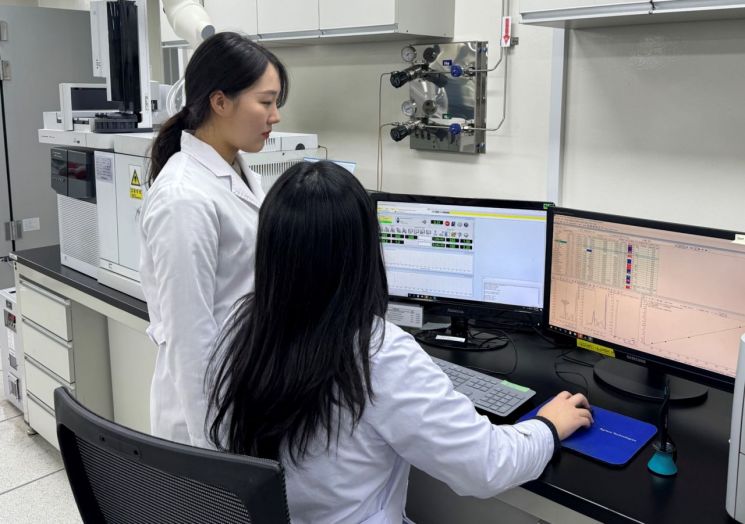
As a result, 4,322 products (97.5%) passed the safety inspection, while 108 products (2.5%) exceeded the residual pesticide standards.
Among the 108 non-compliant products, 85 (78.7%) were agricultural products from the wholesale market before and after auction, and 23 (21.3%) were products distributed in the market. Accordingly, the Gwangju Health and Environment Research Institute seized and disposed of 3,277 kg of these agricultural products.
The main non-compliant agricultural products included 34 items such as ▲ lettuce (13 cases) ▲ chive and spinach (9 cases each) ▲ aster scaber (chwinamul) (8 cases) ▲ perilla leaves (7 cases) ▲ shepherd’s purse and young radish leaves (6 cases each). The pesticides exceeding the residual tolerance standards were identified as 50 types in total, including ▲ foreate (13 cases) ▲ terbufos (12 cases) ▲ dinotefuran (10 cases).
The Gwangju Health and Environment Research Institute promptly blocks the distribution of agricultural products that are judged non-compliant by exceeding the standards by seizing and disposing of all such products in accordance with the Food Sanitation Act and the Agricultural Products Quality Control Act.
In addition, these cases are registered in the Emergency Notification System for Non-compliant Foods (Food and Drug Safety Ministry) and reported to the relevant production area authorities, who then impose administrative measures such as restricting shipments from wholesale markets and imposing fines.
Kang Insuk, head of the Food and Drug Research Department at the Gwangju Health and Environment Research Institute, said, “As the types of non-compliant items and agricultural products diversify, we are conducting accurate and thorough safety inspections on agricultural products consumed through various distribution channels such as wholesale markets, food material marts, and local food direct stores. We will do our best to ensure that citizens can consume safe and trustworthy food.”
© The Asia Business Daily(www.asiae.co.kr). All rights reserved.
![Clutching a Stolen Dior Bag, Saying "I Hate Being Poor but Real"... The Grotesque Con of a "Human Knockoff" [Slate]](https://cwcontent.asiae.co.kr/asiaresize/183/2026021902243444107_1771435474.jpg)
















