Follow-up Study of 237 Patients with Stage 2 and 3 Progressive Gastric Cancer Surgery
Weight, Complications, Stage, and Extent of Gastrectomy Affect Long-term Survival Rates
A research team at Seoul Asan Medical Center revealed that four factors?body weight, complications, cancer stage, and extent of gastrectomy?affect the long-term survival rate of gastric cancer surgery patients aged 75 and older. The study results were recently published in the international medical journal Clinical Interventions in Aging.
Professors Gong Choong-sik and Ko Chang-seok from the Department of Gastrointestinal Surgery at Seoul Asan Medical Center, along with Professor Jung Sung-ah from the Department of Surgery at Gangneung Asan Hospital, conducted a follow-up study over 71 months on 237 patients aged 75 or older who underwent surgery for stage 2 or 3 advanced gastric cancer at the hospital between 2007 and 2015. The study found that none of the 237 patients died as a result of the surgery. The survival rate three months after surgery was also high at 99.2%, indicating no short-term risk from the surgery.
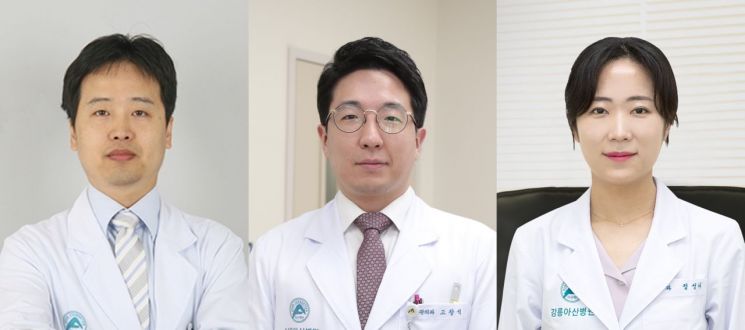 (From left) Professor Gong Chung-sik and Professor Ko Chang-seok of the Department of Gastrointestinal Surgery at Seoul Asan Medical Center, Professor Jung Sung-ah of the Department of Surgery at Gangneung Asan Medical Center
 [Image source=Seoul Asan Medical Center]
The 5-year survival rate for elderly patients who underwent surgery for stage 2 or higher advanced gastric cancer was 51.4%. Generally, the 5-year survival rate for stage 2 gastric cancer is about 70%, and for stage 3, it is in the 40% range. Statistical analysis of risk factors that lowered survival rates identified body weight, complications, cancer stage, and extent of gastrectomy as significant factors.
Regarding body weight, being underweight was found to be more dangerous than being overweight. Underweight patients had a 1.45 times higher risk of death compared to normal or overweight patients. Patients with complications had a 2.07 times higher risk of death than those without complications. Additionally, patients with stage 3 gastric cancer had a 2.61 times higher risk of death compared to those with stage 2, and patients who underwent total gastrectomy had a 1.57 times higher risk of death compared to those who had partial gastrectomy.
Professor Ko Chang-seok stated, "It is important for elderly individuals to undergo regular health check-ups to detect cancer early." He added, "When elderly patients are diagnosed with advanced gastric cancer, the decision to operate should be made comprehensively considering the necessary extent of gastrectomy, cancer stage, and overall health condition." He further noted, "If postoperative nutritional status is improved and complications are minimized, safe recovery can be expected."
This study is expected to be a great help when elderly patients diagnosed with advanced gastric cancer decide on surgery, as there have been very few previous studies analyzing long-term survival after surgery in elderly advanced gastric cancer patients. Professor Gong Choong-sik said, "Many elderly patients hesitate to undergo surgery because they think they already have other diseases or have limited life expectancy after a cancer diagnosis. However, elderly patients can safely undergo surgery, achieve complete recovery through comprehensive postoperative management, and live a full life, so I hope they do not give up on cancer surgery treatment."
Meanwhile, gastric cancer ranks fourth in cancer incidence in South Korea. As the population ages, the number of patients diagnosed with gastric cancer in old age is also increasing. According to National Health Insurance statistics, as of 2020, more than one in four gastric cancer patients in South Korea are aged 75 or older.
© The Asia Business Daily(www.asiae.co.kr). All rights reserved.
![Clutching a Stolen Dior Bag, Saying "I Hate Being Poor but Real"... The Grotesque Con of a "Human Knockoff" [Slate]](https://cwcontent.asiae.co.kr/asiaresize/183/2026021902243444107_1771435474.jpg)
















