Digging Through Trash and Noise Pollution... Only Temporary Even After Being Chased Away
Crying Sounds Lure Them to Other Locations, Local Governments Also Capture Them Directly
In Japan, where there are as many crows as pigeons in Korea, complaints and damages caused by crows continue unabated. In response, a university professor developed a deterrent robot that emits crow calls, and local governments are removing nests, among other efforts, as concerns about 'crow control' persist.
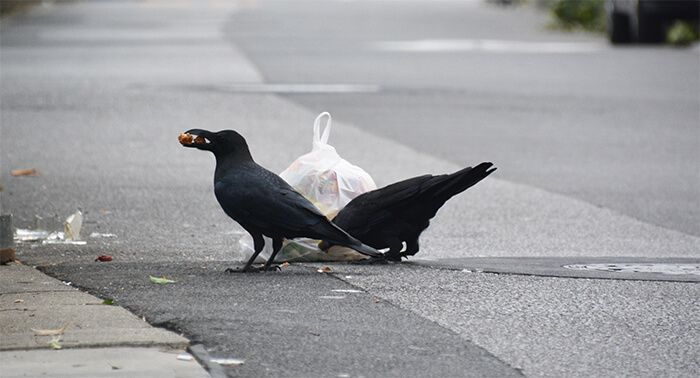
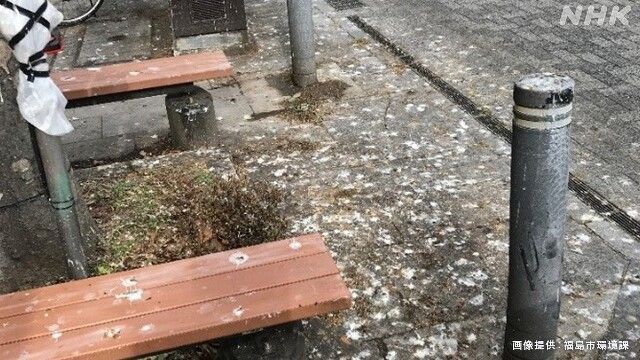
On the 19th, NHK reported that the number of local governments struggling with crow control has significantly increased. Five species of crows inhabit Japanese cities, causing problems by rummaging through garbage, creating noise pollution with their loud calls, and even attacking people. Although residents have made various efforts such as setting off fireworks or placing owl-shaped ornaments, natural predators of crows, these measures are insufficient to drive away crows, which have intelligence comparable to that of a six-year-old human child.
As a result, crow deterrent robots have even appeared in Japan. Naoki Tsukahara, a professor at Utsunomiya University, analyzed crow calls and created a robot that emits calls to lure crows elsewhere. The robot first emits calls signaling danger to drive crows away from the current location, then plays calls indicating safety in areas far from residential neighborhoods to repel crows. However, since crows are intelligent and quickly become accustomed to the sounds, the vocal combinations must be regularly changed.
This 'crow call robot' has undergone demonstration experiments in more than 30 local governments and is gradually showing results. In Yamagata City, a flock of 300 crows was successfully lured 200 meters away from the city center.
NHK also introduced a model city for crow control: Tokyo Metropolis. The number of crows in Tokyo has decreased from 36,000 in 2001 to 9,000 currently, nearly a quarter of the original population, due to active crow control measures. Tokyo implemented a 'control measure' involving the direct capture and disposal of crows, followed by the removal of nests and eggs. In Japan, wild birds' eggs and chicks are protected, so even nests built in residential areas cannot be disturbed without cause, despite the negative impact on daily life. However, Tokyo offered a service to remove crow nests upon request until 2021. Additionally, Tokyo provided subsidies for the purchase of garbage covers to prevent crows from accessing trash as part of its measures.
However, experts expressed concern that an excessive reduction in the crow population could affect the natural ecosystem. Hajime Matsubara, a professor at the University of Tokyo, stated, "Crows transport and disperse seeds of fruits and also eat caterpillars that become pests. Since they play many roles in the natural cycle, it is undesirable for their population to decrease excessively."
© The Asia Business Daily(www.asiae.co.kr). All rights reserved.
![Clutching a Stolen Dior Bag, Saying "I Hate Being Poor but Real"... The Grotesque Con of a "Human Knockoff" [Slate]](https://cwcontent.asiae.co.kr/asiaresize/183/2026021902243444107_1771435474.jpg)
















