Average Life Expectancy Increased from 75.6 to 77.1 Years Over 30 Years
Healthy Life Expectancy Decreased from 64.8 to 64.4 Years
While the life expectancy of Americans has increased, their healthy life expectancy has rather decreased.
On the 17th (local time), The Wall Street Journal (WSJ) reported this by citing the latest data from the Institute for Health Metrics and Evaluation (IHME) at the University of Washington's "Global Burden of Disease" (GBD) study. According to this data, the average expected life expectancy at birth for Americans increased by 1.5 years from 75.6 years in 1990 to 77.1 years in 2021. However, during the same period, healthy life expectancy decreased by 0.4 years from 64.8 years to 64.4 years. As a result, the gap between the average expected life expectancy and healthy life expectancy after birth widened from 10.8 years to 12.7 years. Additionally, the estimated average proportion of life lived in good health for Americans was 83.6% in 2021, down 2.2 percentage points from 85.8% in 1990.
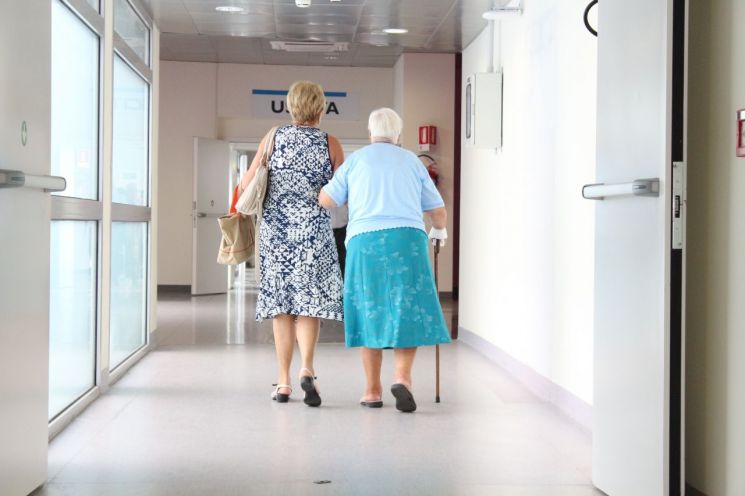
The U.S. Centers for Disease Control and Prevention (CDC) stated that over the past 100 years of the 20th century, the life expectancy of Americans dramatically increased from 49 years to 77 years. Despite the increase in life expectancy, experts attribute the decrease in healthy life expectancy to the chronic nature of incurable diseases due to medical advancements, increased substance use disorders among younger generations, and rises in diabetes, obesity, and mental illnesses. Furthermore, the development of diagnostic technologies has led to the detection of diseases that were previously undiagnosed, which is also believed to have contributed to the decline in healthy life expectancy.
WSJ pointed out that deteriorating health in old age leaves significant physical and mental scars on patients and caregivers, while also imposing a substantial social burden due to increased healthcare costs. John Rowe, a professor at Columbia University, told WSJ, "The period of unhealthy life during one's lifetime is continuously increasing," adding, "The impact of this is also growing."
Meanwhile, South Korea, like the United States, is experiencing an increase in life expectancy but a decrease in healthy life expectancy.
In July of last year, the Ministry of Health and Welfare announced that the life expectancy of South Koreans is 83.6 years. The Ministry analyzed detailed data by major fields and indicators from the "OECD Health Statistics 2023" and published the level and status of South Korea's healthcare system as well as those of other countries. According to these statistics, the average life expectancy among OECD countries is 80.3 years, placing South Korea among the top longevity countries.
The life expectancy of Koreans has increased by more than 20 years over the past 50 years, from 62.3 years in 1970 to 66.1 years in 1980, 71.7 years in 1990, 76.0 years in 2000, and 80.2 years in 2010. However, healthy life expectancy in South Korea has hardly increased over the past decade. According to Statistics Korea, healthy life expectancy was 66.3 years in 2020, but it decreased by 0.5 years to 65.8 years in 2022, just two years later. In 2012, healthy life expectancy in South Korea was 65.7 years, showing little difference from 2022.
© The Asia Business Daily(www.asiae.co.kr). All rights reserved.
![Clutching a Stolen Dior Bag, Saying "I Hate Being Poor but Real"... The Grotesque Con of a "Human Knockoff" [Slate]](https://cwcontent.asiae.co.kr/asiaresize/183/2026021902243444107_1771435474.jpg)















