Comprehensive Support for Field Investigation, Planning, and Investment; On-Site Demonstration Project to Proceed in the Second Half of This Year
Real-Time Defect Detection Enabled by Magnetic Field Variation Data of Wire Rope
Busan Port Authority (BPA, President Kang Jun-seok) has launched a technology development project for the "Permanent Diagnostic System for Port Crane Wire Ropes."
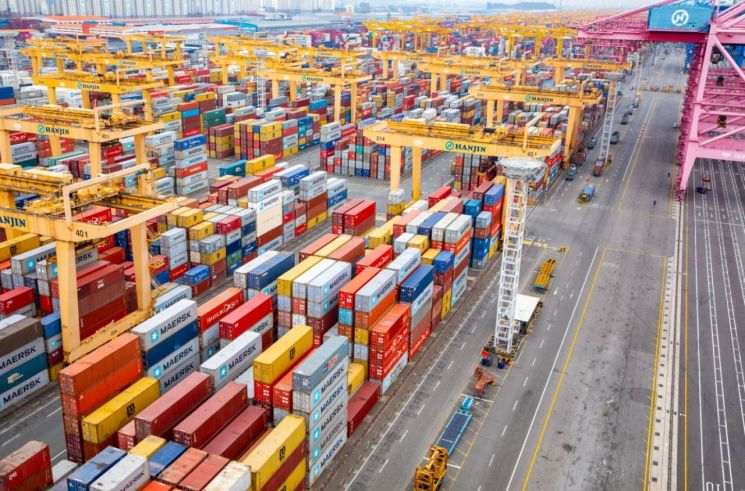
Wire ropes are a critical component of port cranes that require meticulous management in ports where container loading operations are conducted 24/7. For general container terminal cranes, the average usage period of wire ropes is about 3,000 hours. With the recent introduction of unmanned automation technology at the New Port West Container Terminal (phases 2-5), the operating hours are expected to increase, leading to overload and a reduction in usable life to less than 1,800 hours.
Terminal operators deploy maintenance personnel to conduct regular inspections to detect wire rope damage in advance. However, this causes additional issues such as productivity decline due to unavoidable crane operation stoppages during inspections, difficulty detecting damage in blind spots, and worker safety concerns due to high-altitude work.
BPA listened to the field difficulties requested by Hanjin Busan Container Terminal (HJNC), a terminal operator at Busan Port, and began field surveys and planning for development technology. Over approximately five months, BPA assessed the current status of existing technology development, discovered Enkia, an IT operation management solution specialist company, and together established a detailed development plan for the permanent diagnostic system for port crane wire ropes.
Enkia has experience developing wire rope management solutions for various types such as tower cranes and overhead cranes, but considers the development difficulty particularly high for port crane wire ropes due to their constant movement.
To ensure stable technology development, BPA and Enkia will participate in the Ministry of SMEs and Startups’ "New Product Development Project with Purchase Conditions for SMEs," raising about 1.2 billion KRW in joint R&D funds and commencing full-scale joint development.
During the two-year project period, a total of 1.21 billion KRW will be invested in development costs, with 540 million KRW from the Ministry of SMEs and Startups, 540 million KRW from BPA, and 130 million KRW from corporate investment.
The technology aims to develop a safety sensor that generates a magnetic field on the wire rope to collect real-time change data and provides defect detection and precise location information through AI-based defect detection functions.
BPA expects that developing and introducing the permanent diagnostic technology for port cranes will enhance port efficiency by preventing safety accidents during maintenance, minimizing downtime during operations, and reducing social costs through timely replacement of damaged wire ropes.
In the second half of 2024, once the initial technology development is completed, BPA plans to support a testbed at Busan Port sites, including HJNC.
BPA President Kang Jun-seok stated, “Through the development of smart safety technology optimized for both existing ports and the unmanned automated port opening this year, we will make Busan Port an accident-free port and continue active public-private cooperation by expanding technology investment and collaboration with SMEs.”
© The Asia Business Daily(www.asiae.co.kr). All rights reserved.
![Clutching a Stolen Dior Bag, Saying "I Hate Being Poor but Real"... The Grotesque Con of a "Human Knockoff" [Slate]](https://cwcontent.asiae.co.kr/asiaresize/183/2026021902243444107_1771435474.jpg)















