[K-Convenience Store Global 1000th Store Era]⑥
Exploring Japanese Convenience Stores... Half of Sales Are PB
Expansion of Administrative and Convenience Services Including Elderly Care
"Are there any new releases this week?"
At 7 p.m., a man who appeared to be an office worker entered a convenience store and asked for a clerk. He was looking for the latest edition of a fashion magazine that had been published recently. As he walked toward the magazine section where he picked up a magazine, a fairly large display stand caught his eye. About 20 different magazines were displayed by category, including fashion, beauty, mobility, and sports, and there were quite a few people nearby reading them. A convenience store employee explained, "Unlike Korea, where magazines are not sold in convenience stores, Japan handles a wide variety of magazines. Besides customers buying drinks, lunch boxes, and desserts, there are always many customers purchasing various daily necessities such as magazines, tissues, and detergents, so Japanese convenience stores are always bustling."
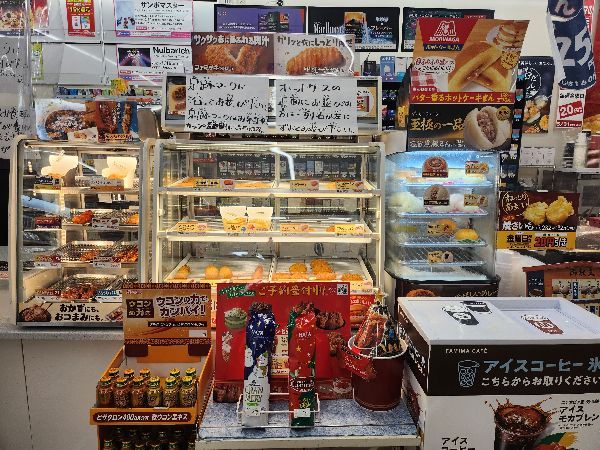 Various fast foods are displayed in front of the cash register at a Japanese convenience store. Photo by Lee Seohui @dawn
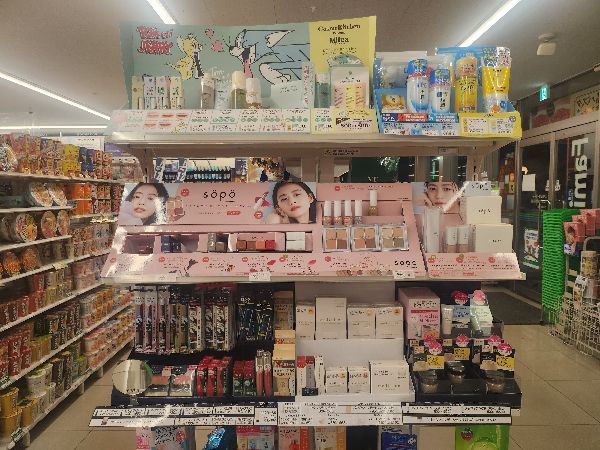
The convenience stores in Tokyo, Japan, that I visited in early last month were like "miniature large supermarkets." The food sales sections, including dairy products, beverages, and ready-to-eat meals, were generally similar to those in Korea, but one wall was fully occupied by a pharmaceutical sales section and a cosmetics display, with daily necessities overwhelmingly outnumbering food items. The pharmaceutical section stocked thermometers, nutritional supplements, cold medicine, and other items by category, and right next to it were lifestyle brand Muji products, socks, toilet paper rolls, detergents, and more.
The cosmetics section was stocked with basic products such as lipstick, eyeliner, and eyebrow pencils. Prices were generally below 1,000 yen, cheaper than the market price in Japan. A woman in her 40s I met that day said, "I stop by a nearby convenience store when I suddenly run out of tissues. Many university students visit to buy snacks, but housewives and elderly people also frequently visit convenience stores to purchase daily necessities."
The 'Convenience Store Landscape' Changed by the Great East Japan Earthquake and COVID-19
The reason Japanese convenience stores today function not just as simple convenience stores but as lifestyle goods stores is due to two events: the 2011 Great East Japan Earthquake and the 2020 COVID-19 pandemic. After experiencing these two social disasters, Japanese convenience stores transformed from 'food sales' to 'spaces equipped with all daily necessities.' When social disasters occur, the physical accessibility of convenience stores becomes an important resource. This change is well reflected in the report titled "A New Existence Mode for Convenience Stores," published by the Japanese government after the 2011 Great East Japan Earthquake. Through this report, the Japanese government emphasized that "convenience stores no longer function as simple shops but must transform into businesses that solve social problems."
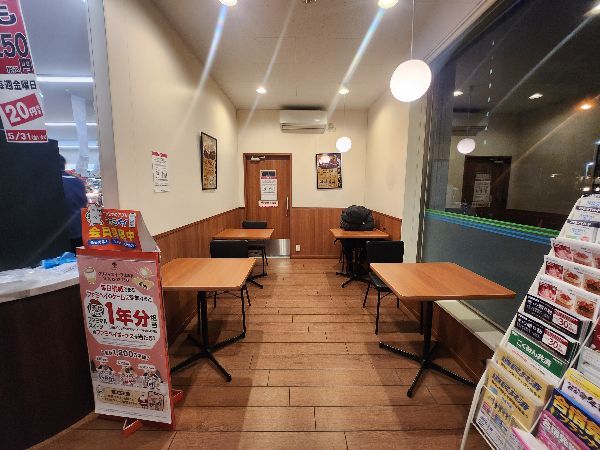
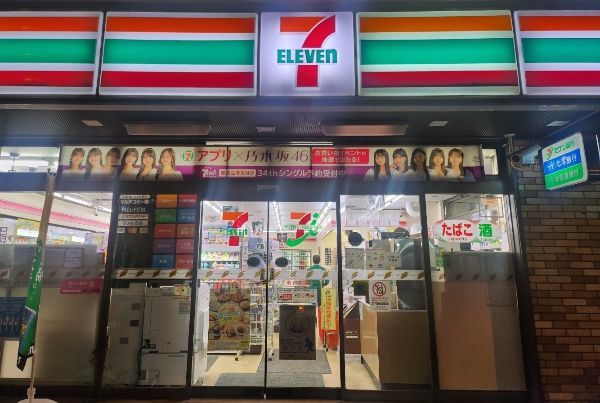
The expansion of administrative and convenience services at convenience stores also began at this time. Major convenience stores (Seven-Eleven, FamilyMart, Lawson) introduced copy/print machines, postal delivery, and public utility bill payment services. Elderly care services for the aging population are also on the rise. Lawson, the third-largest convenience store chain in Japan, opened its first "Care Lawson" store for elderly care in April 2015 in Kawaguchi, a city near Tokyo. Customers can purchase items for the elderly such as ready-to-eat meals and adult diapers, and through social workers affiliated with insurance companies partnered with Lawson, they can receive various services including health consultations, insurance advice, and exercise classes. Convenience stores thus function as a combination of local community centers, senior centers, and public health offices.
An industry insider said, "Care Lawson stores provide combined consumption and welfare services for the increasing elderly population. There are over 100 items stocked for the elderly, including medication assistance devices and low-calorie foods, and a separate consultation counter inside the store allows residents to consult with professional social workers at any time, resulting in a high visit rate from nearby residents."
Competitive Private Brand Products Account for Half of Sales
Another characteristic of Japanese convenience stores is the numerous private brand (PB) products. At the Seven-Eleven, FamilyMart, and Lawson stores I visited, nearly half of the dessert and beverage sections were filled with PB products. PB products were also noticeable in lifestyle goods sections, including pens, notebooks, and detergents.
The busiest areas were the refrigerated beverage and dessert corners. When a foreign tourist in their 20s picked up a coffee-flavored bubble tea, a Seven-Eleven PB product, another tourist immediately grabbed a vanilla-flavored pudding. Korean tourist Suyeon Lee (26) said, "I deliberately visited the convenience store to buy the famous Seven-Eleven pudding I saw on social media. Japanese convenience store food is so famous for its deliciousness that lists like 'Top 10 Convenience Store Foods You Must Buy When Visiting Japan' are shared among friends."
Japanese convenience store PB products are famous for their "taste and quality comparable to high-end restaurants." Typically, PB products have the image of "low price, low quality" because they eliminate distribution processes to lower consumer prices, but Japanese convenience stores prioritize taste and quality. As a result, PB products are often priced higher than market prices. However, since the taste is guaranteed, consumers willingly pay the higher price. In fact, in Japan, PB products account for more than half of total convenience store sales, far exceeding Korea's 25% to 30%.
The secret to the taste lies in the development process. At Seven-Eleven, a task force (TF) is formed with diverse experts, including internal staff, food industry professionals, and culinary experts. Seven-Eleven headquarters sets the basic framework by deciding the product concept and planning, while food companies and culinary experts focus on detailed research to create the flavor. If necessary, equipment manufacturers also participate to develop dedicated equipment and production lines.
A Japanese convenience store industry insider said, "The most popular products in stores are lunch boxes made with freshly cooked rice and freshly baked bread, all of which are PB products exclusive to our company. The secret to the taste is the effort and time various companies invest in developing a single product."
Another unique feature of Japanese convenience store PB products is the variety of brands. Japanese convenience stores have multiple brands within their PB products tailored to product characteristics and price ranges, allowing consumers to prioritize their preferred brand. For example, Seven-Eleven's PB products are divided into four types: 'Premium Gold,' 'Premium,' 'Fresh Food,' and 'Premium Lifestyle.' Premium Gold uses the highest quality ingredients and is the most expensive line. Premium is a cost-effective brand with higher quality relative to price and has the longest history among all lines. Fresh Food offers products that seem freshly made at home, and Premium Lifestyle handles daily necessities.
© The Asia Business Daily(www.asiae.co.kr). All rights reserved.
![Clutching a Stolen Dior Bag, Saying "I Hate Being Poor but Real"... The Grotesque Con of a "Human Knockoff" [Slate]](https://cwcontent.asiae.co.kr/asiaresize/183/2026021902243444107_1771435474.jpg)

















