1637 People in 2022, 498 People in 2023
Gwangyang City in Jeollanam-do announced that its population increased for two consecutive years in 2022 and 2023 as a result of focusing on population policies.
The population of Gwangyang City steadily increased from 150,531 in 2021 to 152,168 in 2022, and 152,666 in 2023, making it the only city among the three cities in the eastern Jeonnam region?Yeosu, Suncheon, and Gwangyang?to show growth.
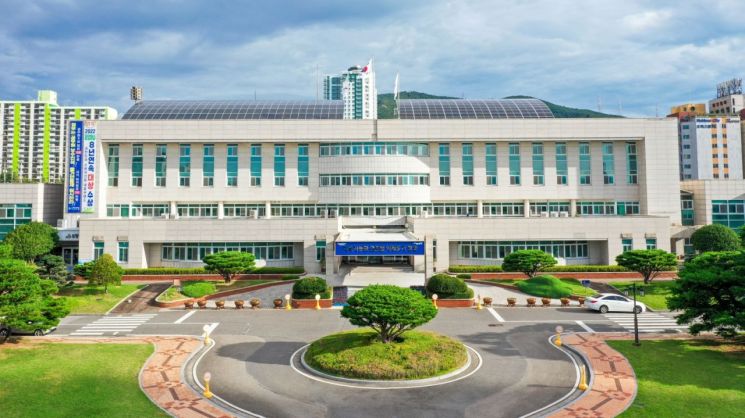
In particular, the city cited ‘youth job creation’ and ‘life-cycle tailored population policies’ as the main factors contributing to the population increase.
To attract young people, the city provided quality jobs to about 700 individuals through youth job creation projects such as the ‘Regional Industry Customized Job Creation Project’ and the ‘Region-led Youth Job Project.’
Last year, the city invested 2.6 billion KRW to create around 460 jobs in new industry sectors through regional industry customized job creation projects like the ‘POSCO Group Employment Academy’ and ‘Secondary Battery Material Employment Contract-based Workforce Training.’
Additionally, the city supported employment and entrepreneurship for about 240 young people by promoting job projects including the ‘Region-specialized Industry Customized Youth Job Support Project,’ ‘Carbon Neutral Smart Green Project,’ and ‘Small and Medium Enterprise Industrial Transition Talent Matching Project,’ which are part of the region-led youth job initiatives.
Along with this, due to large-scale investments by POSCO Holdings group companies such as POSCO Future M, POSCO Phil Bar Lithium Solution, POSCO Lithium Solution, as well as CIS Chemical and SNC, a significant influx of 1,599 young people aged 28 to 35 (811 in 2022 and 788 in 2023) occurred.
The city analyzed that the ‘life-cycle tailored population policy,’ which ensures happiness for all generations from fetus to child, adolescent, youth, middle-aged, and elderly, also played a role.
To minimize the burden of pregnancy and childbirth and support happy pregnancies and healthy births, the city is implementing measures such as ▲health checkup expenses for newlyweds, diagnostic and treatment expenses for infertile couples ▲transportation expenses for prenatal care, nutrition plus support ▲establishment of pediatric emergency medical systems ▲public postpartum care centers ▲postpartum care costs, childbirth incentives, prenatal care expenses ▲newborn health care expenses support.
Furthermore, to create a childcare environment where parents can raise children with peace of mind, the city is expanding support in various areas including ▲expansion of national and public daycare centers ▲personnel expense support for adjusting daycare class sizes ▲part-time childcare service support ▲support for graduation photo expenses at daycare centers and kindergartens ▲elementary school entrance congratulatory money ▲children’s cultural performance expenses ▲one instrument per child arts education support ▲expansion of child care centers ▲sisterhood projects between families with four children and companies or organizations.
Policies supporting the dreams and hopes of adolescents include ▲support for school trip expenses for elementary, middle, and high school students ▲100-won city bus operation ▲child meal support ▲after-school academies for youth ▲operation of Gwangyang-style rural study villages ▲youth global talent development ▲support for school uniform expenses for new and transfer students in middle and high schools ▲support for sanitary products for female adolescents ▲Baegun scholarship payments ▲projects to create healthy youth play culture spaces.
In particular, economic independence support policies for the youth are linked to the influx of young people.
The city has implemented practical welfare policies for youth such as ▲expansion of Gwangyang youth housing loan interest support projects ▲housing expenses for employed youth ▲temporary special support for youth monthly rent ▲Youth Hope Stepping Stone Savings Account ▲construction of integrated public rental housing in Gwangyang Happy Town, as well as ▲support for youth continuous employment incentives ▲youth cultural welfare card support ▲youth book purchase support ▲support for young successor farmers’ agricultural settlement.
Additionally, the city supports active regional activities of young people through ▲support for youth organization activities ▲activation of youth dream centers ▲creation of Youth Square, thereby building a vibrant youth city.
To assist the second chapter of middle-aged life, the city promotes ▲career-type job projects for new middle-aged, social contribution projects for new middle-aged ▲weekend farm support for retirees ▲lifelong education programs for second careers ▲50+ new middle-aged life academies ▲operation of retired talent volunteer groups, fostering a lively retirement life and encouraging the influx and settlement of new middle-aged residents.
In response to the increasing elderly population ratio, the city is implementing policies such as ▲free city bus rides for seniors aged 65 and over ▲activation of senior welfare centers ▲expansion of Gwangyang-style senior jobs ▲Senior Book Start ▲early dementia screening and dementia treatment management expense support ▲elderly tailored care services ▲emergency safety and security services for elderly living alone and disabled persons, creating a healthy and happy aging society.
Common to all generations, the city continues meticulous support to maintain a happy life for citizens through ▲payment of moving-in incentives ▲operation of Gwangyang City Hope Job Center ▲operation of urban weekend farms ▲operation of Jeonnam ICT Innovation Square ▲small business facility improvement, small business yellow umbrella mutual aid hope incentives, small business financial institution loan interest subsidy support ▲operation of smoking cessation clinics ▲support for veterans and war veterans’ allowances.
Projects for gender-equal parenting environments and work-family balance, such as creating reemployment environments for women with career breaks and post-employment management for working moms Cheer Up!, have also been promoted.
Moreover, to respond to population structure changes caused by low birth rates and aging, the city has promoted population education outreach, population policy explanations, operation of population policy citizen participation groups, population forums, and public-private campaigns for living together in Gwangyang, fostering public consensus and raising awareness.
The city expects continuous population inflow in the future. New apartment complexes with 6,312 households such as ‘Seonghwangdo I District Central Xi,’ ‘Mokseong District Booyoung Apartments,’ ‘Wow District Dongmoon The East,’ ‘Deokrye-ri Seohee Star Hills,’ and ‘Hwanggeum District Prugio The Central’ are continuously being occupied in Gwangyang.
Additionally, to expand comfortable living infrastructure, the city is promoting the construction of high-quality apartments through regional urban development in Seonghwang·Doi 2 District, Inseo District, Deokrye·Dowol District, and other areas.
Mayor Jeong In-hwa of Gwangyang said, “Despite the natural population decrease where deaths outnumber births since 2022, Gwangyang is the only city in Jeonnam to have increased its population for two consecutive years. We will further accelerate efforts to create a livable city with comprehensive welfare guaranteed for all age groups from fetus to elderly, a city good for business and work, a city with income through job creation, a city with a cultured and refined life through cultural and artistic revitalization, and a city with stable housing through demand-tailored apartment supply.”
He added, “We will create future food sources by attracting new industries such as secondary batteries, hydrogen, materials and parts, and data, and build a sustainable global future city Gwangyang through revitalizing the tourism industry.”
Asia Economy Honam Reporting Headquarters, Reporter Heo Seon-sik hss79@asiae.co.kr
© The Asia Business Daily(www.asiae.co.kr). All rights reserved.
![Clutching a Stolen Dior Bag, Saying "I Hate Being Poor but Real"... The Grotesque Con of a "Human Knockoff" [Slate]](https://cwcontent.asiae.co.kr/asiaresize/183/2026021902243444107_1771435474.jpg)















