ELS Sold in 2021 Begin Maturity from January... Over 50% Loss Confirmed
5 Trillion Won Loss Feared in First Half if Trend Continues
FSS Conducts On-Site Inspections at 12 Banks and Securities Firms... Results to Be Announced in Feb-Mar
Recovery of Hong Kong H Index Uncertain... Investors and Sellers Anxious
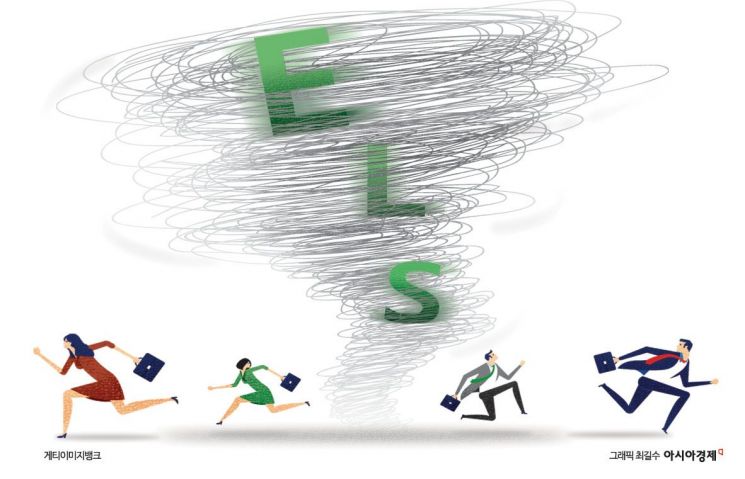
Concerns over large-scale principal losses in equity-linked securities (ELS) tracking the Hong Kong H-Index, sold by major commercial banks and securities firms, are emerging. As the maturity of ELS sold around early 2021, when the Hong Kong H-Index peaked, approaches, cases confirming losses exceeding 50% are increasing. With over 10 trillion won worth of ELS maturing in the first half of this year alone, the impact is expected to grow.
According to the financial sector on the 16th, ELS linked to the Hong Kong H-Index sold in 2021, when the index approached a high of 12,300 points, have products maturing in the first half amounting to 10.2 trillion won. ELS tracking the Hong Kong H-Index, which is calculated by aggregating 50 Chinese companies listed on the Hong Kong stock market, are sold with a three-year maturity after subscription, and profits begin to be confirmed from this year.
However, since the Hong Kong H-Index has continuously declined since 2021 and stood at around 5,440 points as of the 15th, avoiding large-scale losses is difficult. The Hong Kong H-Index even fell below 5,000 points at one time in 2022. The loss confirmation criteria for ELS vary by product, but the tracking index generally needs to be at 65-70% of the subscription level to avoid principal loss. For example, in the 'Knock-in' type, if the tracking index is above 70% at maturity, both principal and interest can be received, but if it falls below 70%, principal loss occurs proportionally to the decline. The 'No Knock-in' type also has a break-even point at about 65% of the subscription level, making it a very high-risk product.
This time, banks had a high sales proportion. As of November last year, the cumulative sales of Hong Kong H-Index ELS totaled 19.3 trillion won, with 15.9 trillion won sold by KB Kookmin Bank (8 trillion won), Shinhan Bank (2.4 trillion won), NH Nonghyup Bank (2.2 trillion won), Hana Bank (2 trillion won), and SC First Bank (1.2 trillion won), according to the Financial Supervisory Service. Only Woori Bank, which experienced the derivative-linked fund (DLF) incident, is somewhat less involved in this matter.
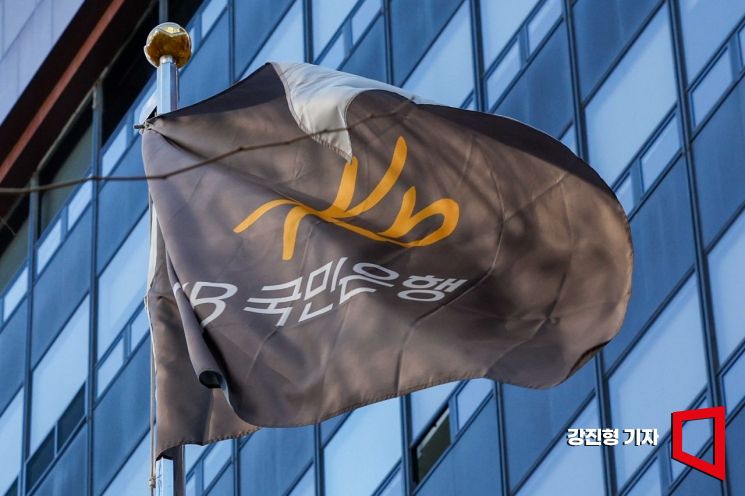 As stock-linked securities (ELS) based on the Hong Kong H-Index are expected to incur losses amounting to trillions of won in the first half of this year alone, financial authorities have begun on-site inspections targeting major distributors. The photo shows KB Kookmin Bank in Yeouido, Seoul, on the 8th. Photo by Jinhyung Kang aymsdream@
Hong Kong H-Index ELS Maturity in January Reaches 900 Billion Won... Potential Losses in the First Half Could Exceed 5 Trillion Won
Hong Kong H-Index ELS maturing or due to mature in January alone amount to 910 billion won. As of the 12th of this year, 210.5 billion won worth of Hong Kong H-Index ELS sold by five banks?Kookmin, Shinhan, Nonghyup, Hana, and Woori?have matured, with an average loss rate exceeding 50%. The confirmed loss amount was 106.7 billion won, meaning investors barely recovered about half of their principal. If the recent trend of the Hong Kong H-Index continues, losses in January alone could exceed 400 billion won.
Securities firms are no exception. Among Hong Kong H-Index ELS sold by Mirae Asset Securities, NH Investment & Securities, Hana Securities, and KB Securities, losses of 15 billion won occurred by the 9th. The final yields of ELS that first confirmed losses on the 8th from Mirae Asset Securities and NH Investment & Securities were -48.6% and -48.1%, respectively. The final yields of other securities firms also approached -50% without exception.
The problem lies in the sharp increase in Hong Kong H-Index ELS maturing in the future. According to the Financial Supervisory Service, 79% of the total 19.3 trillion won in Hong Kong H-Index ELS sales, or 15.4 trillion won, will mature this year. Monthly amounts are 1.6586 trillion won in February, 1.817 trillion won in March, 2.5553 trillion won in April, 1.5608 trillion won in May, and 1.5118 trillion won in June. If the trend of confirmed losses continues as with previous ELS, losses in the first half could reach the 5 trillion won range.
The stock market environment surrounding the Hong Kong H-Index is also not optimistic. With the real estate market in China rapidly cooling and local government debt issues emerging, the recent victory of the Democratic Progressive Party in Taiwan's presidential election is seen as adding negative factors to the Hong Kong stock market. Choi Seolhwa, a researcher at Meritz Securities, explained based on analysis of six Taiwan presidential elections since 2000, "The election of the pro-US Democratic Progressive Party is interpreted as increasing cross-strait tensions, which acts as a negative factor for the Hong Kong stock market."
Investor Complaints Increasing: "Strict Measures if Incomplete Sales Confirmed"... Financial Supervisory Service to Announce On-Site Inspection Results in February-March
As the feared losses are confirmed one after another, both investors and sellers are anxious. By the 12th, 1,410 complaints related to Hong Kong H-Index ELS had been received by major banks, with 518 complaints filed this year alone. Many complaints reportedly raise issues about the sales process, including claims that the high-risk nature of the product was not clearly disclosed. Major banks have formed internal response teams to handle ELS-related complaints and report to the Financial Supervisory Service but have not found effective countermeasures beyond these procedures.
The Financial Supervisory Service has formed a task force (TF) to respond to Hong Kong H-Index ELS and plans to thoroughly investigate illegalities through on-site inspections and complaint investigations. From November to December last year, the Financial Supervisory Service conducted on-site and document investigations of 12 major ELS sellers and identified issues such as poor management of ELS sales limits, sales drive performance indicators (KPI), and failure to retain contract documents. Since the 8th, inspection personnel have been dispatched to major sellers including Kookmin, Shinhan, Nonghyup, and Hana banks. The Financial Supervisory Service plans to announce response measures based on the on-site inspection results around February to March.
Depending on the inspection results, if incomplete sales or other violations are confirmed, large-scale compensation for losses by sellers may follow. Financial Supervisory Service Governor Lee Bok-hyun stated, "ELS are financial investment products, and investors must bear responsibility according to the principle of self-responsibility," but also emphasized that if illegal sales practices that disregard customer interests are confirmed, strict measures will be taken. It is expected that past compensation cases will serve as a benchmark. The Financial Supervisory Service's Dispute Mediation Committee recommended compensation of 40-80% of losses in the 2019 DLF incident and the 2021 Lime Fund incident.
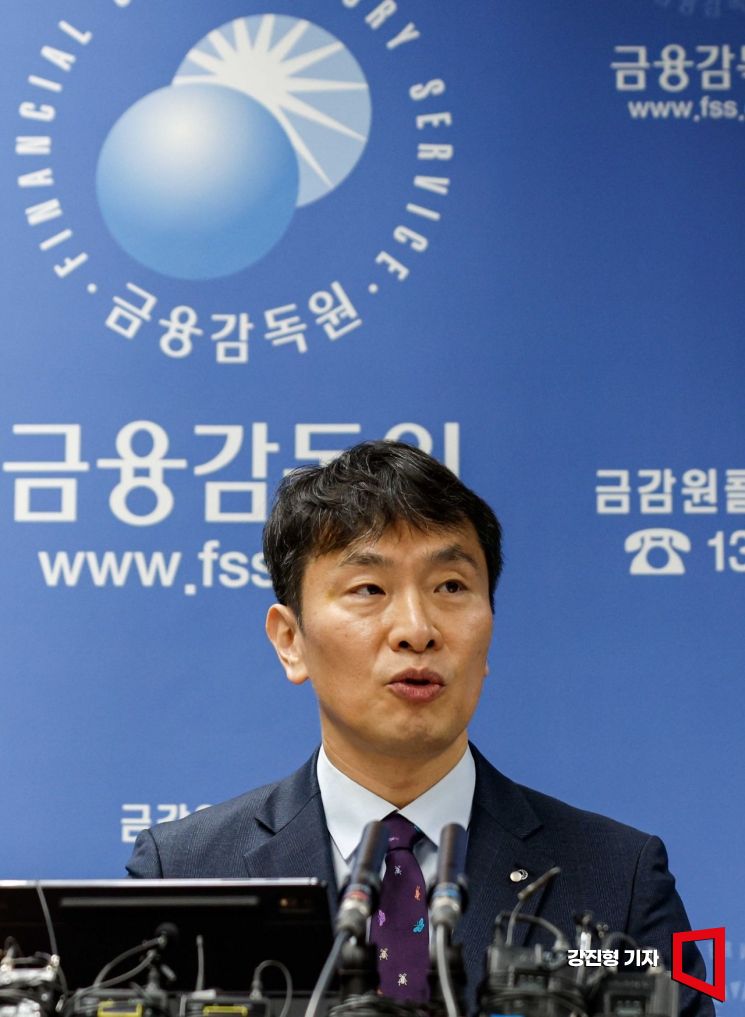 Lee Bok-hyun, Governor of the Financial Supervisory Service, is holding a press conference on the 4th at the Financial Supervisory Service in Yeouido, Seoul. Photo by Kang Jin-hyung aymsdream@
© The Asia Business Daily(www.asiae.co.kr). All rights reserved.
![Clutching a Stolen Dior Bag, Saying "I Hate Being Poor but Real"... The Grotesque Con of a "Human Knockoff" [Slate]](https://cwcontent.asiae.co.kr/asiaresize/183/2026021902243444107_1771435474.jpg)

















