Only 13% Say "Fiscal Situation Improved After Biden's Inauguration"
Due to Reduced Government Support and Increased Spending
While the largest banks in the United States optimistically assess that their customers' finances remain healthy despite high interest rates, individuals appear to feel that the economy is difficult, according to major foreign media reports on the 14th (local time).
U.S. inflation sharply decreased from a peak of 9.1% in 2022 to 3.4% in December last year. The unemployment rate remained low at 3.7% as of the end of last year. However, according to a poll released that day by ABC News and Ipsos, only 13% of respondents said their financial situation had improved since Biden took office. Only 31% supported the Biden administration's economic policies, while 56% opposed them.
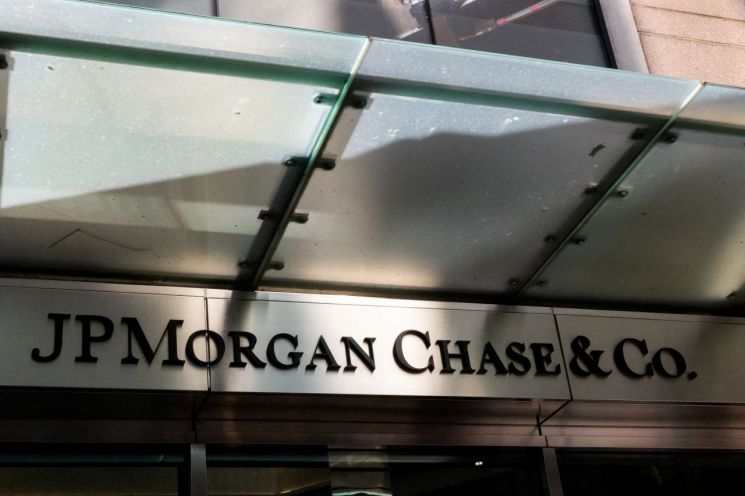
The financial conditions of individual customers diagnosed by the four major U.S. banks?JP Morgan Chase, Bank of America (BoA), Citigroup, and Wells Fargo?are different.
Charlie Scharf, CEO of Wells Fargo, said, "Our customers' financial health remains solid." Alastair Bostwick, CFO of BoA, also stated, "Most accounts are not as full as during the COVID-19 pandemic, but customers' financial conditions are good." He added, "Although the average deposit balance per customer continues to decline from its peak, wage increases more than offset spending increases, so balances remain higher than pre-COVID-19 levels. However, there are customer groups under more pressure."
The reason for the differing views between banks and individual customers is attributed to increased spending due to high interest rates and inflation amid reduced large-scale federal government financial support after COVID-19. Thanks to stimulus policies to mitigate the impact of COVID-19, such as payments of up to $1,200 (about 1.58 million KRW) to individuals earning less than $75,000 (about 99.02 million KRW) annually, banks' cash holdings reached record highs, and loan loss rates hit historic lows. However, as we enter the COVID-19 endemic era, customers' savings are decreasing, and loan losses are increasing.
Jeremy Barnum, CFO of JP Morgan, said, "Loan losses and cash holdings have returned to levels seen before the government stimulus programs started during COVID-19," adding, "This means spending more money than is earned." He further noted, "It is questionable whether consumers will restrain spending when cash reserves are lower than before."
Jane Fraser, CEO of Citibank, said, "Inflation is expected to continue to decline, and the economic outlook is expected to remain positive," adding, "While the U.S. is in a position to withstand a prolonged recession, global growth is expected to slow."
The banks emphasized that maintaining the unemployment rate at the current low level of 3.7% is important to keep loan losses at a manageable level. CFO Barnum said, "A strong labor market means strong consumer credit."
© The Asia Business Daily(www.asiae.co.kr). All rights reserved.
![Clutching a Stolen Dior Bag, Saying "I Hate Being Poor but Real"... The Grotesque Con of a "Human Knockoff" [Slate]](https://cwcontent.asiae.co.kr/asiaresize/183/2026021902243444107_1771435474.jpg)















