Vice Chairman Shin Hak-cheol Visiting Davos for 4th Year
Chairing the 'Chemical and Advanced Materials Industry Council'
Shin Hak-cheol, Vice Chairman of LG Chem, has forecast intense competition with China in the global petrochemical market. This is because the self-sufficiency of basic feedstocks, such as ethylene and other petrochemical raw materials, is highly likely to be realized within the next 2 to 3 years, inevitably increasing the volume flowing into overseas markets.
On the 15th (local time), ahead of his attendance at the World Economic Forum (WEF) held in Davos, Switzerland, Vice Chairman Shin stated in a recent article posted on the forum's website, "China's self-sufficiency rate for petrochemical basic feedstocks is expected to reach 100%," adding, "(Domestic) petrochemical companies need to reconsider supply chain strategies such as building partnerships or localization to hedge risks."
This is a warning that if China turns its eyes to overseas markets beyond self-sufficiency based on large-scale production capacity, domestic petrochemical companies could also suffer significant damage.
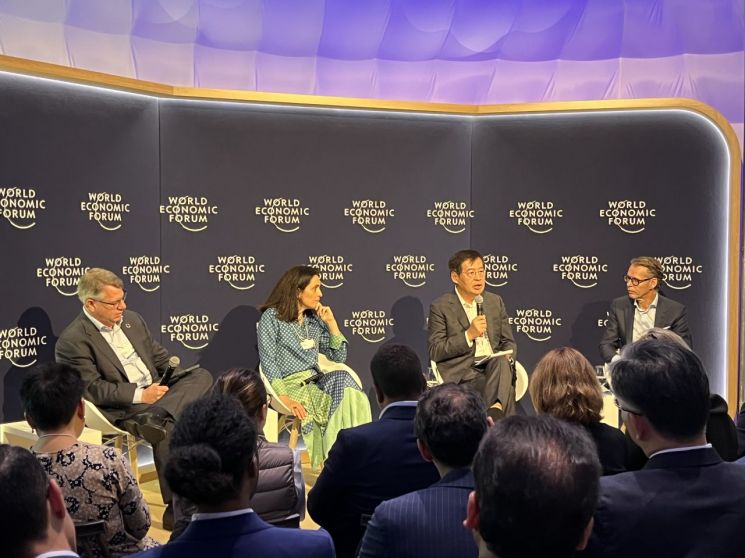 Shin Hak-cheol, Vice Chairman of LG Chem (second from the right), attending and discussing at the World Economic Forum session "How to Win the Net Zero Competition" held in Davos, Switzerland in 2022 (Photo by LG Chem)
Until now, China has been classified as a major importer of petrochemicals. Even with continuous supply increases, it still fell short compared to the pace of demand growth. From the geographically close perspective of South Korea, China was the largest market in the petrochemical industry.
However, the situation changed after large-scale expansion of petrochemical facilities since 2020. China's ethylene production capacity (CAPA), which was 32 million tons in 2020, increased to 46 million tons by the end of 2022, ranking first in the world. Domestic petrochemical companies that mainly exported basic feedstocks to China were hit hard. If China cannot absorb ethylene and other basic feedstocks domestically, these will flow into the global market, making competition with domestic companies inevitable.
Vice Chairman Shin warned, "As oil majors and refiners expand their business areas into petrochemicals (downstream), fierce competition is taking place with petrochemical companies," adding, "Existing petrochemical companies are being pushed to pursue high-growth and high value-added sectors."
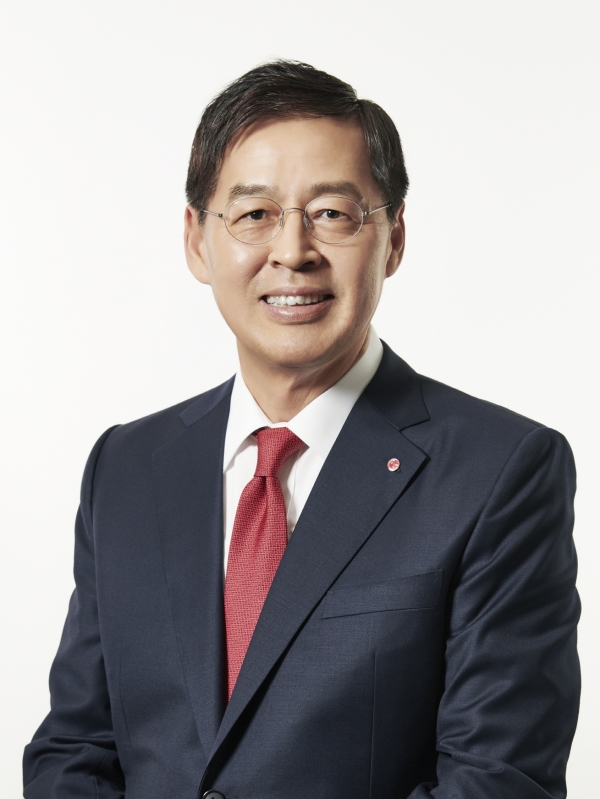
Vice Chairman Shin pointed out that the Chinese economy, which will influence the petrochemical industry's market conditions, is not as helpful as expected. He said, "It was anticipated that the end of the pandemic and China's reopening would increase consumption and lead to global economic recovery," but diagnosed, "China's reopening has not had a significant impact on the global economy, and the triple burden of low growth, high inflation, and high interest rates is likely to continue."
He added, "We have witnessed a sharp rise in raw material prices, including oil, natural gas, agricultural products, and key minerals, due to intensified geopolitical conflicts," and "this is accelerating the restructuring of global supply chains."
Regarding electric vehicles, which are expected to slow down this year, he said, "Although growth has slowed due to demand favoring affordable electric vehicles and high interest rates, the trend is unstoppable," forecasting that "by 2030, the share of electric vehicles will expand to 50-55%."
Vice Chairman Shin was elected last year as the chairperson of the 'Chemical and Advanced Materials Industry Council' under the Davos Forum. At this forum, he plans to discuss major issues in the global chemical industry. This year marks his fourth consecutive year attending the forum.
© The Asia Business Daily(www.asiae.co.kr). All rights reserved.
![Clutching a Stolen Dior Bag, Saying "I Hate Being Poor but Real"... The Grotesque Con of a "Human Knockoff" [Slate]](https://cwcontent.asiae.co.kr/asiaresize/183/2026021902243444107_1771435474.jpg)
















