The Supreme Court has ruled that even if a 'director' such as the CEO or an inside director of a corporation that is a small or medium-sized enterprise (SME) resides in a rented house and completes the move-in registration, they cannot be recognized as having opposability under the Housing Lease Protection Act (hereinafter referred to as the Housing Lease Act).
This ruling clarifies that the system, which exceptionally recognizes opposability of the lease rights of an SME corporation when an employee of the corporation completes move-in registration and resides in the leased house, cannot be extended to cases where a director who is not an employee of the company resides there, based on the purpose of the system and a systematic interpretation of the law.
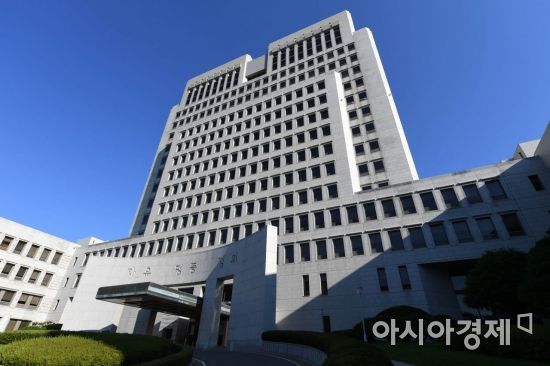
According to the legal community on the 10th, the Supreme Court's First Division (Presiding Justice Kim Seon-su) affirmed the appellate court's ruling that ruled in favor of the plaintiff in the final appeal trial of a building delivery lawsuit filed by real estate sales and leasing company A against company B.
Company B entered into a housing lease contract to rent an apartment owned by company A in Yongsan-gu, Seoul, with a deposit of 200 million KRW and a monthly rent of 15 million KRW from December 2019 to December 2021. The CEO of company B, Mr. C, completed the move-in registration and actually resided in this apartment.
On September 29, 2021, about two months before the contract expiration, company A expressed its intention not to renew the contract to company B, and Mr. C exercised the right to request contract renewal.
The right to request contract renewal is a right guaranteed to tenants on the premise that they have opposability under the Housing Lease Act. The law stipulates that if the tenant requests contract renewal during the period from six months to two months before the lease period ends, the landlord cannot refuse without justifiable reasons.
Meanwhile, Article 3, Paragraph 3 of the Housing Lease Act, newly established in 2013, stipulates that when an SME corporation under the Framework Act on Small and Medium Enterprises leases a house for the residential use of its employees and an employee selected by the corporation receives the house and completes resident registration, the corporation's lease rights have opposability against third parties under the Housing Lease Act.
When company B requested contract renewal, company A filed a lawsuit in November 2021 demanding the return of the 200 million KRW deposit and the delivery of the apartment.
The issue in the trial was whether the term 'employee' as defined by law includes a CEO like Mr. C.
The first trial court ruled that opposability under Article 3, Paragraph 3 of the law should be recognized even if the CEO completed move-in registration and resided, and judged that company A could not refuse the lease renewal request, thus ruling against the plaintiff.
The court stated, "The plaintiff argues that Mr. C, who resides in the property, is the actual operator of the defendant and does not qualify as an 'employee of an SME corporation,' but the term 'employee' generally refers to a person working at a certain workplace and it is difficult to exclude 'directors' from this definition."
However, the second trial court's judgment was different.
The appellate court held that the concept of 'employee' in Article 3, Paragraph 3 of the law does not include directors, overturned the first trial court's ruling, and ruled in favor of the plaintiff.
First, the court stated, "The Housing Lease Act was originally enacted on the premise that tenants are natural persons, but was later amended to include an exception to this principle to solve the problem that SMEs, which do not have the economic capacity to own houses, find it difficult to provide stable housing for their employees. Therefore, when determining whether a specific corporation falls under Article 3, Paragraph 3 of the Housing Lease Act, the fulfillment of the requirements should be judged relatively strictly."
This means that the provision was introduced as an exceptional clause to enable small-scale SMEs to provide stable housing for employees working far away.
The court added, "Article 3, Paragraph 3 of the Housing Lease Act stipulates that the corporation must lease the house for the residential use of its employees to acquire opposability. However, the law does not explicitly define the scope of 'employee.' Considering the purpose of the amendment, which was to allow small SMEs to guarantee housing stability for their employees as a welfare measure, it is difficult to interpret that 'employee' includes directors such as CEOs in addition to the corporation's workers."
Furthermore, the court judged, "Therefore, it is difficult to consider Mr. C, who resides in the property and signed the lease contract on behalf of the defendant, as an 'employee' under Article 3, Paragraph 3 of the Housing Lease Act."
Based on this, the court concluded, "The defendant (company B) cannot be considered a corporation falling under Article 3, Paragraph 3 of the Housing Lease Act, and thus is not a tenant protected by the Housing Lease Act. Therefore, the defendant cannot be regarded as having the right to request contract renewal under the Housing Lease Act."
The Supreme Court's judgment was the same.
The court stated, "The Housing Lease Act does not provide a definition for the meaning of 'employee' in Article 3, Paragraph 3. However, since this provision defines the scope of corporations that can acquire opposability as corporations corresponding to SMEs under Article 2 of the Framework Act on Small and Medium Enterprises, it is reasonable to interpret the provision in accordance with the regulations of the Framework Act."
It continued, "The Framework Act on Small and Medium Enterprises' enforcement decree defines 'directors' in stock companies or limited companies as 'registered directors (excluding outside directors).' The Framework Act and its enforcement decree distinguish between 'directors' and 'employees' and also use the term 'executives and employees.' Therefore, the term 'employee' in Article 3, Paragraph 3 of the Housing Lease Act should be interpreted as excluding persons registered as CEOs or inside directors, which aligns with the wording and legal system."
However, the court pointed out a partial error in the appellate court's judgment, stating, "When determining whether the lease is for residential use, it is sufficient that an employee other than a director receives the leased house, completes resident registration, and resides there. Other factors such as work-relatedness, rent amount, or geographical proximity should not be considered."
Nevertheless, the court dismissed company A's appeal, stating, "Although there are inappropriate parts in the appellate court's reasoning, its conclusion that the defendant cannot exercise the right to request contract renewal is justified."
A Supreme Court official said, "This is the first ruling to explicitly clarify the meaning of 'employee' and 'residential lease' under Article 3, Paragraph 3 of the Housing Lease Act," and added, "It is expected to provide standards regarding the requirements for granting opposability when an SME corporation enters into a housing lease contract for its employees' residence."
© The Asia Business Daily(www.asiae.co.kr). All rights reserved.
![Clutching a Stolen Dior Bag, Saying "I Hate Being Poor but Real"... The Grotesque Con of a "Human Knockoff" [Slate]](https://cwcontent.asiae.co.kr/asiaresize/183/2026021902243444107_1771435474.jpg)
















