Reputation of Hospitality Culture... Businesses Struggle with Customer Abuse
Specific Cases Specified... Refusal of Accommodation Possible After Notification
From now on, hotels and ryokans in Japan can refuse accommodation to customers who make unreasonable demands, so-called 'gapjil' (abusive behavior). Until now, Japanese lodging businesses operated under the atmosphere that they must comply with all customer requests, but as excessive gapjil became a frequent issue, the government has taken direct action.
On the 10th, the Japanese Government Public Relations Online reported that the government decided to implement an amendment to the Ryokan Business Act from the 13th of last month, which specifies conditions under which accommodation can be refused. The bill outlines specific cases where lodging refusal is permitted. First, if a customer repeatedly demands excessive services compared to those provided to other guests, such as unreasonable discounts, room upgrades, late check-outs, early check-ins, or pickups that were not requested. Additionally, if a customer persistently requests that no guests be placed in the rooms directly above, below, or adjacent to their own, the establishment can refuse accommodation.
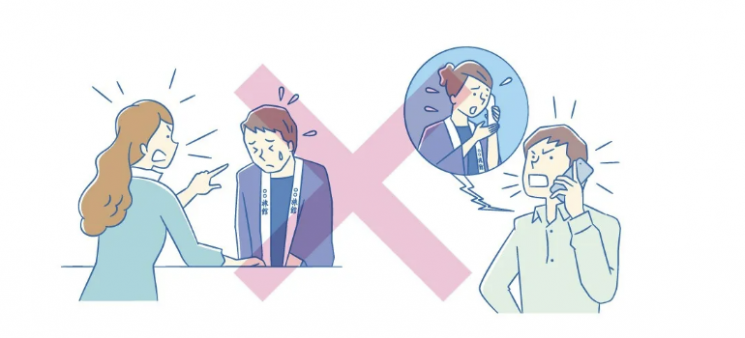
Other cases include ▲ repeatedly demanding that a specific employee be assigned solely to serve them or that certain employees not be scheduled to work ▲ repeatedly demanding apologies through socially unacceptable methods such as kneeling ▲ intoxicated customers demanding prolonged nursing care from staff ▲ verbally reprimanding or making unreasonable demands to staff for extended periods via face-to-face, phone, or email communication ▲ and even if the content of the demand is legitimate, if violence or verbal abuse is involved, the customer can be refused accommodation.
The amendment even specifies concrete examples of problematic demand methods such as violence, injury, threats, defamation, demands to kneel, insults, and verbal abuse. The amendment states that the establishment should first explain that "we cannot comply with such demands, but we will accept your accommodation," and if the customer's gapjil continues, accommodation can be refused. However, requests made by persons with disabilities for convenient lodging are exempted. For example, a hearing-impaired guest requesting a room near the front desk for emergency contact or a visually impaired guest requesting guidance to their room.
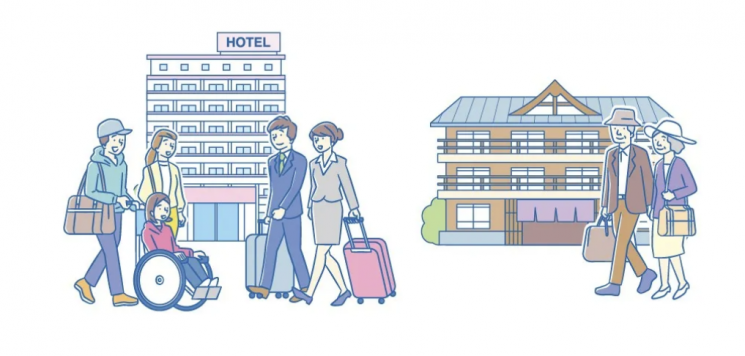
Additionally, requests from persons with mental disabilities for a quiet room environment are considered reasonable. Also, if a person with a disability demands an apology for discrimination at the establishment, the business must comply. This amendment is closer to a collection of actual cases than a strict legal statute, and even in Japan, there have been reactions of surprise, saying, "Is customer gapjil really this diverse?"
The reason the Japanese government is taking such measures is that the lodging industry is a representative sector with severe customer gapjil. Lodging is considered a flagship industry demonstrating Japan's unique hospitality and service culture known as 'Omotenashi (おもてなし)'. While it has been customary to respond to most customer requests, recently, this culture has been criticized for exacerbating the difficulties faced by service workers. According to a survey conducted in August 2021 by the National Ryokan and Hotel Life Hygiene Cooperative Federation, 46.4% of hotel or ryokan operators reported having struggled to respond to customer gapjil.
Kojiro Sayama, a lawyer at Yokohama Law Office, told a Japanese online media outlet, "This amendment to the Ryokan Business Act is ultimately beneficial for both establishments and guests," explaining, "It is significant that ryokans now have clear grounds to refuse accommodation, and customers can also reaffirm the limits of their behavior, making it desirable for everyone."
© The Asia Business Daily(www.asiae.co.kr). All rights reserved.
![Clutching a Stolen Dior Bag, Saying "I Hate Being Poor but Real"... The Grotesque Con of a "Human Knockoff" [Slate]](https://cwcontent.asiae.co.kr/asiaresize/183/2026021902243444107_1771435474.jpg)

















