According to the '2022?2072 Future Population Projections' announced by Statistics Korea in December last year, the population aged 65 and over was 17.4% in 2022. This is an increase of 1.7% compared to data released two years earlier.
Also, as of last month, the population aged 65 and over reached approximately 9.7 million, accounting for 18.9% of the total population, and it is expected to exceed 20% by the end of this year, entering a super-aged society.
In South Korea, which has entered a super-aged society, considering the quality of life of the elderly and socio-economic costs, attention and preventive activities for severe geriatric diseases are necessary. Representative examples include osteoporosis and osteoporotic fractures.
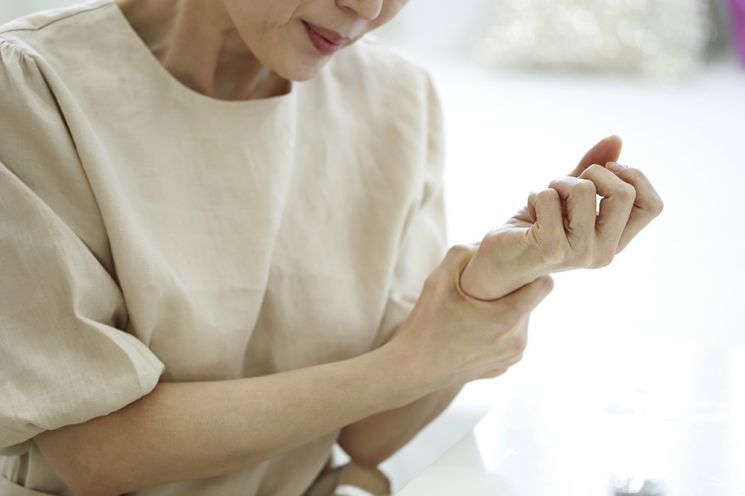
The prevalence of osteopenia, which can be considered a pre-stage of osteoporosis based on bone density tests, is 47.9% among those aged 50 and over, and the prevalence of osteoporosis is 22.4%. This means that one in two adults aged 50 and over has osteopenia, and one in five has osteoporosis. With the increasing elderly population in a super-aged society, the number of osteoporosis patients is also expected to continue rising.
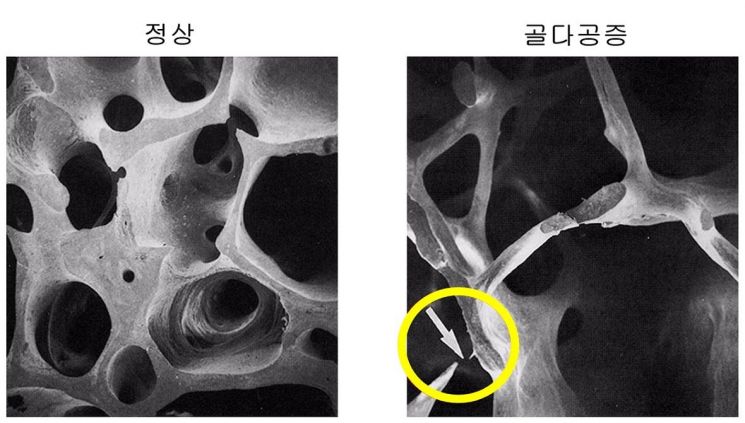
Osteoporosis refers to a condition where the amount of bone decreases and qualitative changes weaken bone strength, resulting in bone volume being lower than normal or increased bone loss, which raises the likelihood of fractures.
Our bones are organs that continuously undergo processes of formation, growth, and absorption throughout life. It is natural for bone mass to gradually decrease as we enter the aging phase. However, osteoporosis can develop if the rate of bone formation slows down and cannot keep up with bone absorption, or if bone absorption occurs too rapidly due to various causes.
If osteoporosis is not properly treated, fractures can occur even from minor impacts. Generally, fractures are understood as bones breaking due to strong external forces. However, osteoporotic fractures are fragile fractures that occur from relatively light external forces such as body weight or falls on weakened bones. Especially in winter, fractures caused by falls on icy roads increase sharply.
Dr. Lee Ji-min, Director of the Joint Center at Daedong Hospital (Orthopedic Specialist), advised, “Since osteoporosis often has no symptoms in its early stages, it is important to regularly check your bone density through continuous screening.” She added, “Because bones weakened by osteoporosis increase the risk of fractures compared to the general population, osteoporotic fractures do not stop at the first occurrence but can lead to re-fractures. Therefore, in a super-aged society, social costs related to elderly osteoporosis and resulting fractures are expected to rise, making early osteoporosis management and fracture prevention crucial.”
According to the 2002-2022 data on osteoporotic fractures and re-fractures in those aged 50 and over, released by the National Health Insurance Service and the Korean Society for Bone and Mineral Research, osteoporotic fractures increased by 346.2%, from 97,380 cases in 2002 to 434,470 cases in 2022. Additionally, re-fractures within one year after fractures of the upper arm, wrist, spine, ankle, pelvis, and other sites showed an increasing trend. In 2022, wrist and ankle fractures were mainly observed in people in their 50s and 60s, while spinal and hip fractures increased with age.
If you have osteoporosis risk factors such as ▲family history ▲advanced age ▲pre-menopausal women with amenorrhea for more than six months ▲postmenopausal women ▲smoking, it is recommended to undergo regular bone density tests. If diagnosed with osteoporosis based on bone density tests, actively following medical advice and treatment is essential to prevent fractures caused by osteoporosis.
Also, it is advisable to properly manage calcium and vitamin D, which are the most important nutrients for bones, and to avoid smoking, drinking, and excessive sodium intake. Exercise helps prevent bone loss, increases muscle strength, and improves balance, thereby reducing the risk of falls. It is recommended to perform exercises suitable for your physical condition for at least 30 minutes, three times a week.
▲Poor lighting ▲doorstep thresholds ▲slippery bathrooms ▲vision impairment ▲advanced age ▲female gender ▲arrhythmia ▲orthostatic hypotension ▲medications such as sleeping pills and anticonvulsants ▲muscle weakness ▲spinal deformities ▲neurological disorders are risk factors for falls. Environmental risk factors should be improved, and medical conditions should be treated by visiting healthcare institutions.
© The Asia Business Daily(www.asiae.co.kr). All rights reserved.
![Clutching a Stolen Dior Bag, Saying "I Hate Being Poor but Real"... The Grotesque Con of a "Human Knockoff" [Slate]](https://cwcontent.asiae.co.kr/asiaresize/183/2026021902243444107_1771435474.jpg)
















