Disease Control and Prevention Agency Sentinel Surveillance Data
Half of Patients Are Infants and Young Children
Norovirus, whose main symptoms include vomiting and diarrhea, is rampant. The number of infected patients has increased fivefold in the past two months.
On the 7th, the Korea Disease Control and Prevention Agency (KDCA) released the number of reported norovirus infection cases collected from 206 sentinel surveillance institutions, including tertiary hospitals. The number of reported cases in the last week of last year (December 24?30) was 268. Compared to November 5?11 last year (49 cases), the number has increased more than fivefold in two months.
The number of norovirus patients remained in the 50s until mid-November but exceeded 200 during December 10?16 last year and has continued to rise, showing a clear epidemic pattern. In particular, infections among infants and young children aged 0?6 accounted for half of the total. The proportion of infants and young children among all infected patients was only 30% in the 46th week (November 12?18 last year), but rose to 68.2% in the 50th week (December 10?16 last year). This means that 7 out of 10 patients were infants or young children. Fortunately, the proportion slightly decreased afterward, but even in the last week of last year, infants and young children accounted for 47.4%, nearly half of the patients.
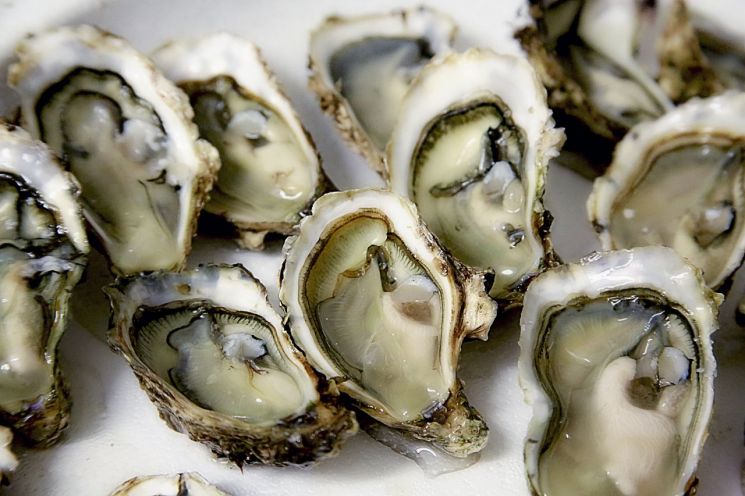
Norovirus, classified as a Class 4 legally notifiable infectious disease in Korea, occurs year-round but mainly between winter and early spring (November to April). Norovirus is resistant to cold, surviving even at minus 20℃. Infection mainly occurs through ingestion of water (groundwater) or food (such as shellfish) contaminated with norovirus, and it can also spread through contact with infected patients or their droplets. For this reason, infants and young children (0?6 years old) who spend a lot of time in group settings such as daycare centers and kindergartens are frequently infected.
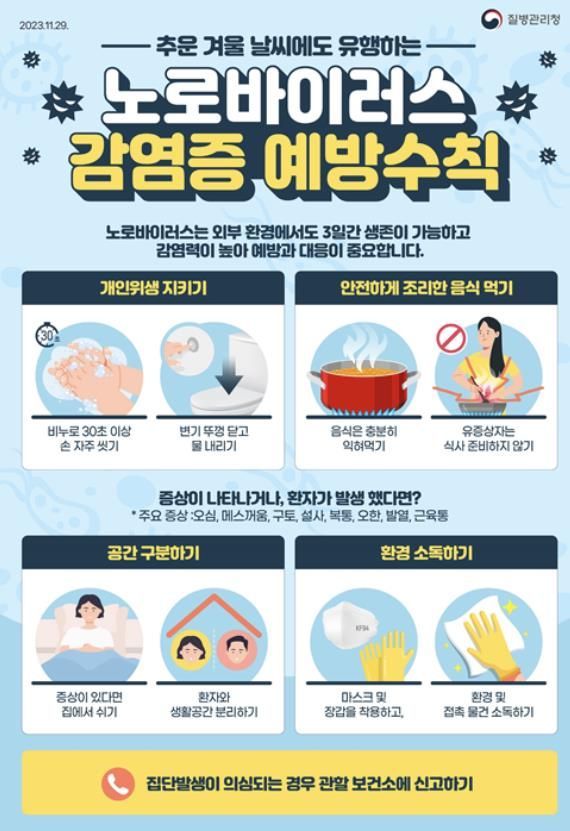
After infection with norovirus, symptoms such as vomiting, diarrhea, and nausea appear within 12 to 48 hours, and some people may experience abdominal pain, chills, fever, and muscle pain. Infants or immunocompromised individuals may develop dehydration if they do not replenish fluids adequately. Norovirus is highly contagious and can survive in everyday environments for up to three days. Additionally, immunity duration is short, so people previously infected with norovirus can be reinfected.
There is no preventive vaccine for norovirus, so thorough hygiene management is necessary to prevent infection. Especially in winter, it is common to get infected by eating raw oysters or raw shellfish. To prevent infection, shellfish should be fully cooked at 85℃ or higher for at least one minute before consumption, and groundwater must be boiled before drinking. Norovirus-infected patients should refrain from attending daycare, school, or work for 48 hours after symptoms disappear. They should also live separately from other family members and always close the toilet lid before flushing after defecation to prevent virus spread through droplets.
A KDCA official emphasized, "To prevent norovirus infection, it is better to wash hands with soap for more than 30 seconds rather than using hand sanitizer," and added, "Food ingredients should be washed under running water and cooked safely and hygienically, such as cooking at 85℃ or higher for at least one minute."
© The Asia Business Daily(www.asiae.co.kr). All rights reserved.
![Clutching a Stolen Dior Bag, Saying "I Hate Being Poor but Real"... The Grotesque Con of a "Human Knockoff" [Slate]](https://cwcontent.asiae.co.kr/asiaresize/183/2026021902243444107_1771435474.jpg)
















