WP Report... Analysis of Virus Quantity in Sewage Samples
"Variant Virus JN.1 is the New Dominant Strain"
Recently, signs of a resurgence of COVID-19 have appeared in the United States. In response, some state hospitals have reinstated mandatory indoor mask-wearing policies.
On the 4th (local time), The Washington Post (WP) reported, based on an analysis of virus levels in wastewater samples?a key indicator of community COVID-19 spread?that infection rates could rise to levels seen from late 2022 to early 2023. The U.S. lifted its COVID-19 emergency status in May last year, but there is a possibility that infection numbers could increase to levels similar to those before the lifting.
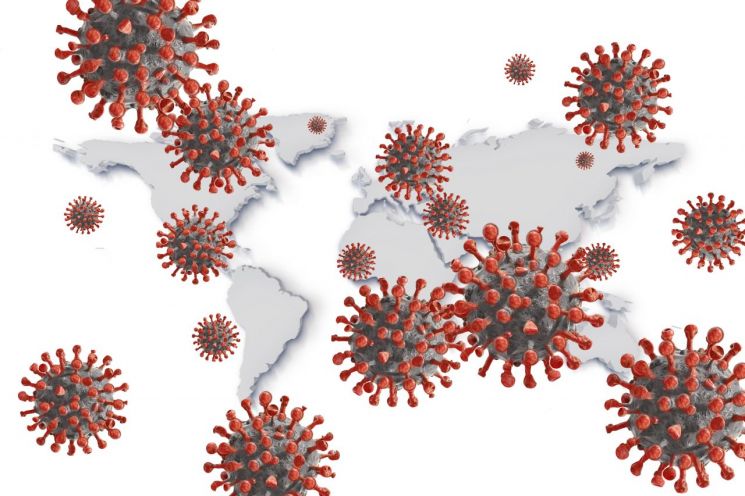
Marissa Donnelly, an expert from Biobot, a U.S. wastewater epidemiology company, told WP, "Currently, a very high proportion of COVID-19 virus is being detected in wastewater," adding, "There is concern for people with weakened immunity or those at risk of severe symptoms."
WP explained that the currently prevalent COVID-19 virus is JN.1, which has become the new dominant strain in various countries including the U.S. JN.1 is known to infect even those who have been vaccinated or have developed antibodies through prior infection.
JN.1 is another subvariant derived from BA.2.86, a subvariant of the Omicron variant of COVID-19. JN.1 is one of the mutated and evolved forms of the spike protein of BA.2.86, which has about 30 more spike proteins than the existing BA.2 subvariant. The number of spike proteins helps estimate the immune evasion capability of the variant.
Public health experts believe that COVID-19 infections increased during the Christmas and New Year holidays, and the spread could intensify further with school reopenings and the start of new work activities.
Although COVID-19 is considered similar to seasonal flu in the U.S., it remains the respiratory illness causing the highest number of hospitalizations. Mandy Cohen, director of the Centers for Disease Control and Prevention (CDC), stated, "Among the three major viruses?COVID-19, influenza, and respiratory syncytial virus (RSV)?COVID-19 still causes the most hospitalizations."
At least four state hospitals reinstate mandatory mask-wearing
The CDC still recommends a five-day isolation period for COVID-19 patients, but many infected Americans are not self-isolating. Moreover, free testing to confirm infection has become more difficult to access than before. Given these circumstances, people often cannot tell whether their symptoms are due to COVID-19, a cold, or the flu, which can unknowingly lead to further spread. As a result, medical institutions such as hospitals, health centers, and long-term care facilities in at least four states?New York, California, Illinois, and Massachusetts?have recently begun reapplying mandatory mask-wearing policies.
© The Asia Business Daily(www.asiae.co.kr). All rights reserved.
![Clutching a Stolen Dior Bag, Saying "I Hate Being Poor but Real"... The Grotesque Con of a "Human Knockoff" [Slate]](https://cwcontent.asiae.co.kr/asiaresize/183/2026021902243444107_1771435474.jpg)
















