December FOMC Meeting Minutes
Almost All Participants Say 'Cut Appropriate'
No Discussion on Market-Expected Cut Timing
Some Disagree, Saying "Additional Hikes May Be Needed"
Officials of the U.S. Federal Reserve (Fed) judged at last month's Federal Open Market Committee (FOMC) meeting that the benchmark interest rate had reached or was near its peak. This effectively marked the end of the rate hike cycle and placed greater emphasis on rate cuts within the year. However, no specific timing or conditions for rate cuts were discussed.
According to the minutes of the December FOMC meeting released by the Fed on the 3rd (local time), nearly all participants conveyed the message that lowering the target range for the federal funds rate by the end of 2024 would be appropriate due to easing inflation. Previously, at last month's FOMC, the Fed held U.S. interest rates steady for the third consecutive time at 5.25?5.5% and signaled the possibility of a 0.75 percentage point cut within the year through a new dot plot.
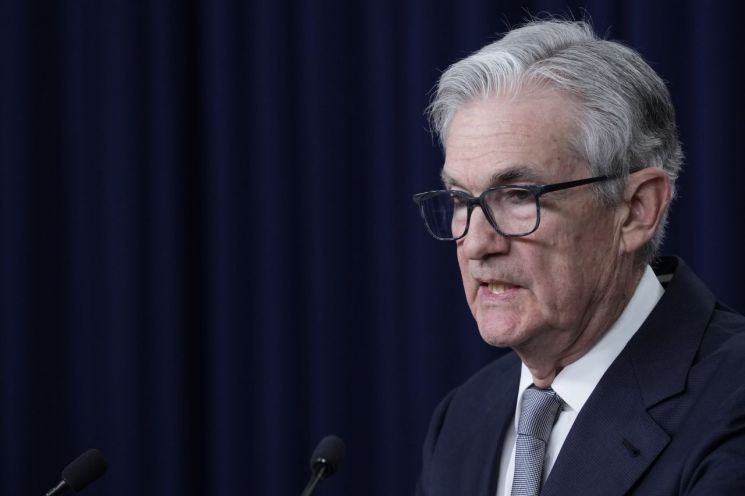
The minutes stated, "Participants viewed the policy outlook as indicating that rates were at or near the peak of this tightening cycle," and "Almost all participants suggested that rate cuts would be appropriate in the submitted forecasts." Fed Chair Jerome Powell also noted at the December FOMC press conference that "discussions about when policy easing (rate cuts) would be appropriate have become more visible."
However, no concrete discussions regarding future rate cuts were confirmed at last month's meeting. Participants agreed that due to unusually high uncertainty, the actual path of monetary policy could vary depending on economic conditions. They also emphasized the importance of cautious decision-making and a data-dependent approach in the monetary policy process. This aligns with remarks made that day by Thomas Barkin, President of the Federal Reserve Bank of Richmond, who stated that this year's rate adjustments depend on economic indicators including inflation.
Some attendees argued at last month's meeting that rates might need to be maintained at the current level for longer than expected. Hawkish comments (favoring monetary tightening) also emerged, suggesting that additional rate hikes might be necessary depending on changes in economic conditions. The minutes noted, "Participants confirmed that maintaining a restrictive policy stance would be appropriate until inflation consistently declines toward the Fed’s 2% price stability target."
There was consensus that progress had been made in the fight against inflation over the past year. However, various risks were also mentioned regarding future policy decisions. Potential concerns for a rebound in inflation included geopolitical risks causing energy prices to surge and the possibility of core commodity prices rising due to supply chain improvements.
The minutes stated, "Participants assessed that inflation risks have eased but remain above the 2% target, and expressed concern that disinflation progress could stall," adding, "Many participants emphasized uncertainty about how long the restrictive monetary policy stance would need to be maintained." Some attendees also pointed out that the Fed could face potential conflicts between its dual mandate of price stability and maximum employment.
Alongside this, the U.S. economy was diagnosed as having slowed in the fourth quarter following strong growth in the third quarter. The minutes evaluated, "Real gross domestic product (GDP) growth appears to be slowing due to the strong growth in the third quarter," and "Labor market conditions are easing but remain tight with robust job gains and low unemployment." It further noted, "Delinquency rates on various types of consumer loans have risen," and "Delinquency rates could spike again due to large loans maturing over the next several quarters."
Currently, market expectations still confirm the possibility of a rate cut as early as March. According to the Chicago Mercantile Exchange (CME) FedWatch tool, the federal funds (FF) rate futures market on this afternoon reflects more than a 70% chance that the Fed will cut rates by at least 0.25 percentage points in March. However, as forecasts spread that the pace of cuts will not be as steep as market expectations, the New York Stock Exchange continued its downward trend that day. The release of key reports such as the nonfarm payrolls report, which the Fed closely monitors, is also scheduled for later this week.
© The Asia Business Daily(www.asiae.co.kr). All rights reserved.


















