Sale of 15% Stake to SPC via PRS Method
Third-Party Sale of Investment Stake Possible
'3.2 Trillion Mid-Term Dividend + Stake Sale' Bond Issuance Limit Increased
Korea Electric Power Corporation (KEPCO) raised 350 billion KRW by selling shares of its subsidiary Korea Electric Power Technology (KEPCO Tech). This move is aimed at securing liquidity amid plans to receive an interim dividend of 3.2 trillion KRW from its power generation subsidiaries. KEPCO has faced difficulties in securing funds due to large-scale deficits and restrictions on corporate bond issuance limits.
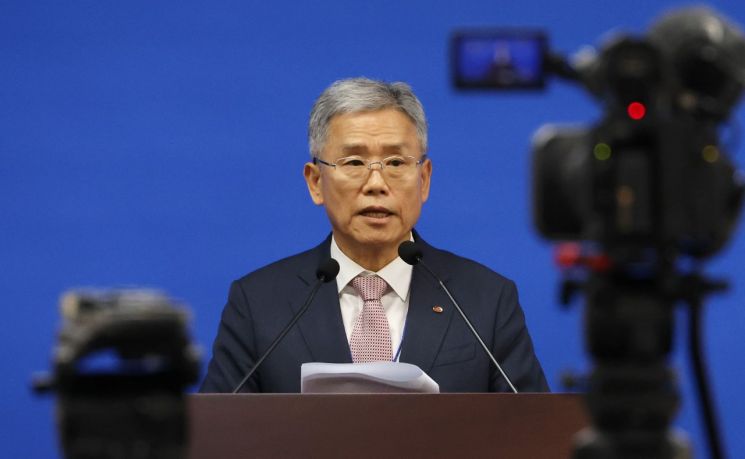
According to the investment banking (IB) industry on the 2nd, KEPCO sold 5,645,094 common shares of KEPCO Tech (14.77% stake) to a special purpose company (SPC) established by Mirae Asset Securities and others. The sale price per share was 62,000 KRW, totaling 350 billion KRW. KEPCO is the largest shareholder of KEPCO Tech, holding 65.77% of the shares. By selling 14.77% of its stake, KEPCO retained the 51% stake necessary to exercise management control. Korea Development Bank is the second-largest shareholder with a 32.9% stake.
Last year, KEPCO attempted to sell part of its KEPCO Tech shares through a block deal (off-hours large volume sale) but failed. At that time, it conducted a demand forecast for a block deal of 1 to 2 million shares (2.6% to 5.2% stake) during the market closing hours, but due to low participation from institutional investors, the sale was canceled. This time, KEPCO changed its approach and succeeded in selling the shares.
KEPCO reportedly signed a Price Return Swap (PRS) contract with the SPC that purchased the KEPCO Tech shares. PRS is a contract for a kind of ‘difference settlement’ centered on the sale price. If KEPCO Tech’s stock price falls below 62,000 KRW, KEPCO compensates the investors for losses; conversely, if the price exceeds 62,000 KRW, investors must pay the excess profits to KEPCO. Profit and loss settlements occur every three months during the one-year PRS contract term. The maturity can be extended by mutual agreement.
Investors receive a swap premium from KEPCO as compensation for the PRS contract, corresponding to a certain rate of return. They also receive dividends if KEPCO Tech distributes them. Essentially, investors have invested in stock-backed debt securities with KEPCO guaranteeing a certain return. Additionally, investors hold the right to freely dispose of their shares at any time. An IB industry insider explained, "Granting investors the right to dispose of shares appears to meet the requirements for a true sale. Since investors must pay KEPCO the capital gains if the stock price rises, they have little incentive to actually sell the shares."
Besides selling KEPCO Tech shares, KEPCO plans to receive a total interim dividend of 3.2 trillion KRW from its subsidiaries. Six power generation subsidiaries?Korea Hydro & Nuclear Power (KHNP), Korea East-West Power, Korea South-East Power, Korea South-West Power, Korea Midland Power, Korea Western Power?and KEPCO KDN held board meetings between the 22nd and 29th of last month to approve the interim dividend proposal requested by the parent company KEPCO. Initially, KEPCO requested a total interim dividend of 4 trillion KRW but agreed to receive 3.2 trillion KRW, 800 billion KRW less. Among the subsidiaries, KHNP approved the largest interim dividend of 1.56 trillion KRW. The other five power generation subsidiaries will pay a total of 1.48 trillion KRW, and KEPCO KDN will pay 160 billion KRW.
The sale of KEPCO Tech shares and the interim dividend were urgent self-help measures to prevent KEPCO from being unable to issue new bonds (KEPCO bonds) this year. According to the Korea Electric Power Corporation Act, KEPCO can issue bonds up to five times the sum of its capital and reserves. If, as the market expects, a loss of around 6 trillion KRW occurs last year, the bond issuance limit will decrease to about 74 trillion KRW. This is far below the current KEPCO bond issuance balance exceeding 80 trillion KRW. Without reducing losses, KEPCO could face a situation where it cannot issue new bonds and must repay maturing bonds, thereby reducing the outstanding bond balance.
However, with the 3.2 trillion KRW interim dividend and the sale of KEPCO Tech shares, KEPCO’s deficit is expected to fall below 3 trillion KRW. Consequently, the sum of ‘capital + reserves’ will increase, raising the corporate bond issuance limit to about 90 trillion KRW this year. This creates room to issue approximately 10 trillion KRW more in corporate bonds beyond the current KEPCO bond issuance balance. A bond market official said, "KEPCO has been issuing over 11 trillion KRW in commercial paper (CP) to raise quick funds due to the bond issuance limit. It needs to issue long-term bonds to reduce short-term borrowings."
© The Asia Business Daily(www.asiae.co.kr). All rights reserved.
![Clutching a Stolen Dior Bag, Saying "I Hate Being Poor but Real"... The Grotesque Con of a "Human Knockoff" [Slate]](https://cwcontent.asiae.co.kr/asiaresize/183/2026021902243444107_1771435474.jpg)















