Intel Launches 5th Gen Xeon Processors in H1
First Support for CXL 2.0 DRAM
Overcoming Existing DRAM Limits
20 Trillion KRW Market Expected by 2028
Memory Market Gains Momentum
Samsung & SK Combined Operating Profit Forecasted at 20 Trillion KRW
Compute Express Link (CXL), regarded as the next-generation interface, is set to enter full-scale commercialization in the first half of this year. The launch of Intel's 5th generation Xeon processor (code name: Emerald Rapids), the first central processing unit (CPU) to adopt the CXL standard, is expected to mark the starting point. If CXL joins the memory semiconductor market, which has recently revived due to increased demand related to artificial intelligence (AI), the timing for Samsung Electronics and SK Hynix to recover their profits is expected to accelerate.
According to industry sources on the 2nd, Intel plans to release the first CPU compatible with the CXL standard, the 5th generation Xeon processor, in the first half of this year.
Currently, CXL memory is installed in some products such as Intel's 4th generation Xeon processor (Sapphire Rapids). However, the 'scalability' characteristic of CXL is considered somewhat limited because it supports CXL 1.1. CXL 1.1 features symmetrical CXL-supported memory per CPU, which limits the number of DRAM modules that can be used per CPU. Generally, a CPU can use up to 16 DRAM modules.
On the other hand, the 5th generation CPU supports CXL 2.0 DRAM, enabling full-scale expansion. By integrating the interface into one, it allows direct communication between devices and memory sharing, significantly increasing capacity. This means both capital investment and cost efficiency can be improved. Especially since Intel holds over 80% market share in the global server CPU market, the CXL 2.0 ecosystem is expected to expand rapidly through Emerald Rapids.
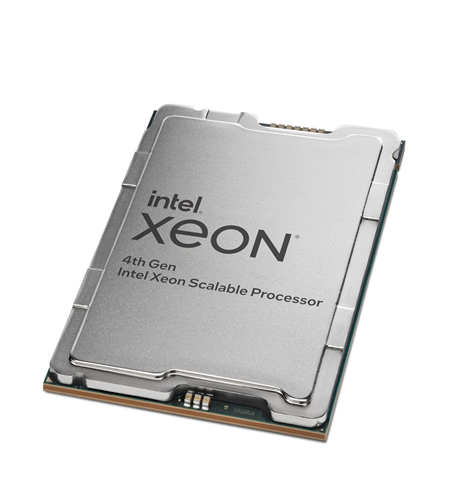
The semiconductor industry expects that after Intel's CPU release, CPUs supporting CXL 2.0 will emerge one after another. AMD is also likely to produce CPUs or various processors supporting similar standards. This will accelerate the expansion of the CXL market.
With the commercialization of CXL 2.0 starting in the first half of this year, DRAM demand is expected to increase further. Market research firm Yole Group forecasts the global CXL market to reach $15 billion (approximately 20 trillion KRW) by 2028, with the CXL DRAM market accounting for 80% of that, or $12 billion. Yole Group predicts, "After 2027, all CPUs in the industry will be designed to interoperate with CXL, making CXL-dedicated DRAM even more prominent."
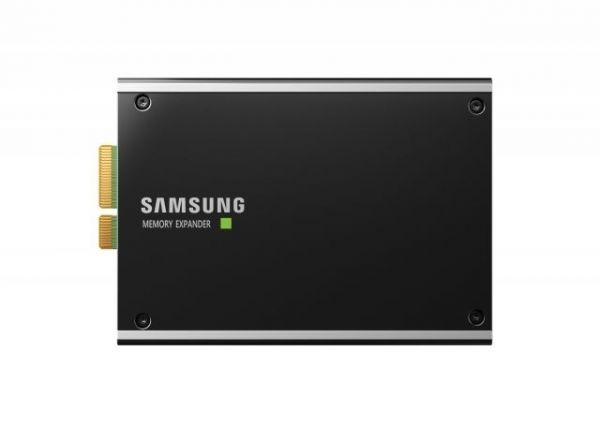
Competition between Samsung Electronics and SK Hynix, leading the CXL DRAM market, is expected to intensify. Securing the initial validation from Intel is crucial to capturing the 20 trillion KRW market.
Both companies have been accelerating mass production of CXL 2.0 memory since the end of last year. Samsung Electronics and SK Hynix are mass-producing 128GB and 96GB CXL 2.0 memory modules, respectively. Samsung Electronics recently succeeded in DRAM compatibility verification in collaboration with Red Hat, a server operating system (OS) company.
Expectations for performance are also rising. Prices of DRAM and NAND flash, which hit their lowest point, are recovering, and following increased demand for high bandwidth memory (HBM), sales of high-value-added memory through CXL DRAM are expected to increase significantly. The combined operating profit of Samsung Electronics' DS division and SK Hynix is projected to be around 20 trillion KRW this year.
© The Asia Business Daily(www.asiae.co.kr). All rights reserved.
![Clutching a Stolen Dior Bag, Saying "I Hate Being Poor but Real"... The Grotesque Con of a "Human Knockoff" [Slate]](https://cwcontent.asiae.co.kr/asiaresize/183/2026021902243444107_1771435474.jpg)
















