Population, Households & Families, Income & Consumption, and 13 Other Sectors
63.1% of Gwangyang Citizens Hope to Reside in Gwangyang for the Next 10 Years
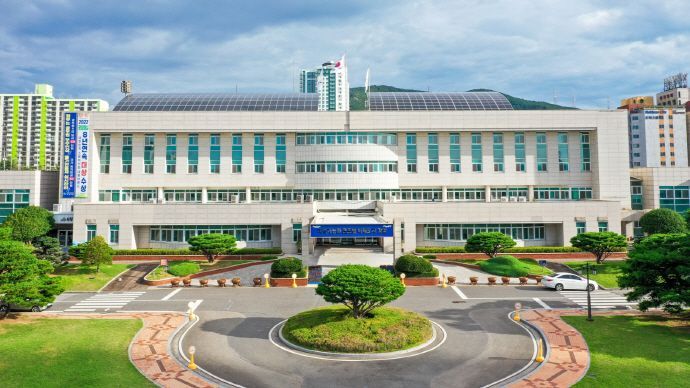
Gwangyang City, Jeollanam-do, announced the results of the "2023 Gwangyang City Social Survey," which investigated social concerns related to citizens' quality of life, living standards, and policy demands, on the 28th.
This survey was conducted from September 1 to 13, targeting all household members aged 15 and older in 1,008 households across 84 sample survey districts within Gwangyang City.
The survey items consist of a total of 13 sections, including population, household and family, consumption and income, labor, education, and Gwangyang City-specific items.
Regarding solutions to the low birthrate issue as perceived by Gwangyang citizens, 29.0% responded with "Expansion of infant and toddler childcare and education support," and 15.6% with "Expansion of pregnancy and childbirth support." The ideal number of children was highest at 63.6% for two children.
The average monthly household income of Gwangyang citizens was highest at 17.6% in the "2 to less than 3 million KRW" range. Eight out of ten citizens responded that they currently have income, with income satisfaction rated as average by 48.2%, and 48.4% reported "having difficulties" in maintaining their livelihood.
The adequacy of jobs for Gwangyang citizens was rated "average" by 43.1%, and overall job satisfaction was 30.8%. The main reason for not working was "childcare or housework," accounting for 38.1%.
About four out of ten Gwangyang citizens responded that "cancer" is the disease they worry about the most, with "decline in quality of life" being the top reason for concern at 30.4%.
The smoking rate among citizens was 17.8%, and 44.8% had attempted to quit smoking. The most common reason for failing to quit was "due to stress," at 48.6%.
Citizens' satisfaction with their residential environment was 38.0% for "housing," 42.0% for "infrastructure such as water supply, sewage, and city gas," and 30.9% for "parking lot usage within residential areas."
The average residence period of Gwangyang citizens was 31 years, and 63.1% responded that they wish to continue living in Gwangyang City even after the next 10 years.
Regarding priority environmental issues, responses were "climate change disaster response" at 34%, "air pollution" at 25.2%, and "risk of radioactive materials" at 15.9%, in that order.
The convenience facilities that need to be increased in the future were "healthcare facilities" at 25.0%, "cultural and artistic facilities" at 13.2%, and "living sports facilities" at 11.0%. The difficulties faced by the elderly were "health problems" at 44.2% and "economic difficulties" at 18.7%.
The overall life satisfaction of Gwangyang citizens averaged 6.5 points, happiness frequency averaged 6.6 points, and worry frequency averaged 5.0 points. For digital technology fields that should be prioritized for Gwangyang City's development, 27.7% of citizens chose "healthcare and medical fields," and 26.2% selected "SNS" as the means to acquire city administration information.
The areas that Gwangyang City should focus on to become a better city to live in were "job creation and regional economic revitalization through fostering new growth industries" at 23.2%, and "creating a tourism and cultural city rich in attractions and entertainment" at 21.0%.
When establishing youth policies, 28.1% of citizens prioritized "expansion of quality jobs," and to solve aging population issues, 34.5% selected "expansion of medical and healthcare facilities" as the top project.
Additionally, to improve welfare for the disabled, there is a need for "expansion and support of jobs for the disabled," for cultural facilities to be increased in the future, "experience facilities," for health promotion, the priority health center project is "dementia prevention," and to create a happy city suitable for child-rearing, "expansion of child-rearing infrastructure" is needed.
The results of the "2023 Gwangyang City Social Survey" can be viewed on the Gwangyang City Hall website (sunshineGwangyang → Statistics Information → Statistical Data Room → Social Survey).
Jang Min-seok, Director of the General Affairs Division, said, "The social survey results announced this time measure and analyze the current living conditions of citizens and are used as useful basic data for various business promotions and policy establishment. We hope that the social survey results will be utilized as data that can contribute greatly to improving citizens' quality of life and regional development."
Asia Economy Honam Reporting Headquarters, Reporter Heo Seon-sik hss79@asiae.co.kr
© The Asia Business Daily(www.asiae.co.kr). All rights reserved.
![Clutching a Stolen Dior Bag, Saying "I Hate Being Poor but Real"... The Grotesque Con of a "Human Knockoff" [Slate]](https://cwcontent.asiae.co.kr/asiaresize/183/2026021902243444107_1771435474.jpg)















