Leaving Tokyo for Scenic Small Towns
Emerging as a Solution to Regional Depopulation
In Japan, a so-called 'education migration' trend is emerging recently, where families in Tokyo and the metropolitan area are moving to regional small towns for their children's education. Parents, struggling to afford overseas study due to the weak yen and high inflation, are deciding to relocate, while local governments facing depopulation and regional extinction issues are actively promoting such moves. Attention is focused on whether this will lead to medium- to long-term population redistribution effects.
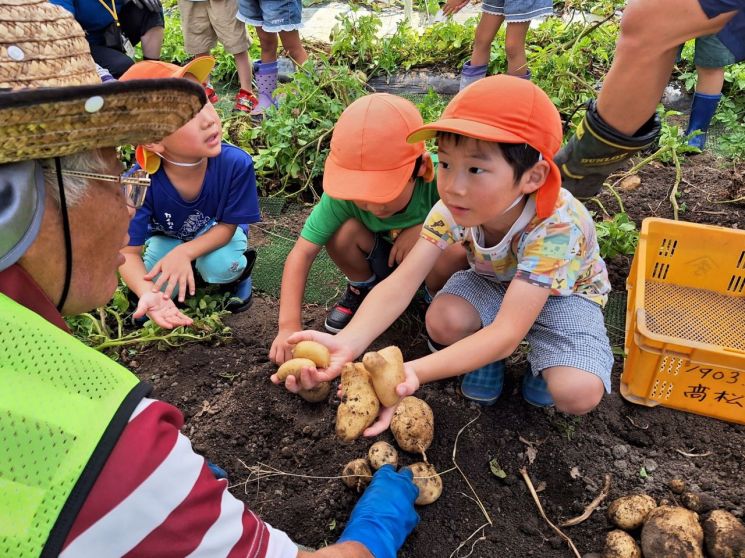 Promotional photo for 'Daycare Study Abroad' in Yamagata Prefecture. (Photo by Daycare Study Abroad platform Kichihike)
On the 28th, Nihon Keizai Shimbun (Nikkei) reported, citing an interview with a family in their 40s who moved from Chuo Ward in Tokyo to Zushi City in Kanagawa Prefecture, that the number of parents leaving Tokyo, where academic enthusiasm is high and competition intense, to move to regional small towns for 'education migration' is increasing.
Ms. Mari Hirata, who decided to relocate, told Nikkei, "Ahead of my child's elementary school entrance ceremony, flyers for cram schools preparing for junior high school exams were being handed out in front of the school," adding, "I felt a difference in educational values due to the overheated academic enthusiasm in Tokyo, where 80-90% of children attend cram schools until the third grade of elementary school." Afterward, Hirata searched for neighborhoods with established education systems, such as Fukuoka Prefecture or Nagano Prefecture, that also offered easy access to mountains or the sea after school, and ultimately moved to Zushi City in Kanagawa Prefecture.
Originally, 'education migration' in Japan, where families relocate for their children's education, was considered an option only for the wealthy. Recently, however, the intensified weak yen and high inflation have made overseas education financially burdensome. As a result, domestic study in small towns with good natural environments has emerged as a new alternative.
In particular, Kanagawa Prefecture, about a 30-minute ride by high-speed train, is recently becoming a second education city. In September, the prestigious British international school Rugby School Japan opened. Although the tuition is high, ranging from 4.5 to 5.5 million yen per year (40 to 50 million KRW), it is much cheaper than sending children abroad, leading to a queue of applicants hoping to move from Tokyo and nearby cities.
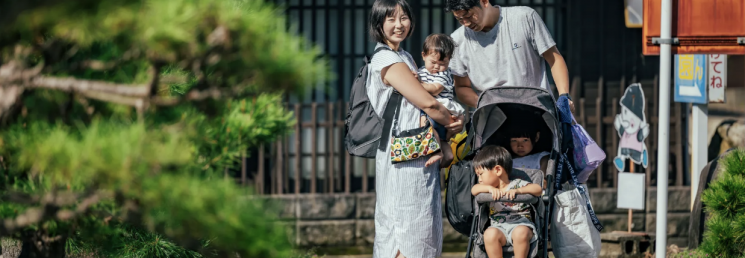
To lower the barriers to moving to small towns, some places have introduced a 'one-week study experience.' In Ome City, northwest Tokyo adjacent to Saitama Prefecture, since October, parents and preschool children can stay locally for one week and send their children to city daycare centers through a 'daycare study abroad' program. It has gained popularity through various programs such as rice threshing experiences and riverside walks for children.
In Japan, where population decline due to low birthrates and aging is severe, there is also hope that this education migration could help solve regional extinction. The domestic migration promotion organization 'JOIN' has already been established in Japan, providing education migration information tailored to purposes, regional information, and information on jobs and vacant houses for parents. Local governments are also actively involved; for example, Saitama Prefecture has been running a 'migration project' since 2021 that offers daycare information and consultations on telework for parents who have relocated for their children.
In Wakayama Prefecture, it was announced in June that a closed school would be remodeled into a prestigious elementary, junior high, and high school specializing in second foreign languages. Surrounded by mountains and near the Kumano Kodo pilgrimage route, the prefecture declared it would accept more than half of the students as 'domestic study abroad students' from outside Wakayama Prefecture, although no dormitories will be provided. This signals a strong encouragement of direct regional migration. Until now, Wakayama Prefecture had only two private elementary schools, but with this new establishment, it is expected that the population moving for education will increase, revitalizing the region.
Following the COVID-19 pandemic, with the increase in telework and a cultural shift toward valuing work-life balance, Japan's education migration phenomenon is expected to continue for the time being. Nikkei reported, "Recently, there is a growing emphasis on a lifestyle that values one's own family rather than the company. Regions where parents and children grow together while coexisting with the community will become even more popular in the future."
© The Asia Business Daily(www.asiae.co.kr). All rights reserved.
![Clutching a Stolen Dior Bag, Saying "I Hate Being Poor but Real"... The Grotesque Con of a "Human Knockoff" [Slate]](https://cwcontent.asiae.co.kr/asiaresize/183/2026021902243444107_1771435474.jpg)
















