The Supreme Court has ruled that even if the results of evaluations of daycare centers are not individually notified in writing or electronically but are instead published on the Daycare Center Information Disclosure Portal website, it is difficult to view this as a procedural defect violating the Administrative Procedures Act.
This is because, according to the interpretation of the Infant Care Act and its enforcement rules, it should be regarded as an exceptional case where there is a special provision exempting the administrative agency from issuing a written disposition.
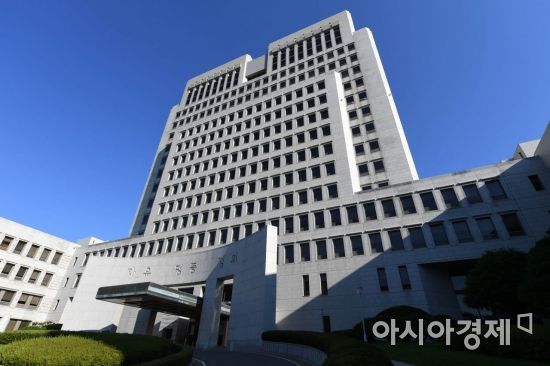
On the 27th, according to the legal community, the Supreme Court's Second Division (Presiding Justice Lee Dong-won) overturned the appellate court's partial ruling in favor of daycare center director A from Gyeonggi Province in an appeal trial regarding a lawsuit against the Minister of Health and Welfare and the state for confirmation of evaluation certification grades, and remanded the case to the Seoul High Court with a ruling in favor of the defendant.
The court stated, "The appellate court's judgment that the evaluation grade assignment disposition by the Minister of Health and Welfare against the plaintiff was invalid due to a serious and obvious procedural defect violating the Administrative Procedures Act contains an error in the application of the law concerning the Administrative Procedures Act, the Infant Care Act, and its enforcement rules, which affected the judgment," explaining the reason for reversal and remand.
The daycare center operated by A in Icheon-si, Gyeonggi Province, was selected as a public-type daycare center by the local government in 2014 and was reselected in 2017, receiving operational subsidies.
However, during an on-site inspection conducted in February 2020, when the evaluation certification validity period was nearing expiration, one container of malt syrup was found stored with its lid open in the pantry of the kitchen, resulting in a B grade in the institution grade evaluation conducted by the Korea Childcare Promotion Institute.
A, who was notified of this result by the Minister of Health and Welfare through the Childcare Integrated Information System in the form of a work communication, explained to the Korea Childcare Promotion Institute that "the malt syrup in question is not a food ingredient but an art activity material," but this was not accepted on the grounds that "there was no separate indication that it was an art activity material."
Subsequently, the Minister of Health and Welfare published the evaluation results of the daycare center on the Daycare Center Information Disclosure Portal website in accordance with the Infant Care Act and its enforcement rules. The Governor of Gyeonggi Province then canceled the public-type daycare center designation based on this.
A filed a lawsuit claiming that there was a procedural defect because the Minister of Health and Welfare did not follow the notification procedures stipulated in the Administrative Procedures Act during the publication of the evaluation results.
Article 24, Paragraph 1 of the Administrative Procedures Act, which stipulates the method of administrative disposition, states, "When an administrative agency makes a disposition, it shall be in writing unless there are special provisions in other laws or regulations," establishing the principle that it should be done in writing. It also allows electronic documents if the party consents.
In the trial, A argued that it was illegal for the Minister of Health and Welfare to notify the evaluation results via the internet and publish them on the website without A's consent.
On the other hand, the Minister of Health and Welfare countered that the Infant Care Act and its enforcement rules stipulate that the government's daycare center evaluations be published on the internet homepage, and this corresponds to the "special provisions in other laws or regulations" mentioned in the Administrative Procedures Act, so there is no problem.
The first and second trials accepted A's claim and ruled that the Minister of Health and Welfare's disposition to assign the evaluation grade was invalid.
The reason was that the provisions of the Infant Care Act relate only to the "external publication" of evaluation results and do not regulate the method of the disposition itself, such as grade assignment, and that administrative dispositions are generally made by delivery in writing or electronic documents.
However, the Supreme Court's judgment was different.
The court premised that "Article 24, Paragraph 1 of the Administrative Procedures Act recognizes exceptions to the 'obligation to deliver administrative dispositions in writing' by administrative agencies."
Furthermore, the court stated, "The Minister of Health and Welfare's external publication of the evaluation grade assignment decision in this case through this publication corresponds to the 'special provisions in other laws or regulations' stipulated in the main text of Article 24, Paragraph 1 of the Administrative Procedures Act. Therefore, it is difficult to view the failure to notify the plaintiff, the disposition recipient, by written or electronic document as a procedural defect violating the method of disposition prescribed by the Administrative Procedures Act."
The court cited that Article 30, Paragraph 6 of the Infant Care Act delegates the content and method of publication of daycare center evaluation grades and other evaluation results to be prescribed by the Minister of Health and Welfare, and accordingly, the enforcement rules of the Infant Care Act stipulate the matters to be published and the methods of publication, which include publishing the evaluation results on the websites of the Ministry of Health and Welfare, the Childcare Comprehensive Support Center, or institutions or organizations entrusted with evaluation tasks.
These provisions can be seen as specially regulating the method of disposition regarding the Minister of Health and Welfare's decision to assign daycare center evaluation grades, and this can be regarded as a "special provision in other laws or regulations" recognized as an exception to the principle of written delivery of administrative dispositions under the Administrative Procedures Act.
Additionally, the court mentioned that when daycare center evaluations were conducted only for those who applied, the enforcement rules of the Infant Care Act included provisions on "written notification," but as the system changed to require all daycare centers to be evaluated mandatorily, those provisions were deleted. The court stated, "The deletion of the regulation on individual notification of evaluation results appears to be because the method of disposition regarding the Ministry of Health and Welfare's grade assignment decision was specially set as 'publication.'"
© The Asia Business Daily(www.asiae.co.kr). All rights reserved.
![Clutching a Stolen Dior Bag, Saying "I Hate Being Poor but Real"... The Grotesque Con of a "Human Knockoff" [Slate]](https://cwcontent.asiae.co.kr/asiaresize/183/2026021902243444107_1771435474.jpg)
















