Osstem Implant and Motiva Korea Launch Financial Products
Medical Community Tense Over Emergence of 'Direct Transaction' Distribution Channels
The Yoon Seok-yeol administration is accelerating the implementation of the non-reimbursable medical treatment disclosure system, changing the market landscape. Companies manufacturing and selling non-reimbursable medical devices are launching new products combined with financial services. As new products emerge under the system aimed at guaranteeing consumer choice, the medical community, which has virtually monopolized the sales rights of non-reimbursable medical devices, appears tense about the emergence of a new distribution channel through direct transactions.
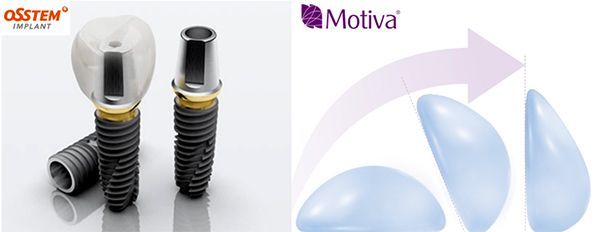
Motiva Korea, an importer and distributor of breast implants, launched the MtoZ service earlier this month. Motiva MtoZ is an installment payment service that offers silicone gel breast implants to the general public on a subscription basis. After consulting with a hospital or clinic, if the patient wishes to use MtoZ payment, a split payment contract related to the implant is signed with Motiva Korea through a credit screening process. Since the implant is billed separately to the importer-distributor and the medical fees are billed separately by the hospital, the company explains that this system aligns with the purpose of the non-reimbursable medical treatment disclosure system. The company stated, "Consumers pay only the implant cost to Motiva Korea after completing medical treatment at a hospital or medical institution, maintaining the existing medical device distribution procedures and traceability." They added, "We have completed a legal review confirming there are no issues under current laws."
Combining financial products with medical device sales is not limited to the plastic surgery market. Hana Capital signed a business agreement earlier this month for a strategic financial partnership with Osstem Implant. Osstem Implant, a leader in the dental market, is now actively entering financial marketing by partnering with Hana Capital. Hana Capital plans to provide financial and service support including ▲a dedicated non-face-to-face installment finance consultation window for Osstem Implant customers ▲financial support related to the sale of dental equipment such as implants. Park Seung-oh, CEO of Hana Capital, said, "We are pleased to contribute to introducing world-class medical equipment and technology to the domestic dental industry."
As medical device manufacturers and sellers launch new products combined with financial services, the medical community has expressed concerns. The Korean Society of Plastic and Reconstructive Surgeons stated, "Unlike general subscription services such as OTT viewing or rentals, which can be stopped or products returned, implanted human materials inside the body cannot be returned or discontinued without additional medical procedures." They pointed out, "Patients may be pressured to remove implants due to non-payment, posing serious health risks, and contract termination could lead to additional financial burdens and a decline in creditworthiness." They added, "Since breast implants are classified as Class 4 medical devices with high risk and are subject to traceability, they should be carefully selected based on the opinion of a plastic surgery specialist," and argued, "In most countries including the United States, medical devices classified as human implant materials are not sold to the general public."
A Motiva Korea representative said, "After consultation based on the opinion of a plastic surgery specialist, this is merely a payment service that reduces the burden of lump-sum payment by allowing consumers to choose their payment method. We do not sell medical devices directly to customers or engage in direct transactions. For aftercare, our warranty system supports surgery costs and implants up to 6 million KRW within 5 years in cases of capsular contracture stages 3 or 4 or rupture, making aftercare part of the product." They added, "We do not demand implant removal if subscription payments are missed after surgery."
Meanwhile, the non-reimbursable medical treatment cost disclosure system is based on Article 45-2 of the Medical Service Act, whereby the Minister of Health and Welfare, together with the Health Insurance Review and Assessment Service, verifies and discloses information such as prices submitted by medical institutions to help ensure appropriate non-reimbursable services and assist patients in making reasonable choices. To facilitate the practical use of this system introduced to guarantee consumers' right to know, the Yoon Seok-yeol administration has accelerated gathering opinions from various sectors. As a result, the Ministry of Health and Welfare implemented a revised ordinance in September regulating the reporting items, frequency, and details of non-reimbursable medical treatment costs.
Woo Bin, Legal News Reporter
※This article is based on content supplied by Law Times.
© The Asia Business Daily(www.asiae.co.kr). All rights reserved.

















