US CDC "Not More Severe Than Other Variants"
WHO Recently Designates JN.1 as a 'Variant of Interest'
The subvariant of the COVID-19 virus, 'JN.1', which was first discovered last September, is rapidly spreading, causing a sharp increase in patients.
According to the Financial Times (FT) and others on the 24th (local time), the U.S. Centers for Disease Control and Prevention (CDC) reported that 'JN.1' accounts for 44% of COVID-19 cases in the United States. This variant, first identified last September, had a minimal presence until early last month. However, within just two weeks, it has spread not only in the U.S. but also across Europe?including the UK, France, and Sweden?as well as Singapore, Canada, and other parts of the world. Currently, about 27% of COVID-19 cases worldwide are estimated to be infected with this virus variant.
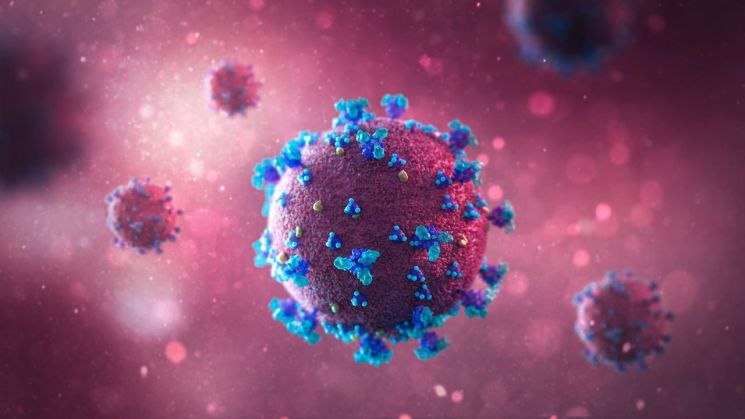
JN.1 is known to be another subvariant derived from BA.2.86, a subvariant of the COVID-19 Omicron variant. JN.1 is one of the forms in which the spike protein of BA.2.86 has mutated and evolved. BA.2.86 has about 30 more spike proteins than the existing subvariant BA.2. The number of spike proteins helps estimate the immune evasion capability of the variant.
The World Health Organization (WHO) recently announced that the number of COVID-19 cases worldwide increased by 52% over the past four weeks (November 20 to December 17) compared to the previous period. Although WHO designated JN.1 as a variant of interest, it did not consider the risk level to be high. In a statement on the 19th, WHO said, "Based on the available evidence, the risk level that JN.1 poses to global public health is currently considered low," and added, "We will continue to monitor JN.1 as a variant of interest."
WHO classifies the risk level of COVID-19 variants by comprehensively considering factors such as transmissibility, symptoms, and vaccine effectiveness. Variants of Interest (VOI) are considered to have a higher risk than Variants Under Monitoring (VUM) but lower risk than Variants of Concern (VOC).
Experts expect infections to spread further due to low vaccination rates and increased movement during the year-end holidays such as Christmas and New Year's. As of the first week of this month, only about 18% of U.S. adults had received the new COVID-19 vaccine released last September. Among vulnerable groups, such as nursing home residents, only one in three had been vaccinated.
Along with this, the flu vaccination rate has also declined. As of the first week of this month, about 42% of U.S. adults had received the flu vaccine, a 3 percentage point decrease from about 45% during the same period last year. Dr. Manisha Patel of the CDC said, "During this time, more people want to travel and meet with family," adding, "All of this affects the spread of the virus."
Cases of seasonal flu are also increasing. According to the latest CDC estimates, this season there have been 3.7 million flu patients in the U.S., with 38,000 hospitalizations and 2,300 deaths.
© The Asia Business Daily(www.asiae.co.kr). All rights reserved.
![Clutching a Stolen Dior Bag, Saying "I Hate Being Poor but Real"... The Grotesque Con of a "Human Knockoff" [Slate]](https://cwcontent.asiae.co.kr/asiaresize/183/2026021902243444107_1771435474.jpg)















