Houthi One-Way Drone $2,000
US Military Surface-to-Air Missile $2,000,000
The U.S. Department of Defense is reportedly concerned about the enormous costs associated with responding to security threats posed by Yemen's Houthi rebels to trade routes in the Red Sea, according to the American political media outlet Politico. The U.S. military's losses are snowballing as expensive missiles costing over 2.6 billion Korean won are being used to shoot down a single low-cost drone employed by the Houthis.
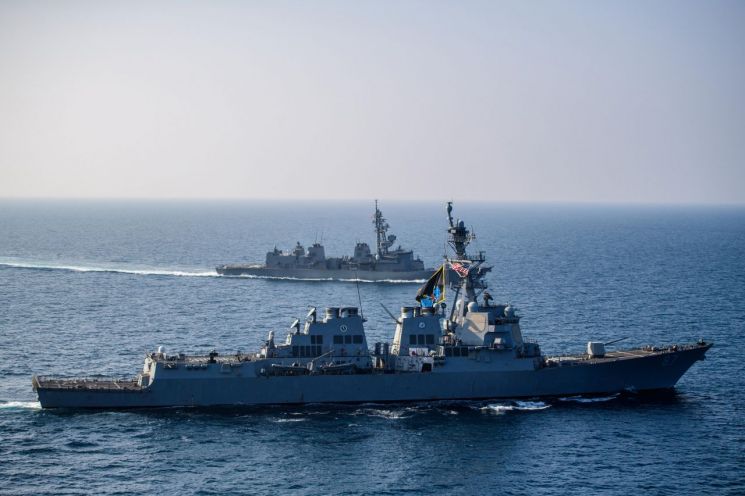
On the 19th (local time), Politico cited senior officials within the U.S. Department of Defense saying, "The cost of using expensive surface-to-air missiles priced at over $2 million (approximately 2.6 billion Korean won) per shot to shoot down Houthi drones that cost only a few thousand dollars each is becoming increasingly worrisome."
According to Politico, the one-way suicide drones used by the Houthi rebels cost between $2,000 and $20,000 each. In contrast, the surface-to-air missiles fired from U.S. destroyers to intercept these drones cost between $1.8 million and $2.1 million. This means the price difference between the two sides can be more than 1,000 times.
Since the clashes between Israel and Hamas, the Houthi rebels have indiscriminately attacked trade vessels in the Red Sea. Over the past two months, the U.S. military has shot down approximately 38 Houthi drones and missiles, most of which are estimated to be low-cost one-way drones. Even a rough estimate suggests that the U.S. military has absorbed losses exceeding 100 billion Korean won to shoot down Houthi drones.
Nevertheless, the reason the U.S. military maintains a large fleet deployed in the Red Sea to block attacks by the Houthi rebels is believed to be the critical importance of the Red Sea trade route connected to the Suez Canal. This route is a vital trade artery through which more than 12% of the world's daily cargo volume passes, serving as a key gateway for European freight and Middle Eastern oil shipments worldwide.
The U.S. government plans to secure the Red Sea trade route not only with its own forces but also by forming a multinational fleet with 10 allied countries. However, there are concerns that costs could balloon if the Houthi rebels continue their indiscriminate attacks using inexpensive drones.
Meanwhile, the Houthi rebels have threatened to intensify drone and missile attacks, vowing to resist U.S. intervention. On the 20th, Houthi leader Abdel Malek al-Houthi stated in a speech on the rebel-operated Al Masirah TV, "If the U.S. intervenes further, we will not remain passive and will target the U.S., its warships, and interests with missiles."
© The Asia Business Daily(www.asiae.co.kr). All rights reserved.
![Clutching a Stolen Dior Bag, Saying "I Hate Being Poor but Real"... The Grotesque Con of a "Human Knockoff" [Slate]](https://cwcontent.asiae.co.kr/asiaresize/183/2026021902243444107_1771435474.jpg)















