'Big Player' Managing 1,400 Luxury Brands
Maximizing Synergy When Combined with Coupang Logistics
High Potential for Market Paradigm Shift
Department Stores, Practically 'Monopolistic', on Edge
Coupang's acquisition of Farfetch, the world's largest online luxury company, is expected to cause a significant shift in the domestic luxury market. By securing access to 1,400 luxury brands worldwide at once, a confrontation with department stores that have long dominated the luxury market has become inevitable. Industry insiders say, "If Coupang's Rocket Delivery capabilities combine with Farfetch in Korea, where demand for luxury goods is high, it will rapidly emerge as a key competitor to department stores."
According to industry sources on the 19th, Coupang's parent company, Coupang Inc., which acquired the luxury fashion platform Farfetch yesterday, is expected to apply Rocket Delivery service to Farfetch as early as the first half of next year. Rocket Delivery is Coupang's flagship service that delivers products the day after an order is placed. It also offers free shipping and returns, making it a core strength of Coupang's logistics system. If this service is integrated into Farfetch, consumers will be able to receive luxury goods that are difficult to find offline the next day with just a few taps on their smartphones at home.
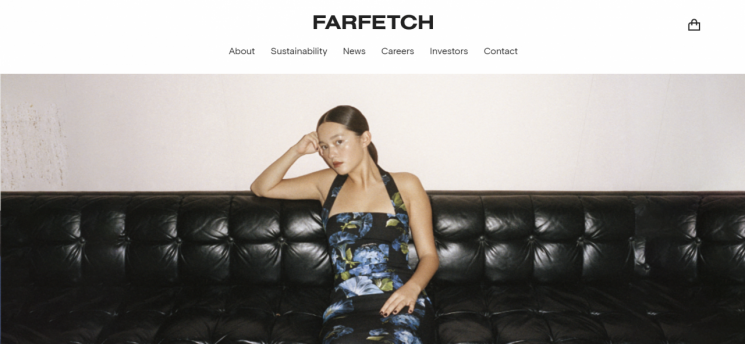 The homepage of Farfetch, the world's largest luxury fashion platform, acquired by Coupang Inc., Coupang's parent company, announced the acquisition on the 19th.
 [Photo by Farfetch homepage capture]
However, it is still uncertain in what form Coupang will implement Rocket Delivery for Farfetch. The industry expects that Coupang may expand the luxury beauty brand exclusive section 'Rocket Luxury,' launched in July, to include luxury fashion items or establish a separate exclusive section.
If the combination of Rocket Delivery and Farfetch materializes in any form, the domestic distribution channel that will suffer the most significant impact is expected to be department stores, according to industry consensus. Department stores are reported to have increased the proportion of luxury sales to 40% following the transition to the COVID-19 endemic phase, boosted by a base effect. Last year, Shinsegae Department Store (KRW 2.4869 trillion) and Hyundai Department Store (KRW 5.0141 trillion) recorded record-high sales, which analysts attribute to the increased share of luxury sales. Ultimately, this means a strong competitor has emerged in a major revenue source for department stores.
Moreover, the competitor's foundation is the world's largest luxury fashion e-commerce platform encompassing 1,400 global luxury brands, including the so-called 'Erusha' (Herm?s, Louis Vuitton, Chanel), Dolce & Gabbana, and YSL. These are brands that ordinary department stores have spent a long time and effort to onboard. In fact, among the Erusha brands alone, only seven out of about 70 stores across Korea's five major department stores?Lotte, Shinsegae, Galleria, etc.?have all three brands. An industry insider said, "From Coupang's perspective, having acquired Farfetch, it now possesses overwhelming luxury competitiveness in terms of the number of brands."
Furthermore, if Rocket Delivery, utilizing over 100 logistics centers established across 30 regions nationwide, is added, there is talk that the luxury market paradigm, once considered the exclusive domain of department stores, could change. Another industry insider said, "We look forward to seeing whether Coupang will demonstrate a new innovative presence in the luxury market following its Rocket Delivery innovation."
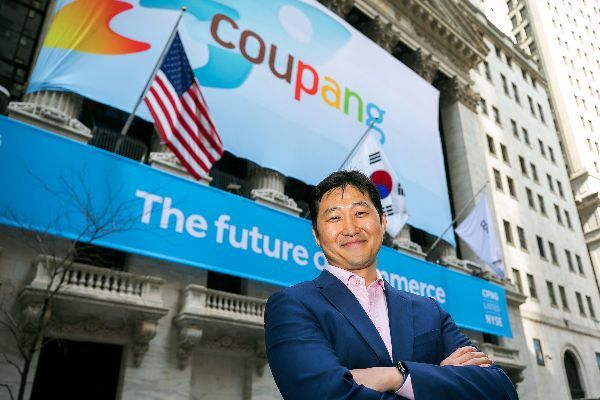
Another factor fueling this shift is that Korean consumers show the highest luxury consumption rate in the world. According to a report by Morgan Stanley released last February, Korean consumers purchased luxury goods worth $16.8 billion (approximately KRW 20.9 trillion) last year alone, ranking Korea as the number one country in per capita luxury consumption. The per capita purchase amount exceeded that of the United States and China, countries known for high luxury consumption. Coupang also stated on the day of acquisition, "We are showcasing Farfetch's value in Korea's luxury market, where per capita personal luxury spending is among the highest in the world," aligning with this trend.
Meanwhile, Coupang expects that this Farfetch acquisition will not only create a competitive dynamic with department stores but also generally increase K-fashion exports. Currently, about ten Korean brands, including Wooyoungmi, Songzio, Low Classic, Kimhekim, and Go&Joey, are sold through Farfetch. However, compared to K-pop or K-food, K-fashion has faced limitations in global recognition. An industry official said, "Just as many domestic consumer goods companies have expanded into Taiwan through the Rocket Delivery logistics network, native companies in the K-fashion sector could increase their global presence through Farfetch."
© The Asia Business Daily(www.asiae.co.kr). All rights reserved.
![Clutching a Stolen Dior Bag, Saying "I Hate Being Poor but Real"... The Grotesque Con of a "Human Knockoff" [Slate]](https://cwcontent.asiae.co.kr/asiaresize/183/2026021902243444107_1771435474.jpg)
















