Seoul Metro Achieves KRW 3.91 Billion Savings Through Active Administration in Revising River Act Enforcement Decree... Recognizing Equity and Discrimination Issues with Other Railway Facilities... Continuous Consultation and Persuasion with Ministry of Environment and Related Agencies... President Baekho: "We Will Continue to Improve Unreasonable Regulations Based on Thorough Awareness of Issues"
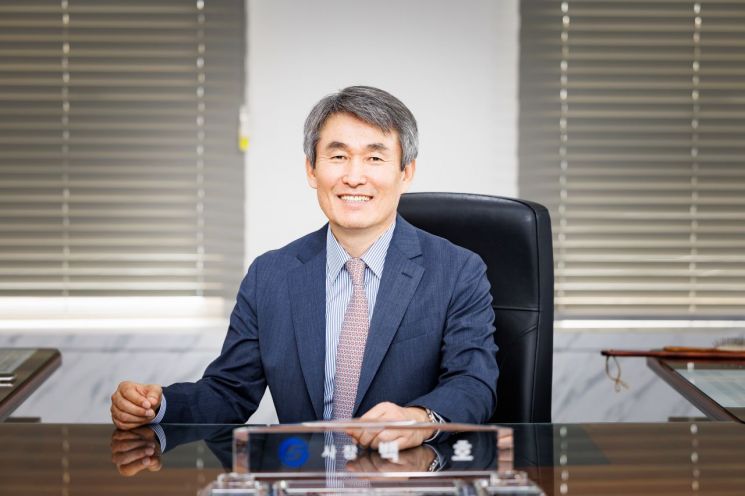
Seoul Metro (President Baek Ho) announced on the 12th that it successfully led the revision of the Enforcement Decree of the River Act to allow urban railway operators to receive a 'full exemption' from river occupancy fees.
As a result, the corporation has saved 3.91 billion KRW in river occupancy fees and will be permanently exempt from such fees during various construction projects.
Seoul Subway Lines 1 to 8 pass through major rivers in Seoul, including the Han River, Cheonggyecheon Stream, Jungnangcheon Stream, and Dorimcheon Stream, making it unavoidable to install railway facilities on riverbed land.
The corporation faced a situation where river occupancy fees were imposed annually on facilities installed on riverbed land according to the River Act, increasing financial burdens. This became an obstacle to the ongoing 'Installation Project of Boarding Convenience Facilities for Transportation Vulnerable Groups,' which is being implemented due to social demands.
Additionally, there was an issue of fairness and reverse discrimination, as river occupancy fees were imposed differently depending on the operating entity and legal basis for the same railway facilities. Although the River Act stipulates that river occupancy fees should be fully exempted for 'non-profit projects for public use or other public interest purposes,' urban railway operators were not included in the subjects defined by the subordinate Enforcement Decree. Consequently, unlike Korea Railroad Corporation and other railway operators such as GTX and the Shinansan Line, they were subject to river occupancy fees.
The corporation actively sought to resolve this financial burden and address fairness and reverse discrimination issues with railway facilities operating on the same line. Starting in May this year, it proposed the revision of the law to the Ministry of Environment and, after continuous consultations and persuasion with Seoul City and related agencies, finally achieved the revision of the Enforcement Decree of the River Act on December 12.
The revised Enforcement Decree of the River Act recognizes 'urban railway operators (local public enterprises) conducting non-profit projects' under the newly established Article 44, Paragraph 1, Item 6 as 'non-profit projects for public interest purposes,' thereby including them in the full exemption category for river occupancy fees. Accordingly, it is expected that the riverbed occupancy fee for Banpo Stream, imposed for the 1 station 1 route project at Express Bus Terminal Station on Line 7 this year, will be exempted.
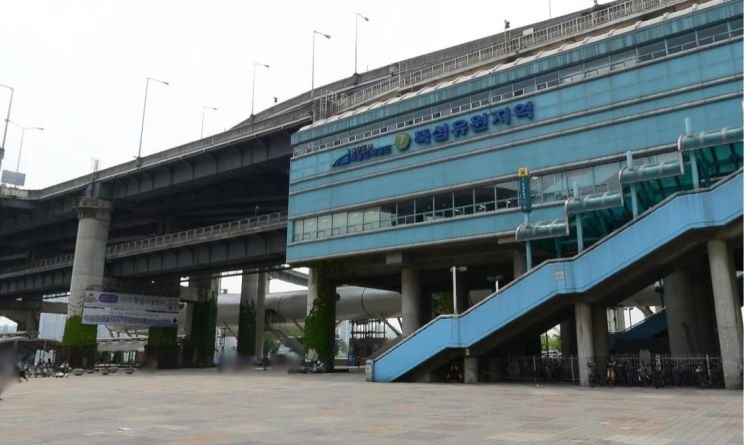
The estimated river occupancy fee currently imposed or to be imposed for the installation of elevators at Express Bus Terminal Station on Line 7 is about 3.9 billion KRW, which corresponds to the construction cost for installing escalators by improving subway entrances.
President Baek Ho said, “This revision of the Enforcement Decree of the River Act is the result of efforts to actively resolve operational shortcomings in the law,” adding, “We will continue to improve unreasonable regulations based on thorough awareness of problems.”
© The Asia Business Daily(www.asiae.co.kr). All rights reserved.
![Clutching a Stolen Dior Bag, Saying "I Hate Being Poor but Real"... The Grotesque Con of a "Human Knockoff" [Slate]](https://cwcontent.asiae.co.kr/asiaresize/183/2026021902243444107_1771435474.jpg)

















