Refining companies unanimously agreed on the need to establish systems to target the eco-friendly fuel market, such as Sustainable Aviation Fuel (SAF), in line with the decarbonization trend.
On the 18th, the Ministry of Trade, Industry and Energy held the 5th "2023 Petroleum Conference" at Samjung Hotel in Gangnam, Seoul, under the theme "New Growth Strategies for the Petroleum Industry and the Role of Eco-friendly Fuels." The event was an opportunity to assess policies and industry status regarding eco-friendly fuels that can replace petroleum.
 Kim Young-dae, head of the Green Growth Technology Team at SK Innovation, is presenting at the '2023 Petroleum Conference' held on the 18th at Samjung Hotel in Yeoksam-gu, Gangnam-gu, Seoul. Photo by Korea Petroleum Association
Extracting Petroleum from Waste Oil and Water... Refining Industry Focuses on Eco-friendly Fuels
Eco-friendly fuels are broadly divided into biofuels and E-Fuels (Electro Fuels, renewable fuels obtained through water electrolysis). Biofuels refer to energy derived from all natural byproducts, including animal and vegetable cooking oils, plants, seaweed, and even animal excrement. Through these biofuels, aviation fuel, diesel, gasoline, and heavy oil can be produced. However, since phosphorus (Phosphorus), an essential element required in the bio raw material production process, is finite on Earth, biofuels cannot completely replace fossil fuels.
On the other hand, E-Fuels are artificially produced gasoline. When energy obtained from eco-friendly power generation and water are combined and electrolyzed, hydrogen molecules are created. By capturing carbon dioxide from the air and compressing it with hydrogen, E-methanol is produced. Based on this, gasoline, diesel, and aviation fuel are made. Since E-Fuels have the same components as gasoline, greenhouse gases are emitted during combustion. The industry expects that while biofuels will be developed first, E-Fuels will also gain attention as eco-friendly fuels due to raw material shortages.
Among these eco-friendly fuels, the market that refiners are most closely watching is SAF. Kim Young-dae, head of the Green Growth Technology Team at SK Innovation, who spoke at the event, said, "(SK Innovation's interest lies in) the UN-affiliated International Civil Aviation Organization (ICAO)'s CORSIA regulation, which mandates the use of SAF starting in 2027." He added, "(Thanks to this regulation) the SAF industry is expected to rapidly form an initial market, and SAF prices are anticipated to carry a premium about three times higher than conventional jet fuel."
He continued, "In Korea, it is difficult to secure feedstock for biofuels, and the prices of these raw materials are soaring. Realistically, it is necessary to quickly collaborate with companies in China and Southeast Asia, where bio raw materials are abundant, to target the market." In fact, SK Innovation is preparing to enter the biofuel market by acquiring Daekyung O&T, a supplier of used cooking oil (UCO), a raw material for biofuels and aviation fuel. Daekyung O&T supplies animal fats from slaughter byproducts and used cooking oil generated from restaurants and food factories as raw materials for biofuels.
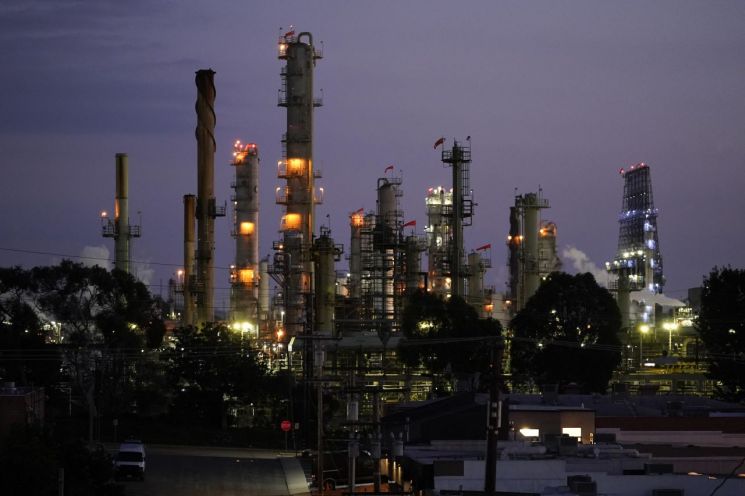
Expansion of Petroleum Alternative Fuels Leads to 'Petroleum Business Act' Amendment... Challenges Remain in Standardization and Mandates
Kim Cheol-hyun, Executive Director of Central Technology Research Institute at HD Hyundai Oilbank, said, "According to carbon neutrality policies of various countries, the usage ratio of eco-friendly fuels is expected to increase significantly in the future," and forecasted, "SAF demand for eco-friendly raw materials will greatly increase due to the EU mandate in 2035."
SAF can reduce carbon emissions by 80% compared to conventional crude oil-based aviation fuel. Currently, the market is led by Europe and the United States. Regulations are being implemented by gradually increasing the blending ratio of SAF with conventional aviation fuel. The EU has set the blending ratios at 2% in 2025, 6% in 2030, 20% in 2035, and 70% in 2050. The U.S. Treasury Department announced detailed regulations of the Inflation Reduction Act (IRA) on the 15th of this month (local time), deciding to provide tax credits for SAF. According to market research firm Mordor Intelligence, the SAF market is expected to grow from $745.5 million (approximately 969.5 billion KRW) in 2021 to nearly $10 billion (about 13 trillion KRW) in 2025, and surpass $21.5 billion (about 27.96 trillion KRW) by 2027.
Until now, there was no legal basis for producing eco-friendly fuels domestically. Only last month was the amendment to the "Petroleum Business Act," which expands the scope of petroleum alternative fuels, approved by the National Assembly's Industry, Trade, Energy, Small and Medium Enterprises Committee on the 23rd. Passage in the plenary session is also expected soon. However, the eco-friendly fuel market, including SAF, still has a long way to go. Presenters at the event also emphasized the need for active government support and strengthened public-private cooperation.
Executive Director Kim said, "Countries like Europe and the U.S. have announced mandatory blending systems, making demand forecasting possible to some extent, but we cannot accurately predict demand." He added, "On the other hand, investment amounts are large, so companies face high risks and find it difficult to make bold investments." Team leader Kim Young-dae said, "Most companies currently composing the domestic biofuel market are small-scale. It is necessary to systematize and standardize the entire process from raw materials to manufacturing and consumption, and for institutions and companies to establish a close cooperative system to achieve this."
© The Asia Business Daily(www.asiae.co.kr). All rights reserved.


















