Novavax Vaccine Using Long-Established Gene Recombination Method
Previously Only mRNA Vaccines Used
Two Vaccine Methods Increase Public Choice Options
Vaccination with the Novavax vaccine, a recombinant protein-based synthetic antigen vaccine targeting the COVID-19 variant XBB, will begin on the 18th. Following the messenger RNA (mRNA) vaccines that have been used for the existing winter season vaccinations, the addition of this option expands the choices for vaccination, and the Korea Disease Control and Prevention Agency (KDCA) has urged elderly individuals to get vaccinated.
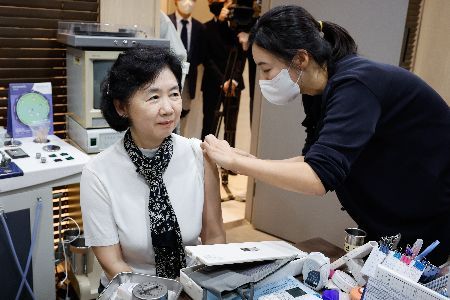 Jiyeongmi, Director of the Korea Disease Control and Prevention Agency, participating in the COVID-19 vaccination campaign [Photo by Yonhap News]
According to the KDCA, the Novavax vaccine is available for individuals aged 12 and older. All citizens aged 12 and above, including high-risk groups such as those aged 65 and older and immunocompromised individuals, can receive the vaccine free of charge. Vaccination is possible by visiting vaccination centers on the day without prior reservation. Of course, reservations can also be made online through the ‘COVID-19 Vaccination Reservation System’ website.
The Novavax vaccine is a type of recombinant protein vaccine. It is similar to the method used to produce vaccines with high national vaccination rates, such as the hepatitis B vaccine and the cervical cancer vaccine. COVID-19 vaccinations began on October 19, with Pfizer and Moderna mRNA vaccines being used. With the introduction of the recombinant protein-based Novavax vaccine, the public now has more vaccine options.
Kwon Geun-yong, head of the KDCA’s Vaccination Planning Division, explained, “The recombinant protein method used in the Novavax vaccine has a long development history. For those who have concerns about the new mRNA vaccine technology or who have experienced certain adverse reactions such as myocarditis or pericarditis, the Novavax vaccine can be a good alternative.” This is the first time the Novavax vaccine is being used for winter vaccinations targeting COVID-19 variants.
The KDCA urged high-risk groups to get vaccinated and also encouraged those who frequently come into contact with infants and young children to get vaccinated. Ji Young-mi, director of the KDCA, stated, “Respiratory infectious diseases, including Mycoplasma pneumonia, are currently spreading, and the number of COVID-19 positive cases has remained around 6,000 per week since the second week of November, so the situation cannot be taken lightly,” adding, “We strongly urge many people to participate in the new vaccine vaccinations before COVID-19 spreads widely.”
Meanwhile, 9,600 doses of Pfizer’s COVID-19 vaccine for infants and young children will be introduced into the country through Incheon International Airport today. This vaccine, which targets the COVID-19 XBB variant, received emergency use authorization from the Ministry of Food and Drug Safety on the 8th. The KDCA plans to use this vaccine for winter vaccinations for infants and young children aged 6 months to 4 years.
Vaccination for infants and young children has been ongoing with the Moderna vaccine since the 1st of last month. Previously, infants and young children who received the Pfizer vaccine were not allowed to cross-vaccinate, which limited the use of the Moderna vaccine. The number of Pfizer vaccine doses for infants and young children depends on how many doses they have previously received. A total of 3 doses must be completed; if they have already received 2 doses, only 1 dose is needed this time, and if they have received 1 dose, only 1 dose is required. If they have no prior vaccination experience, 3 doses of the new vaccine must be administered. Infants and young children wishing to receive the Pfizer vaccine can make reservations starting from the 26th and will be able to receive free vaccinations from January 8 of next year.
© The Asia Business Daily(www.asiae.co.kr). All rights reserved.

















