Sangui-Ministry of the Interior and Safety to Hold Regional Economy Forum on the 18th
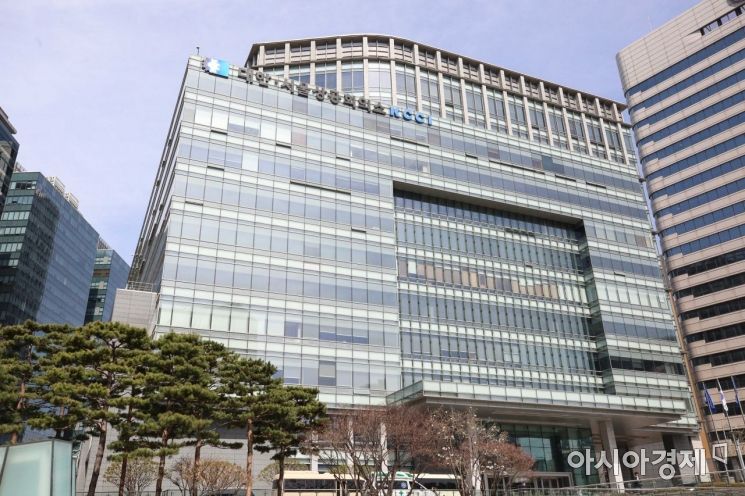
The Korea Chamber of Commerce and Industry announced that on December 18, it jointly held the '2023 Regional Economy Forum' with the Ministry of the Interior and Safety at the Seoul National University Siheung Campus Convention Center under the theme "Building Regional Economy Together: The Role of Businesses and Government."
The forum was attended by over 200 participants, including Lee Sang-min, Minister of the Ministry of the Interior and Safety; Choi Tae-won, Chairman of the Korea Chamber of Commerce and Industry; Yoo Hong-rim, President of Seoul National University; as well as regional economy experts from global consulting firms, government-funded research institutes, academia, regional chamber of commerce chairpersons, local business leaders, and local government officials. They engaged in heated discussions to diagnose regional economic policies and the realities faced by businesses, and to explore the roles and cooperation methods between companies and the government.
In his opening remarks, Minister Lee Sang-min stated, "Local governments themselves must secure new growth engines by collaborating with businesses and universities, which are part of the region, based on development foundations that utilize the unique values of their regions." He added, "The government also plans to actively support region-led development strategies through continuous communication with local areas."
Topic Presentations by Regional Policy and Talent Development Experts Followed by Discussions Involving Regional Business Leaders, Academia, and Global Investors
The forum began with presentations by three experts in regional policy and workforce development: Kim Jeong-yeol, Partner at Deloitte Anjin Accounting Firm; Kim Eun-kyung, Senior Research Fellow at Gyeonggi Research Institute; and Eom Mi-jung, Senior Research Fellow at the Science and Technology Policy Institute.
Kim Jeong-yeol, who gave the first presentation titled "The Role of Businesses and Government in Revitalizing the Regional Economy," shared the future role of government in response to technological changes and proposed three strategies for regional economic revitalization: ▲ establishing regional infrastructure that can induce innovation ▲ discovering differentiated regional content and services ▲ formulating strategies that connect regions not only as points but also as lines and areas.
Next, Kim Eun-kyung presented on "Win-Win Solutions and Cooperation Measures between the Capital Region and Provinces," stating, "Spatial imbalance between the capital region and provinces cannot be resolved by market principles alone." She emphasized, "Policies should consider providing exceptional incentives when building cooperative ecosystems such as R&D between capital region and provincial companies."
Lastly, Eom Mi-jung spoke on the topic "The Key to Regional Economy ? Talent Development," saying, "We need to go beyond the concept of 'nurturing' talent to consider how to utilize it." She also highlighted the need for incentive systems to encourage active corporate participation, such as corporate contract departments starting from the education curriculum.
Following the presentations, a panel discussion was held with Park Joo-seok, CEO of Mapal High Tech; Go San, CEO of A-Team Ventures; Jeong Seong-hoon, President of the Korean Geographical Society and Professor at Kangwon National University; and Lee Won-jae, Asia General Manager of the Yozma Group. Participants discussed past regional economic revitalization policies, the effectiveness and challenges of policies as experienced by businesses, and ways to establish a virtuous cycle between regional talent development and employment. They agreed that changes are needed in both policy and private sectors to alter the current situation.
Jeong Seong-hoon, President of the Korean Geographical Society and a panelist, said, "To create investment conditions in regions, the current public-led approach and fragmented support system have limitations." He added, "We need to establish a testbed for private sector business through bold policy experiments that provide incentives across all areas, including regulations, taxation, and living conditions."
Park Joo-seok, CEO of Mapal High Tech, a cutting tool specialist company located in Siheung, shared during the discussion, "As a technology-based company, engineers are essential, but since the IMF crisis, it has been very difficult to find skilled manufacturing workers, which is our biggest challenge." He explained, "To secure talent, we signed an MOU with Meister High Schools, allowing students to learn manufacturing technology on-site during the semester, followed by training in Germany before hiring them and placing them directly in the field."
© The Asia Business Daily(www.asiae.co.kr). All rights reserved.
![Clutching a Stolen Dior Bag, Saying "I Hate Being Poor but Real"... The Grotesque Con of a "Human Knockoff" [Slate]](https://cwcontent.asiae.co.kr/asiaresize/183/2026021902243444107_1771435474.jpg)















