Strengthening Pre-Regulation of Platforms such as Ne·Ka
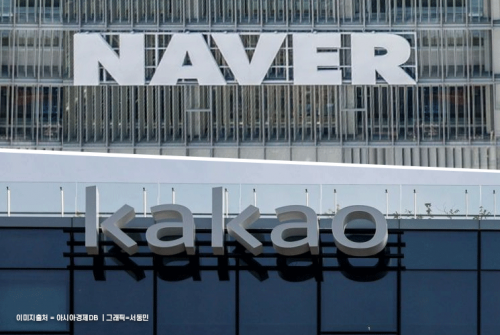
The 'Online Platform Fairness Act (Onple Act),' which includes pre-regulation measures for domestic digital platform companies such as Naver and Kakao, is moving forward in the legislative process. Originally expected to be discarded, the Onple Act is gaining momentum in discussions after receiving presidential approval.
According to comprehensive IT industry coverage, multiple government ministries held a ministerial meeting on the afternoon of the 15th to discuss and finalize the legislative promotion agenda for the Onple Act. The specific details will be discussed at the Cabinet meeting on the 19th.
The Fair Trade Commission (FTC) first announced the Onple Act for legislation in September 2020 but made no progress for three years. President Yoon Suk-yeol emphasized platform self-regulation from the early days of his administration, causing friction with the ruling party. However, recently, amid judicial risks and management corruption controversies involving Kakao, it is reported that the presidential office has reached a consensus that a change is needed in the regulatory approach that fully hands over control to platform companies.
With the presidential report completed, legislative discussions in the National Assembly's Standing Committee on Political Affairs, which oversees the FTC, are expected to gain momentum. Currently, 19 bills related to online platforms, including government proposals, are pending in the Political Affairs Committee, but none have passed the subcommittee stage due to conflicts between the ruling and opposition parties.
The method of legislation?whether government-initiated or member-initiated?has not been decided. Typically, government proposals are submitted and approved at Cabinet meetings but must go through complex approval processes in the National Assembly's standing committees and the Legislation and Judiciary Committee. Therefore, there is also a possibility that the legislation will proceed as a member-initiated bill, which tends to move faster.
The bill is expected to be based on the proposal by Assemblyman Park Jumin. His bill aims to allow online platform operators to form associations to negotiate with intermediary operators and to apply preferential commission rates to small businesses. The regulated companies are those with ▲a market capitalization of 30 trillion won or more ▲an average annual platform service revenue of 3 trillion won or more over the past three years ▲an average monthly online platform user base of 10 million or more, or an average monthly domestic business user base of 50,000 or more over the past three years. Once designated as regulated entities, abuses of dominant position such as preferential treatment of their own services or tying sales will be prohibited.
The Onple Act is also expected to undergo coordination with the 'Telecommunications Business Act Amendment (Self-Regulation Act)' led by the Ministry of Science and ICT and the Korea Communications Commission, which was approved at the Cabinet meeting on November 14. The Ministry of Science and ICT and the Korea Communications Commission have focused on swiftly addressing complaints arising in the field and newly emerging issues due to technological advancements through self-regulation during the legislative process.
The IT industry, which had hoped for self-regulation, is expressing concerns about the possibility of pre-regulation. There are worries that this could weaken corporate competitiveness amid the proliferation of Chinese platforms in the domestic market. Chinese platforms such as 'Temu' and 'AliExpress' are pushing into the domestic market as the top shopping applications. In particular, cheap Chinese counterfeit goods are flooding into the country during this process.
The internet industry has taken the lead in self-purification and coexistence efforts. Major platform companies such as Naver, Kakao, Coupang, Woowa Brothers (Baedal Minjok), and Danggeun have been preparing self-regulation measures and coexistence plans since August last year by forming a 'platform private organization.' Naver launched the 'Naver User Protection and Self-Regulation Committee (tentative name).' Kakao implemented policies to freeze or reduce commissions for small and medium-sized merchants and shortened the settlement cycle for gift transactions. In particular, Kakao Mobility held meetings with the taxi industry and lowered franchise commissions to 2.8%.
© The Asia Business Daily(www.asiae.co.kr). All rights reserved.
![Clutching a Stolen Dior Bag, Saying "I Hate Being Poor but Real"... The Grotesque Con of a "Human Knockoff" [Slate]](https://cwcontent.asiae.co.kr/asiaresize/183/2026021902243444107_1771435474.jpg)















