Medical Driving Assistance, Kitchen Cooking Assistance Robot
Humanoid Semiconductor Process Deployment
Samsung Electronics and LG Electronics are accelerating the development of consumer products such as medical mobility-assist robots and kitchen cooking-assist robots. Samsung Electronics plans to launch the medical robot 'BotFit' by the first half of next year at the latest. LG Electronics is preparing to release the frying robot 'TwiBot.' They are diversifying their business portfolios by entering not only the business-to-business (B2B) robot market used in factories and logistics warehouses but also the business-to-consumer (B2C) robot market used in restaurants and hospitals.
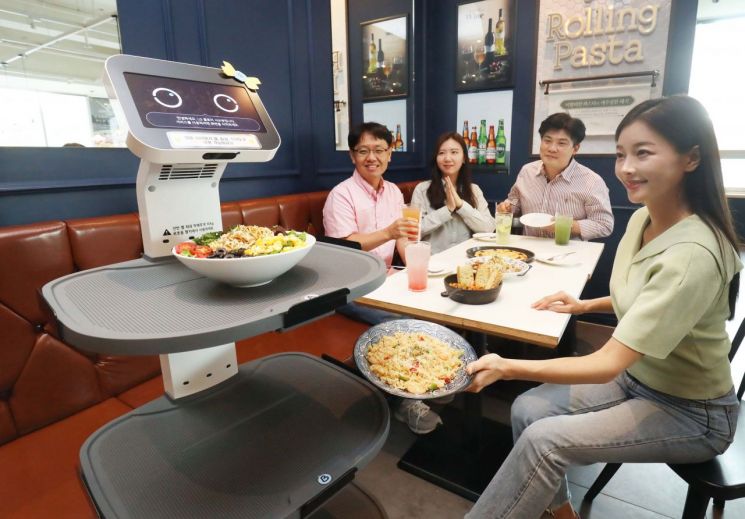
According to industry sources on the 16th, LG Electronics is considering expanding the usage of the frying robot TwiBot by launching it. TwiBot is a robot that cooks fried dishes in the kitchen instead of humans. When ingredients are coated with batter and placed on the machine, the robot automatically prepares the food. It is known that TwiBot for chicken cooking has already been supplied to some bhc stores, and LG Electronics plans to consider expanding its application to more stores depending on operational performance. It can be supplied not only to chicken franchises but also to restaurants within resorts.
LG Electronics launched Korea's first robot vacuum cleaner in 2003. Around 2018, when it acquired the domestic robot manufacturer Robostar, it diversified its B2C business by building a lineup of guide and serving robots. Since then, it has introduced various products such as guide robots, delivery robots, serving robots, sterilization robots, and goods-carrying robots for factories and logistics warehouses.
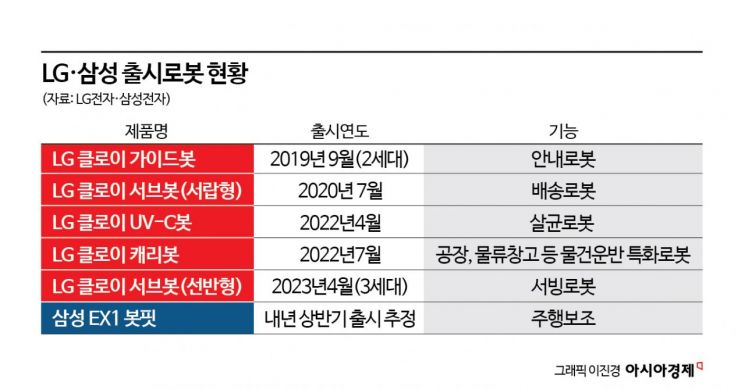
The LG CLOi drawer-type sub-bot is a delivery robot recognized for elevator safety by the Korea Elevator Safety Agency. The shelf-type sub-bot delivers items based on autonomous driving and obstacle avoidance technology. It is mainly used in restaurants to move dishes instead of human staff. In addition, there are 'GuideBot' with multifunctions such as visitor guidance, advertising, security, and docent (exhibition explanation), the non-face-to-face disinfection sterilization robot 'UV-C Bot,' and 'CarryBot' that transports goods in manufacturing plants and logistics warehouses.
In the case of Samsung Electronics, since Vice Chairman Lee Jae-yong mentioned in August 2020 that 240 trillion won would be invested in future technology businesses such as robots, the company has steadily expanded its business. It is preparing to launch the medical wearable robot BotFit early next year. Although it was originally scheduled to be released in the second half of last year, the launch was delayed to improve product completeness. The 'BotFit' trademark was registered last March.
Additionally, by acquiring patents related to service and voice/language processing robots, Samsung is diversifying its business. It is known to be considering deploying robot dogs and humanoid robots in semiconductor production processes.
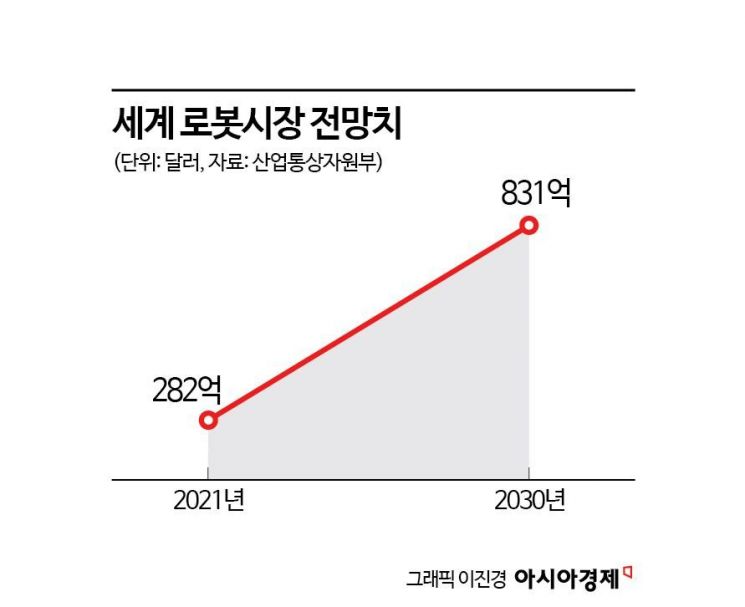
The global robot market is expected to grow about threefold over ten years. The Ministry of Trade, Industry and Energy forecasted that the robot market would grow from $28.2 billion (approximately 36.5 trillion won) in 2021 to $83.1 billion (approximately 107.5 trillion won) in 2030. The market views Samsung Electronics and LG Electronics' entry into the consumer robot market positively. Kim Tae-hyun, a researcher at IBK Investment & Securities, said, "As the elderly population is rapidly increasing in the aging era, it is positive that the two companies are diversifying their B2C businesses such as medical wearables instead of sticking only to B2B businesses."
© The Asia Business Daily(www.asiae.co.kr). All rights reserved.
![Clutching a Stolen Dior Bag, Saying "I Hate Being Poor but Real"... The Grotesque Con of a "Human Knockoff" [Slate]](https://cwcontent.asiae.co.kr/asiaresize/183/2026021902243444107_1771435474.jpg)

















