Noise caused by a blunt object for over a month... 1st and 2nd trials: 8 months imprisonment and 2 years probation
Supreme Court: Repeated acts causing anxiety and fear to the other party should be regarded as stalking crimes
The Supreme Court has made its first ruling that deliberately causing continuous noise between floors can be punished as a 'stalking crime.' Acts of intentionally creating noise between neighbors also constitute stalking crimes if they objectively and generally cause sufficient repeated anxiety or fear to the other party beyond socially accepted reasonable limits.
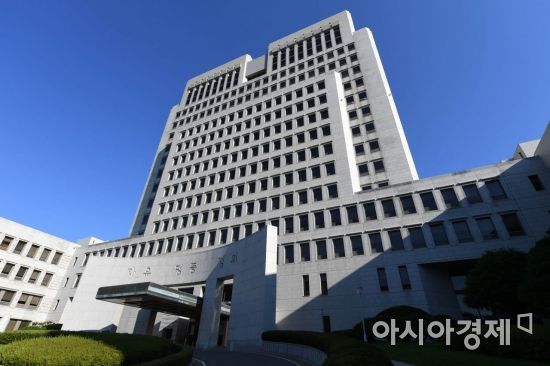
The Supreme Court's First Division (Presiding Justice Kim Seon-su) on the 14th upheld the lower court's ruling sentencing Mr. A, who was tried for violating the Act on the Punishment of Stalking Crimes, to 8 months in prison with a 2-year probation.
Mr. A moved into a monthly rental villa in Gimhae City on June 20, 2021. The landlord and victim, Mr. B, lived upstairs. Subsequently, Mr. A expressed dissatisfaction with noise between floors and daily living noises, and from October of the same year, over more than a month, he was accused of repeatedly making noise 31 times by hitting walls and throwing objects with a blunt instrument, causing repeated anxiety or fear to Mr. B.
The first trial court judged Mr. A's actions as stalking crimes but did not recognize some acts of hitting the wall with a blunt instrument or turning up the TV volume loudly as guilty. The first trial court stated, "Some acts of hitting the wall with a blunt instrument are overlapping, and there is no recorded or clearly detailed video evidence of the loud TV sounds, making it difficult to confirm the size or type of sound or whether it caused anxiety or fear," and sentenced him to 8 months in prison with a 2-year probation. The court also ordered probation supervision, 120 hours of community service, and 40 hours of attending stalking crime recidivism prevention lectures.
The second trial court upheld the first trial's judgment. The second trial court stated, "The victim kept a noise diary regarding the noise made by the defendant," and judged, "The type and volume of sound are not direct elements of the crime, so if the victim felt anxiety or fear due to repeated noise, the crime is established."
It also added, "The police executed a search warrant at Mr. A's residence and confirmed marks on the ceilings of the bedroom and computer room, which, judging by the shape of the marks, appear to have been made by a tool rather than construction defects."
The Supreme Court also agreed with the lower courts' judgments. The court ruled that the acts constituted stalking crimes as they were sufficiently continuous and repetitive to cause anxiety or fear to the other party.
The court judged, "Considering the relationship between the defendant and the victim, the specific acts and circumstances, the defendant's words and actions, and various circumstances before and after the acts, the defendant's actions cannot be regarded as justified acts within the socially accepted reasonable scope for identifying the cause of noise between floors or seeking solutions."
© The Asia Business Daily(www.asiae.co.kr). All rights reserved.

















