Nowon-gu Extends Disconnected Gyeongchun Line Forest Trail... Extends Trail Disconnected Near Gyeongchun Railroad Bridge to Gwangwoon University Station... Saves About 34 Billion KRW in Land Compensation Costs by Winning National Railroad Corporation's Idle Railway Land Utilization Project Contest... Plans to Sign Agreement with National Railroad Corporation, Design Next Year, and Begin Construction in 2025
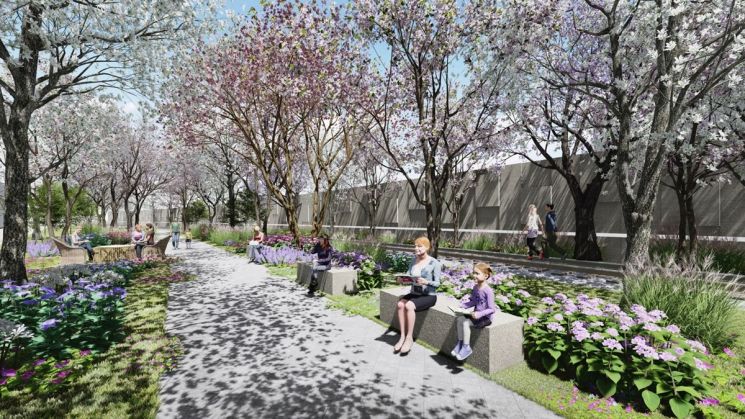
Nowon-gu, Seoul (Mayor Oh Seung-rok) announced that it will connect the last disconnected section of the Gyeongchun Line Forest Trail (from Nokcheon Middle School in Wolgye-dong to Kwangwoon University Station) to create an open village forest where culture breathes.
The Gyeongchun Line Forest Trail is a project by the Seoul Metropolitan Government to create a park on the abandoned Gyeongchun Line railway site through urban regeneration. The first phase, from Gongdeok 2nd Railroad Crossing to Yuksasamgeori, was completed in 2015, and the last third phase section from Yuksasamgeori to the boundary of Guri City opened in 2017. Since then, the section from Nokcheon Middle School in Wolgye-dong to Kwangwoon University Station has been effectively neglected.
However, since the area near Kwangwoon University Station is scheduled for development with the Kwangwoon University Station district development and the future opening of the GTX-C line, the district plans to resolve the abandoned 870m disconnected section of the Gyeongchun Line Forest Trail, attract population to the development site, and create leisure and cultural spaces for residents.
The Gyeongchun Line Forest Trail extension project will be developed over 870 meters in length and 10 to 20 meters in width. It will serve as a symbolic gateway from the city to nature and the first face of the Gyeongchun Line Forest Trail, designed as an open village forest where various communities and cultures breathe.
The project will consist of five sections: ‘Eogwi Forest Yard,’ an open community space meeting the Jungnang Stream; ‘Railroad Garden,’ a flower path along the narrow and long railway; ‘Green Yard,’ sharing green culture with a green market and gardening center linked to a large mart; ‘Sai Forest Trail,’ a natural playground along the aspen tree forest path; and ‘Forest of Creation,’ where youth culture and arts thrive.
The enormous cost of the Gyeongchun Line Forest Trail extension project was resolved by participating in the ‘18th Railway Idle Land Utilization Project Proposal Contest’ hosted by the Korea Rail Network Authority. By being finally selected in the contest, the project will be exempt from land use fees on state-owned idle railway land for up to 20 years, saving 34 billion KRW in land compensation costs.
In January next year, an agreement will be signed with the Korea Rail Network Authority, and basic and detailed designs for the Gyeongchun Line Forest Trail extension will be carried out, aiming for construction to begin in 2025.
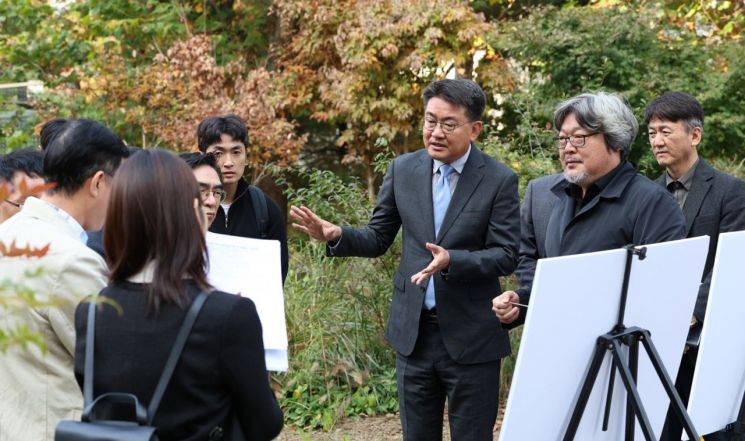
The district’s strong will to promote the project and its plan to secure project funds played a major role in winning the contest. On the day of the on-site evaluation by the contest’s practical evaluation team, the district mayor personally conducted a briefing, demonstrating a firm commitment to the project. Additionally, with the district unit plan for the Kwangwoon University Station district development project decided and announced in November this year, about 10.3 billion KRW in funding for the Gyeongchun Line Forest Trail extension will be provided as a public contribution by Hyundai Development Company, the project implementer.
The district has continuously researched to efficiently utilize idle railway land with goals of revitalizing the local community, connecting green ecosystems, and creating cultural value. Since last year, it has benchmarked successful contest-winning cases and conducted preliminary consulting. This year, it commissioned a study and carried out a basic concept design for the Gyeongchun Line Forest Trail extension section. In June, it also collected various opinions from about 600 residents of Wolgye-dong and reflected them in the basic concept.
Mayor Oh Seung-rok said, “Once the disconnected Gyeongchun Line Forest Trail is extended to Kwangwoon University Station, it is expected to greatly contribute to improving the quality of life for local residents along with the Kwangwoon University Station district development and the opening of the GTX-C line. We will do our best to ensure the project proceeds smoothly so that Wolgye-dong and Kwangwoon University Station area can emerge as a new center of northeast Seoul.”
© The Asia Business Daily(www.asiae.co.kr). All rights reserved.
![Clutching a Stolen Dior Bag, Saying "I Hate Being Poor but Real"... The Grotesque Con of a "Human Knockoff" [Slate]](https://cwcontent.asiae.co.kr/asiaresize/183/2026021902243444107_1771435474.jpg)
















