Closed Mouth and Nose While Sneezing Causes Bronchial Hole
Pressure Increases 20 Times When Closing Mouth and Nose During Sneezing
A case of bronchial rupture causing throat pain after forcibly suppressing a sneeze was reported in a British medical journal. This is the first case of bronchial injury caused by sneezing worldwide.
Dr. Lasaz Mishirovs and his research team at the University of Dundee in Scotland, UK, recently published a case of bronchial perforation (hole) in the international journal 'BMJ Case Reports.'
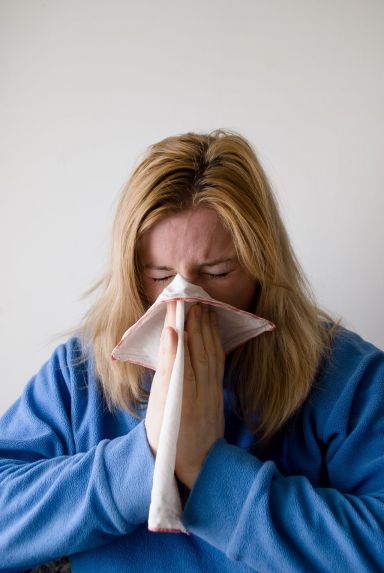
The patient in the report is a man in his 30s from Scotland suffering from allergic rhinitis. While driving a car, he felt a sneeze coming on. However, at the moment of sneezing, he pinched his nose and closed his mouth, then suddenly experienced severe throat pain.
As the pain worsened, the man eventually went to the emergency room and underwent a detailed examination. The diagnosis revealed that his bronchus was torn, with a hole measuring 2 mm both horizontally and vertically.
Signs of emphysema, a condition where inflammation in the bronchus or lungs causes cells to malfunction during breathing, were also partially observed. This disease is accompanied by coughing and, in severe cases, can cause breathing difficulties.
The research team stated that "this is the first reported case of bronchial perforation occurring after sneezing."
According to the study, the airway pressure during a sneeze reaches 1 to 2 kilopascals (kPa). However, if the mouth and nose are closed during a sneeze, this pressure can suddenly spike up to 20 times.
The man did not require immediate surgery but was monitored in the hospital for two days to observe if the symptoms subsided. He was also advised by doctors to avoid strenuous physical activity for two weeks and was prescribed painkillers and pollen allergy rhinitis medication before being discharged. Fortunately, the man's torn bronchus fully healed after five weeks.
The research team noted that although this case is rare, it is dangerous. Bronchial perforation can potentially be life-threatening, and depending on the torn area and the patient's vitality, surgery may be necessary.
© The Asia Business Daily(www.asiae.co.kr). All rights reserved.
![Clutching a Stolen Dior Bag, Saying "I Hate Being Poor but Real"... The Grotesque Con of a "Human Knockoff" [Slate]](https://cwcontent.asiae.co.kr/asiaresize/183/2026021902243444107_1771435474.jpg)















